

Why your brain gets louder when the world gets quieter.
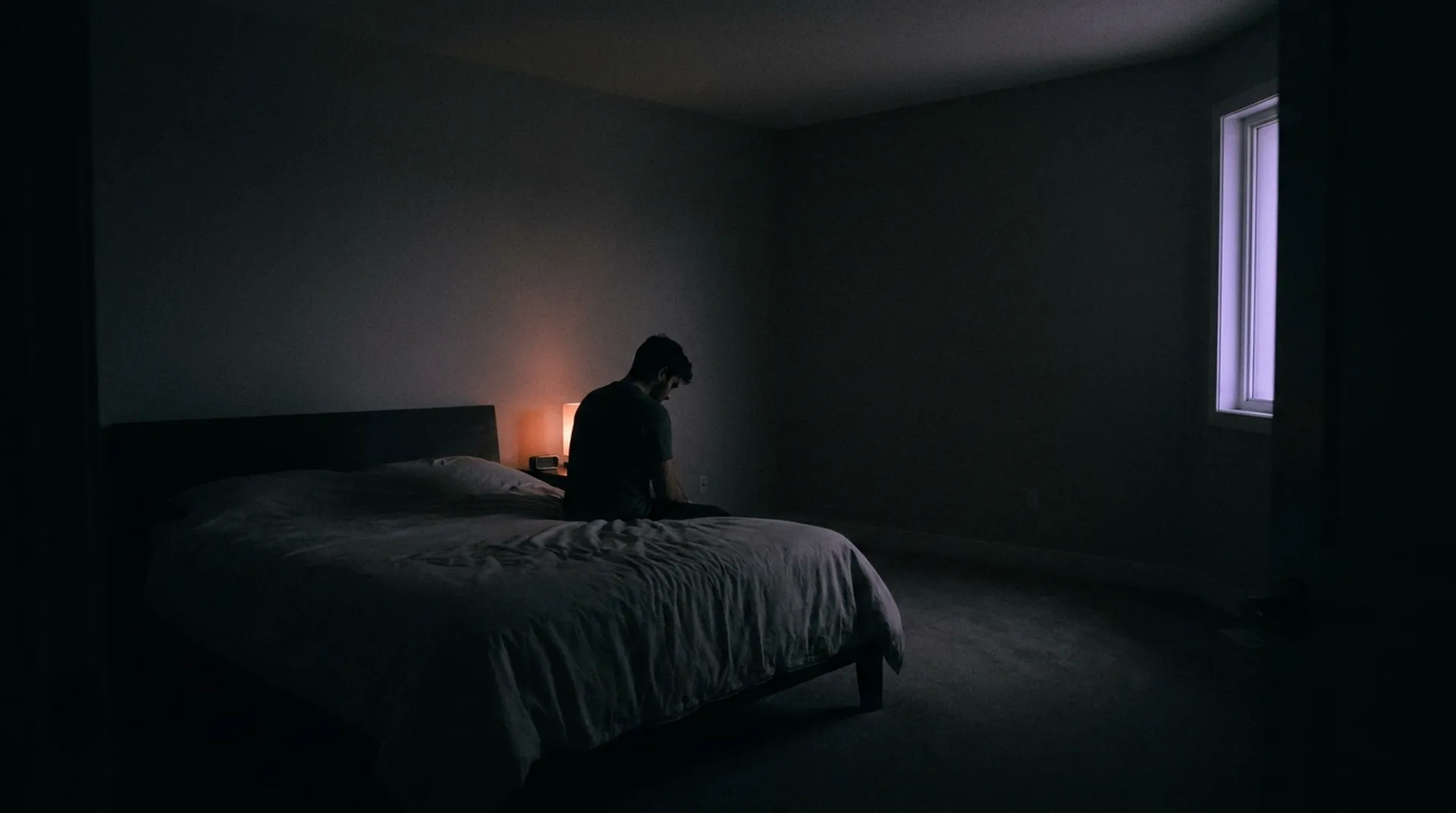
You already know the feeling — the mind that gets louder the moment it’s quiet. Let’s look at why.
AI-generated image
Your brain isn’t broken. It’s doing exactly what it evolved to do.
Thousands of years ago, forgetting an unfinished task could be dangerous. If you forgot to secure the fire or check the perimeter, there were severe consequences.
Today, those survival tasks are unread emails, lingering texts, and tomorrow’s meetings. The stakes are lower, but the mechanism stayed the same.
It keeps looping because it doesn’t want you to fail.
What’s still with you tonight?
The brain hates unfinished things.— the finding Bluma Zeigarnik published in 1927, put plainly
Mechanism 01The Zeigarnik Effect
The subconscious prioritizes incomplete tasks over completed ones.
The Zeigarnik Effect
The subconscious prioritizes incomplete tasks over completed ones.
The story goes that a waiter could recall a complex order perfectly until it was served — and then it was gone. Bluma Zeigarnik took that observation into the lab in the 1920s and found it held: unfinished tasks are remembered better than finished ones. The mind keeps “open loops” open. Writing a thought down gives it somewhere to close.
Source
Mechanism 02Working Memory
Working memory is a biological bottleneck.
Working Memory
Working memory is a biological bottleneck.
Working memory holds only a handful of things at once — Cowan puts the working limit at about four. Trying to keep tomorrow’s worries in your head while falling asleep asks it to do something it cannot do. Writing one thought down is cognitive offloading: letting the world outside your head carry what your head would otherwise have to hold.
Source
Mechanism 03Expressive Writing
Naming the worry reduces its emotional charge.
Expressive Writing
Naming the worry reduces its emotional charge.
Brain imaging shows that simply putting feelings into words activates the prefrontal cortex and dampens the response of the amygdala (the brain’s alarm system). You move from feeling the anxiety to observing it.
Source
Clarity on our role.
Tonight’s design is informed by research on unfinished tasks, working memory, affect labeling, and expressive writing. These findings do not guarantee a particular result from one ritual.
WHAT TONIGHT DOES
- Encourages nightly cognitive reflection
- Supports the building of evening routines
- Helps safely externalize racing thoughts
- Creates a calming auditory transition to sleep
WHAT TONIGHT DOESN’T DO
- Diagnose sleep disorders
- Treat clinical or chronic insomnia
- Cure underlying anxiety conditions
- Replace cognitive behavioral therapy (CBT-I)
Imagine carrying one less thought
into bed tonight.