
The Nocturnal Index
Essays on the restless mind.
Cognitive research notes, clinical philosophy, and reflections on navigating the 3 a.m. room.
54

Why Does Everything Feel Worse at Night?
At night, the problem may not be bigger. There is simply less competing with it. Unfinished work, loneliness, guilt and tomorrow's worries can suddenly take up the whole room.
Read essay
Best Sleep Trackers in 2026: What They Measure and What They Miss
Oura Ring 5, Apple Watch Series 11, Garmin Venu 4, WHOOP 5.0, and Eight Sleep Pod 5 all approach sleep differently. Here is what consumer sleep trackers can estimate, where they are useful, and where they are not medical tools.
Read essay
What the night seems to be telling us.
People do not only search for sleep. They search for what happens around it — the guilt, the loneliness, the conversation still running. Notes from watching how the night talks.
Read essay
Sleep Apps for Therapy Clients: A Between-Session Guide
A clinician's guide to evaluating optional sleep and wind-down apps for clients: what they can realistically support, where the clinical boundaries sit, and what to check before recommending one.
Read essay
Tired but Wired at Night? What to Do
Feeling wired but tired can have many causes, including stress, caffeine, alcohol, light exposure, sleep timing, pain, or insomnia. Here are a few low-stimulation ways to make bedtime easier.
Read essay
Closing the Day, Gently
How to wind down after a stressful day with a simple buffer zone between work and the rest of your evening.
Read essay
Why Anxiety Can Feel Worse at Night
Anxiety can feel louder at night when distractions fade and you are tired. Here are several reasons that can happen, plus a simple routine that may make the evening easier.
Read essay
Wake Up Anxious in the Middle of the Night?
Do you wake up anxious in the middle of the night? Learn why sudden nighttime anxiety can happen, what not to assume from a racing heart, and a simple low-stimulation way to respond.
Read essay
Too Tired to Sleep? How to Calm a Wired Brain
Physically exhausted but your brain won't stop? Stress, worry, caffeine, timing, and learned sleep patterns can all leave you tired but alert. Here’s what may be going on and a simple breathing option to try.
Read essay
How to Stop Worrying About Tomorrow Before Bed
Can’t stop worrying about tomorrow when you’re trying to sleep? Learn a gentle constructive-worry practice that can give tomorrow’s concerns a clearer place outside the bed.
Read essay
Stop Replaying Conversations at Night
Can’t stop replaying conversations in your head at night? Learn why social rumination can show up after dark, and a gentle external-anchor technique to redirect your attention.
Read essay
When Your Mind Won't Stop for Sleep
If you can't sleep because of overthinking, your mind may be caught in a frustrating loop. Cognitive Shuffling is one optional way to give your attention somewhere softer to land.
Read essay
How to Stop Existential Dread at Night
Facing existential dread at night can feel isolating. This gentle guide walks you through the 5-4-3-2-1 grounding method to help you return from overwhelming thoughts about death, meaning, and the universe to the present moment.
Read essay
How to Relax a Tense Body for Sleep
If your muscles still feel tense when you want to sleep, Progressive Muscle Relaxation can be one simple option. Learn a gentle version that does not promise to reset your nervous system or guarantee sleep.
Read essay
Heart Racing When Trying to Sleep? Here's Why
A racing or pounding heart at bedtime can have many causes, from anxiety and caffeine to medications or rhythm problems. Learn what may help, and which warning signs deserve medical care.
Read essay
How to Get Off Your Phone at Night
Can’t get off your phone at night? Learn why endless feeds are easy to continue, how evening light and content can delay sleep, and how to build a realistic stopping point.
Read essay
Why Do I Get a Burst of Energy at Night?
A late burst of energy can come from circadian timing, evening light, caffeine, stress, habits, or simply finally having unscheduled time. It is not automatically a cortisol spike.
Read essay
How to Fix Sunday Night Insomnia
Struggling with Sunday night insomnia? A simple Sunday Night Reset can make Monday feel more contained and take some pressure off bedtime.
Read essay
ADHD Bedtime Paralysis: Why Going to Bed Can Feel So Hard
If you have ADHD, knowing you are tired and actually starting bedtime can feel like two different tasks. Here is why transitions can be difficult and how to make the first step smaller.
Read essay
Giving Yourself Back the Night
How to fix revenge bedtime procrastination starts with understanding what late-night scrolling is giving you: autonomy, quiet, or a little time that feels like your own.
Read essay
Feeling Restless at Night & Unable to Sleep?
Feeling restless at night can come from stress, caffeine, medication, sleep timing, discomfort, or conditions such as Restless Legs Syndrome. Here is how to tell the patterns apart and try a gentle body scan.
Read essay
Feeling Guilty for Sleeping or Resting? Why It Happens
If rest makes you feel guilty, the thought is worth examining rather than obeying. Sleep is a biological need, and unfinished work does not make resting a moral failure.
Read essay
How to Fall Asleep When Stressed About Work
If work keeps following you into bed, a short closing routine can help move unfinished tasks out of your head and create a clearer boundary between work and the rest of your evening.
Read essay
Why Do I Dread Going to Bed? Reclaiming Your Night
If you dread going to bed, repeated difficult nights may have linked the bed with wakefulness, pressure, or worry. Learn how CBT-I uses simple behavioral changes to rebuild that association.
Read essay
How to Decompress After a Long Shift
Finding it hard to decompress after a long shift? A short transition routine can help separate work from home and reduce the number of decisions you have to make when you are exhausted.
Read essay
Crying Before Bed for No Reason? What It Can Mean
Crying before bed for no obvious reason can feel confusing. Fatigue, stress, grief, loneliness, hormones, or simply having fewer distractions may all play a part.
Read essay
Can't Sleep: Sensory Overload & What Helps
If light, sound, texture, or temperature feels impossible to ignore at bedtime, reducing sensory input may help. Here is a simple way to experiment with a calmer sleep environment.
Read essay
How to Break the Bedtime Scroll Habit
If bedtime scrolling keeps stretching later, make the next choice easier: add friction to the phone and replace the habit with one low-effort activity you actually like.
Read essay
Sleep Tracking Anxiety: When the Score Starts Running the Night
Sleep trackers can be useful, but a score can also become another thing to worry about. Learn how to use the data more lightly, what orthosomnia means, and when to step back from tracking.
Read essay
When Sleep Apps Don't Work for You
A sleep app can be useful and still be the wrong tool on a particular night. Learn when to stop adding techniques, how to reduce sleep pressure, and when persistent insomnia deserves evidence-based care.
Read essay
Do Sleep Apps Make You Feel More Alone?
Sleep apps can feel comforting to one person and strangely lonely to another. The difference often comes down to whether you want guidance, background sound, or real human connection.
Read essay
The Uncanny Feeling of Waking Up at 3 AM
Waking at 3am can make an ordinary room feel strangely unfamiliar. Here is a quieter way to understand the feeling without turning the hour into a warning or a mystery you have to solve.
Read essay
Who Am I When Everyone Is Asleep?
When everyone else is asleep, the roles and demands of the day get quieter. What remains can feel more private, more ordinary, and sometimes more like you.
Read essay
When Your Partner's Breathing Keeps You Awake
A partner's breathing, snoring, or small sleep sounds can become impossible to ignore on a sensitive night. Here are practical ways to protect sleep without turning the sound into a relationship problem.
Read essay
Feeling Fragile After a Bad Night? How to Get Through the Day
After a poor night's sleep, emotions, concentration, pain, and ordinary demands can feel harder to manage. Here is how to make the next day safer and a little easier.
Read essay
Heartbeat Loud When Trying to Sleep: Why You Notice It at Night
A heartbeat can seem much louder after lights out simply because the room is quiet and your attention has fewer places to go. Learn what may help — and when to get medical advice.
Read essay
Can't Sleep After a Breakup? Why Nights Feel Harder
Sleep can change sharply after a breakup. Grief, changed routines, loneliness, and a bed that suddenly feels unfamiliar can all keep you awake for a while.
Read essay
Why Grief Hits Harder at Night
Grief can feel heavier at night because the day gets quieter and absence has more room to be noticed. A gentle guide for the hours when memories and regret return.
Read essay
Lonely at Night Even With a Partner Beside You
If you feel lonely at night even with a partner asleep beside you, it does not automatically mean something is wrong with your relationship. Here are gentler ways to understand and talk about the distance.
Read essay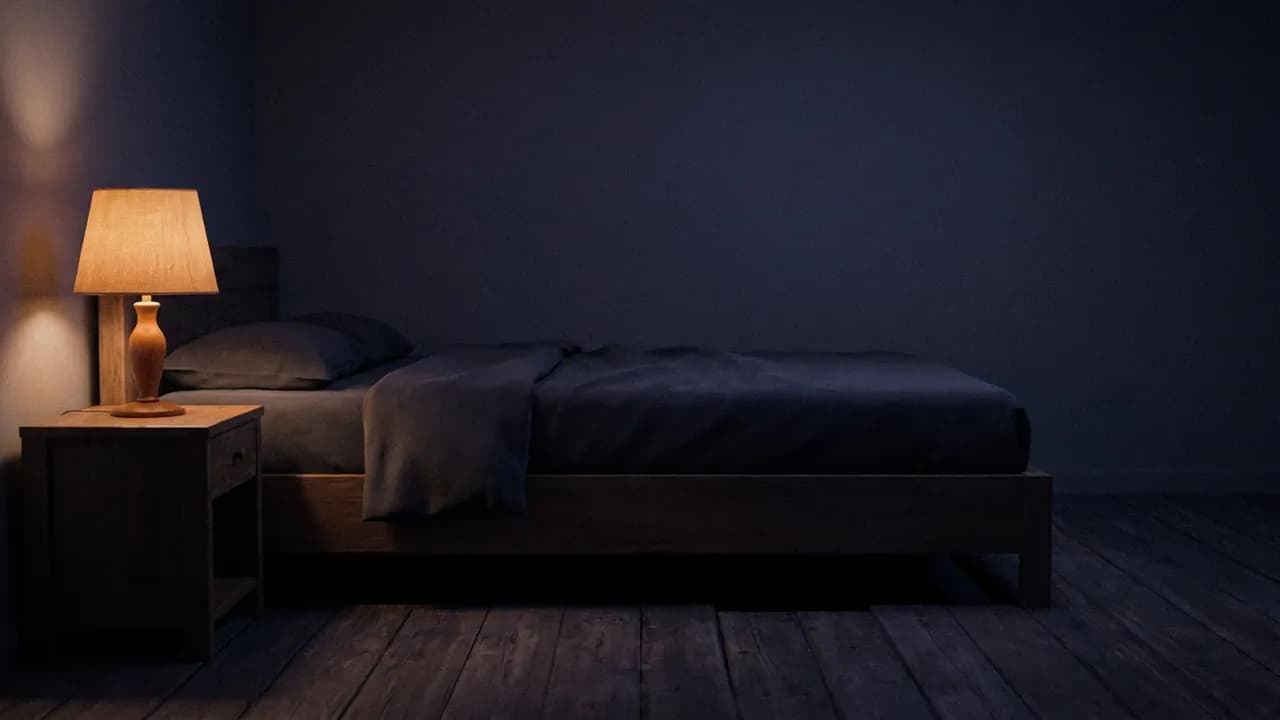
Nighttime Existential Dread: When Big Questions Arrive After Dark
Nighttime existential dread can make ordinary questions about meaning, identity, or mortality feel much larger after dark. Here are ways to make the hour smaller without pretending to solve the questions.
Read essay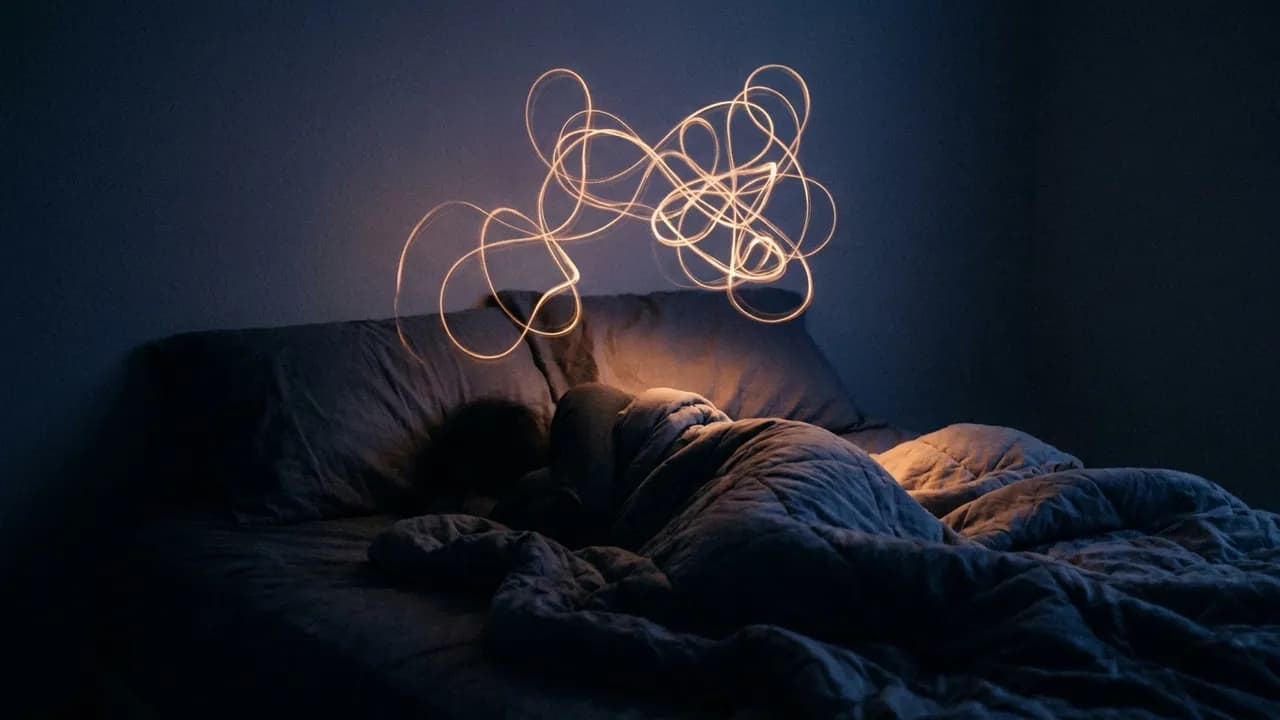
Why You Can't Shut Your Brain Off at Night
Racing thoughts at night are common. The quiet can make unfinished worries easier to notice, but it does not mean your brain is scanning for a tribe or that silence is biologically unsafe.
Read essay
Why White Noise and Meditation Apps Don't Work for Everyone
White noise, meditation, sleep stories, and other sleep apps help some people and frustrate others. The useful question is not which tool is best, but which problem you are trying to solve.
Read essay
Why We're Tired of "Optimizing" Sleep
Sleep tracking can be useful, but it can also become another score to manage. Here's how to notice when data is helping—and when it is adding pressure.
Read essay
Why We Can Feel Lonelier After the Sun Goes Down
Loneliness can feel sharper at night because the day gets quieter, fewer people are available, and there is less competing for your attention.
Read essay
Why Do You Wake Up at 3 AM Every Night?
If you keep waking around 3 AM, the clock time itself is not the diagnosis. Learn how sleep cycles, stress, environment, and health factors can contribute—and what may help you get back to sleep.
Read essay
The Science of Hyper-Vigilance: Why You Can Feel Too Alert at Night
Some people feel unusually alert, tense, or watchful at night. Here's what research on hyperarousal and insomnia can tell us—and where the simple survival-story explanations go too far.
Read essay
Self-Soothing Isn't the Whole Story: Why Connection Can Help at Night
If you find it harder to sleep alone, that does not make you immature. Self-regulation and support from other people can both matter, and neither is a test of adulthood.
Read essay
The 3.83 Night: What the Gender Sleep Gap Can—and Can't—Tell Us
In ResMed's 2025 Global Sleep Survey, women reported 3.83 nights of good sleep per week versus 4.13 for men. Here's what that gap suggests—and what it does not prove.
Read essay
Why nothing is saved.
When there is no journal history waiting for you in the morning, writing can feel less like building a record and more like putting one thought down for the night.
Read essay
Why Tonight isn't therapy.
Tonight is a consumer wellness ritual, not therapy, diagnosis, crisis support, or a substitute for professional care. Here is the boundary in plain language.
Read essay
Why some nights don't need fixing.
Not every difficult night is a problem to solve. Sometimes the most useful thing is to stop optimizing and give the evening a little structure.
Read essay
The voice you chose.
Familiarity can make an evening ritual easier to follow. That's why Tonight asks you to choose one voice instead of browsing a new one every night.
Read essay
On ritual and rhythm.
A familiar bedtime sequence can reduce decisions and make the end of the day easier to recognize. That is useful without promising that a ritual can switch sleep on.
Read essay
What the whisperers carry.
Carefully crafted AI voices, shaped by humans for warmth, pacing, and consistency. A note on the people behind Tonight's whisperers.
Read essay