

You can be surrounded by people all day and still feel lonely when the lights go out.
During the day, there are messages, tasks, conversations, traffic, work, and small interruptions. At night, many of those things stop at once.
The quiet can make absence easier to notice.
Nighttime loneliness is real, but it does not need a story about your brain searching for a tribe or your nervous system sounding an ancient alarm.
Sometimes the explanation is simpler: fewer distractions, fewer people awake, less opportunity for spontaneous contact, and more attention available for whatever you were already carrying.
Why Nighttime Loneliness Can Feel Stronger
Loneliness is influenced by social connection, expectations, mood, stress, health, life circumstances, and how available other people feel. It is not one simple biological switch.
Research by John Cacioppo and others helped establish loneliness as a meaningful social and health-related experience, but that work does not justify saying a modern bedroom brain automatically interprets darkness and solitude as predator danger.
Why Night Feels Different From the Day
At night, distractions fall away. Messages stop. Chores are finished. People may be asleep or less available.
That can make loneliness feel larger because there is less competing for attention and fewer immediate ways to change the social situation.
A fast heartbeat or racing thoughts can come with anxiety or distress, but they are not proof that the nervous system is scanning the room for another person.
The Difference Between Solitude and Loneliness
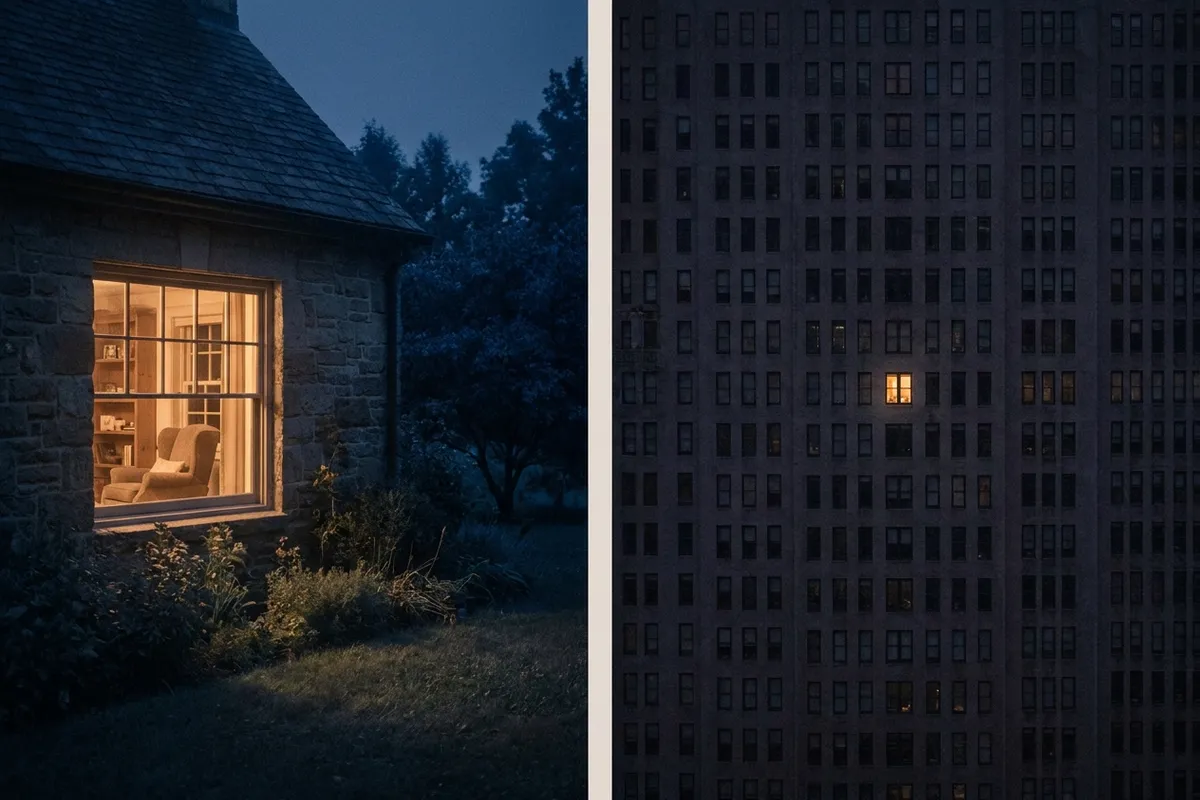
Solitude is being alone in a way that feels chosen or comfortable.
Loneliness is the painful feeling that the connection you want is missing.
You can feel peaceful alone and lonely in a crowded room. The difference is subjective experience, not whether the nervous system believes someone is "keeping watch."
Why Some Apps Can Feel Wrong for the Moment
When you feel lonely, a checklist or score can feel beside the point.
That does not mean meditation apps, podcasts, ASMR, or sleep tools inherently worsen loneliness. Some people find them useful. Others find generic content makes the contrast with real connection more obvious.
The useful question is not which category of app is biologically right or wrong. It is whether the thing you are using actually helps tonight.
What Co-Regulation Actually Means
Co-regulation refers to regulation that happens in interaction with another person. Research on social support and Social Baseline Theory is relevant to how human relationships can affect stress and effort.
An AI voice is not another nervous system and should not be described as co-regulating you. A personalized recording may feel more relevant than a generic one, but personalization is not the same thing as human presence.
Why Real Human Connection Matters
Being heard by another person can matter deeply when you are lonely. A friend who replies, a partner who listens, a family member who stays on the phone, or a therapist who understands the context can offer something an app cannot.
If what you want is to be witnessed, choose a real witness.
A digital tool can organize words, play audio, or provide a routine. It cannot know you exist in the human sense, care about what happened, or share the weight of a night.
Two Small Things to Try
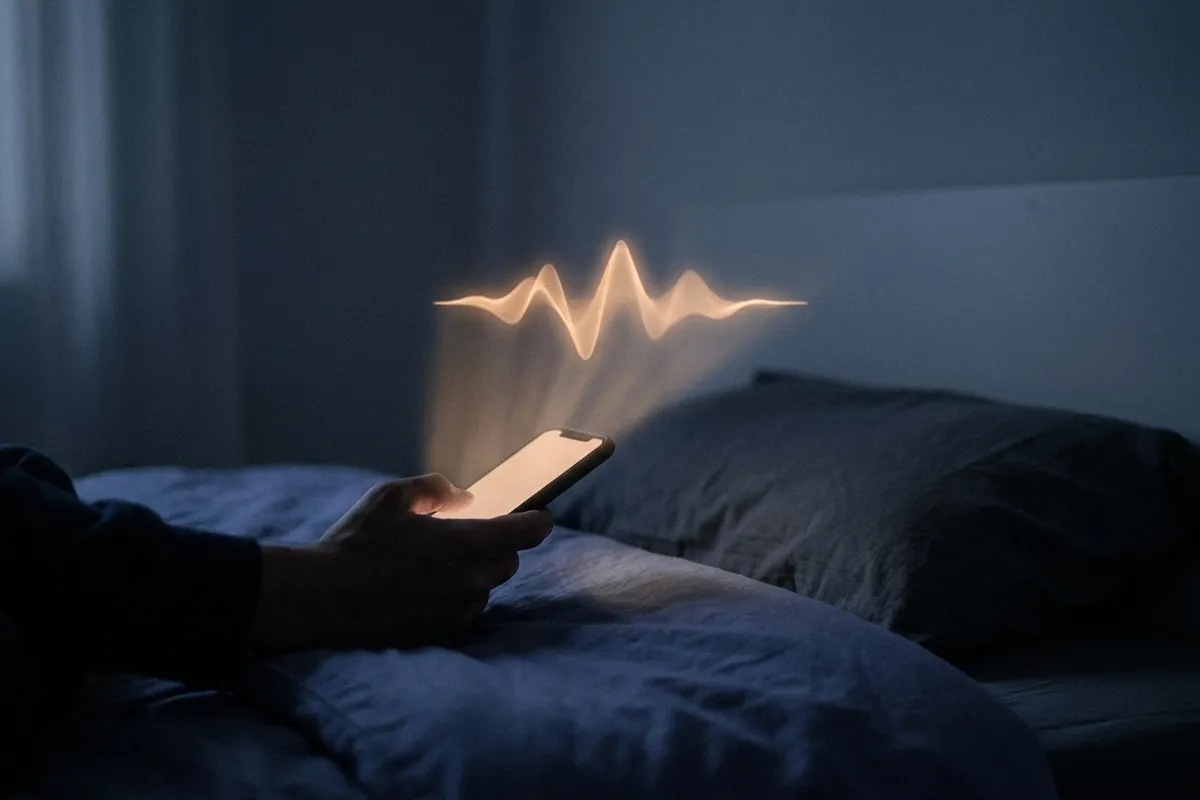
- Send a voice note to someone real. A short message to a person you trust can be more aligned with loneliness than another hour of scrolling. They may not answer immediately, but you have moved toward actual connection.
- Name the feeling plainly. Write or say: I feel lonely tonight. Affect-labeling research suggests that putting feelings into words can change emotional responding in some contexts, but it is not a universal guarantee that naming a feeling will "loosen" it.
If loneliness often appears alongside 3 AM wakeups or difficulty sleeping alone, those pieces look at related experiences without turning them into one biological mechanism.
Where a Digital Ritual Can Fit
Tonight can offer a short ritual when you do not want to scroll and would like something finite to follow.
You write one line. The system uses it to shape an AI-guided ritual. Your chosen voice can say your name and deliver prompts in a consistent tone.
That may make the audio feel more relevant to the night you are having. It does not mean you are being witnessed, accompanied, or co-regulated.
Not Another Feed
Tonight is designed as a low-light, finite ritual rather than an endless content library. That is the product difference.
It is not a substitute for a friend, partner, therapist, support group, or community.
You Are Allowed to Want People
Wanting connection is not a failure of independence.
If nighttime loneliness is telling you anything useful, it may simply be that you want more contact, more closeness, or more belonging in your life. That question deserves daylight and real people, not an evolutionary story about someone keeping watch by the fire.
If loneliness is persistent, severe, or tied to depression, hopelessness, or thoughts of self-harm, reach out to a qualified professional or crisis support. A wellness app should not be the only place you take that feeling.
Tonight can give the end of the day some structure. Human connection remains human connection.
Frequently asked questions
Why do I feel lonelier at night?
At night there are often fewer tasks, conversations, and distractions, and fewer people may be available. That can make loneliness easier to notice and harder to change in the moment. You do not need an ancient alarm-system explanation for the feeling to be real.
Is feeling lonely at night a sign that something is wrong with me?
No. Loneliness is a common human experience and can become more noticeable in quiet periods. If it is persistent, severe, or strongly affecting your life, it is worth looking for more human connection and, when needed, professional support.
What is the difference between solitude and loneliness?
Solitude is being alone in a way that feels chosen or comfortable. Loneliness is the painful sense that desired connection is missing. You can experience either one regardless of how many people are physically nearby.
Can an AI or sleep app ease loneliness at night?
A digital ritual, podcast, or meditation may give you something useful to focus on, but it is not human connection or co-regulation. If what you need is to be heard, known, reassured, or accompanied by another person, reach for a real person or appropriate professional support.