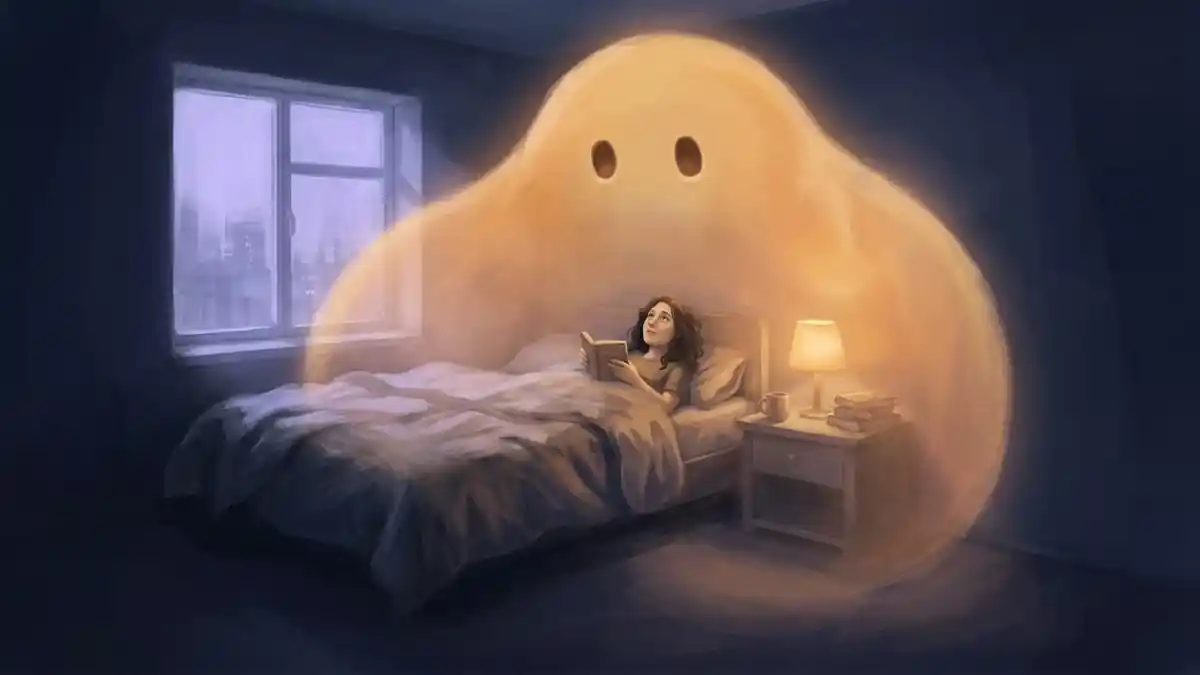

There is a confession people sometimes make to therapists, friends, partners, or anonymous forums:
"I can't fall asleep alone."
"I need someone there, or I lie awake for hours."
"I'm an adult. Why is this still hard?"
The shame usually comes from an idea that a mature adult should be able to handle every difficult night alone. That idea is too rigid.
People can learn ways to settle themselves, and people can also benefit from real human connection. Those are not opposites.
What we should avoid is turning that reasonable point into another biological certainty — for example, claiming that humans were "designed" never to sleep alone or that difficulty sleeping alone proves an ancient survival system is active.
What History and Biology Can — and Cannot — Tell Us
People in many cultures have historically slept near family or community members, and parent-infant sleep has been studied extensively by researchers such as James McKenna. Sleep arrangements also vary widely across cultures, households, ages, and periods of history.
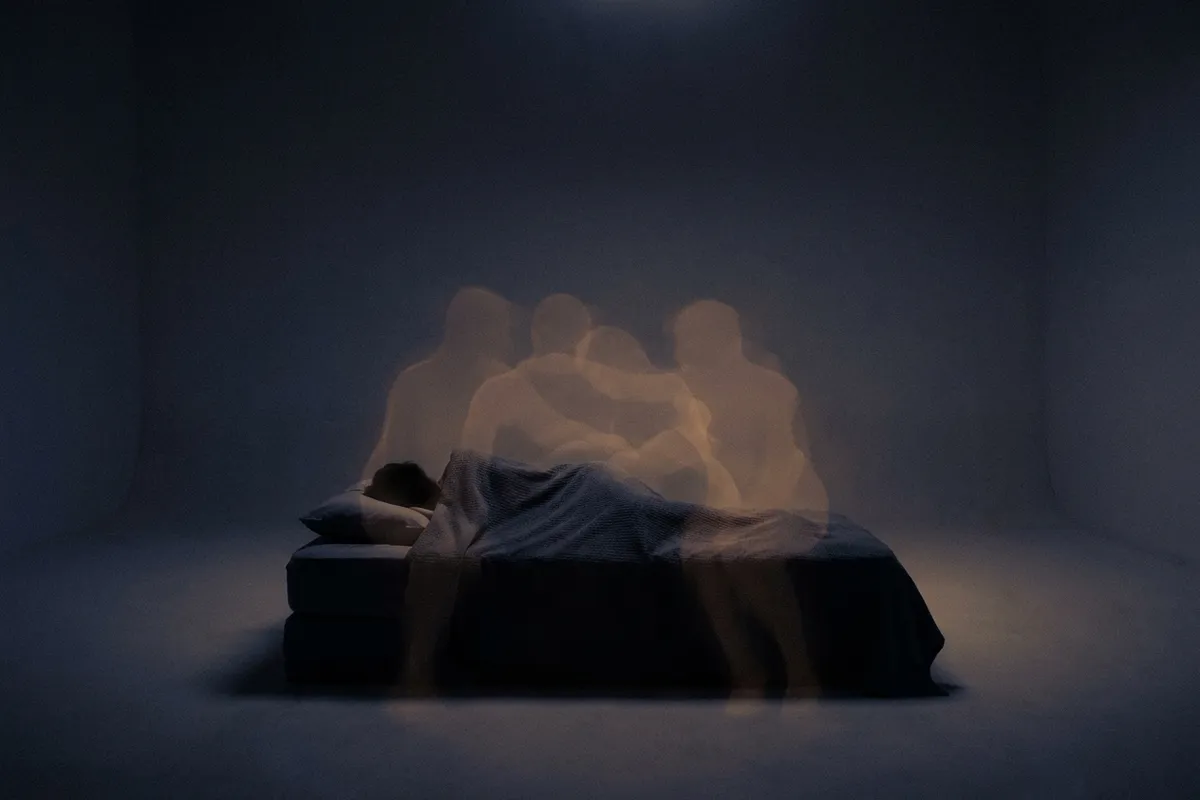
That history can remind us that solitary sleep is not the only normal human arrangement. It does not prove that modern adults who sleep alone are violating their biology, that group sleep was universal, or that insomnia while alone is an inherited memory of predators.
If you sleep better beside someone you trust, that is useful information about you. If you sleep better alone, that is equally valid.
Co-Regulation vs Self-Regulation
Self-regulation means using your own skills to manage attention, emotion, or arousal. Co-regulation is interpersonal: another real person is present and responsive, and the interaction can help both people settle.

They can support each other. A person may be good at calming themselves and still want a partner's hand, a late-night phone call, or the sound of someone they trust. Needing support sometimes does not make self-regulation a failure.
The distinction matters for technology too. An app, recording, or AI voice can provide instructions, sound, or a routine. It cannot provide co-regulation because there is no other responsive person or nervous system there. That boundary is important when reading about sleep apps and loneliness or what an AI voice can actually offer.
Why Sleeping Alone Can Feel Different
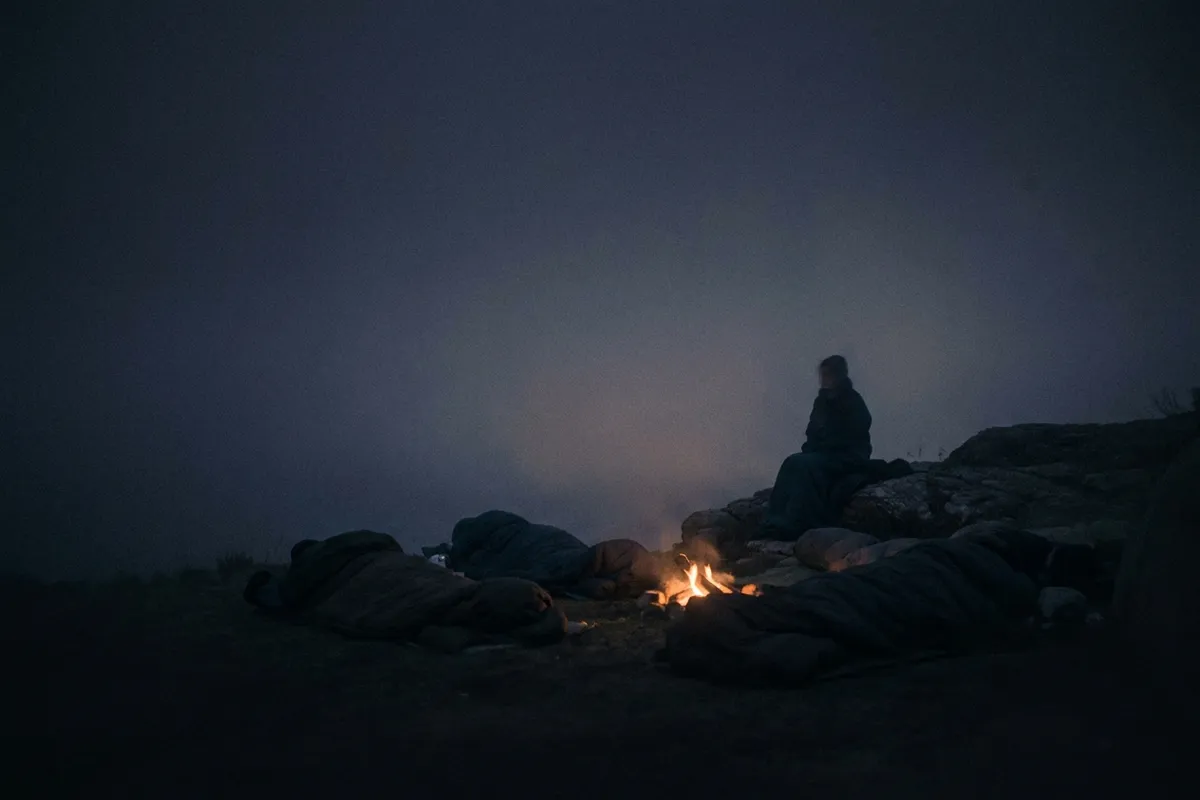
A room feels different when another person is in it. There may be familiar sound, warmth, movement, or simply the knowledge that someone you trust is nearby. Losing those cues after a breakup, move, bereavement, travel, or schedule change can make sleep feel different for a while.
We do not need a universal "night watch" story to take that experience seriously. Someone was not necessarily always awake for sleeping humans throughout history, and your brain is not known to scan the room for a missing tribe before allowing sleep.
If sleeping alone has become difficult, practical options can include a regular wind-down, a phone call earlier in the evening, familiar audio, a comfortable light or sound environment, and gradual practice with the new sleep setting.
You Do Not Have to Prove Independence at Bedtime
There is no prize for making a difficult night harder just to prove that you can cope alone.
Real people can offer real company and co-regulation. Self-soothing skills can help when nobody is available. A recorded or AI-guided ritual can provide structure or familiar sound. Each is a different kind of support.
If difficulty sleeping alone is persistent, causes significant distress, or is part of broader anxiety, panic, grief, or chronic insomnia, professional support can help. CBT-I is the best-supported behavioral treatment for chronic insomnia; therapy can also help when fear, loss, or relationship changes are central.
You may also recognize related experiences in 3 AM wakeups and the loneliness that arrives after sundown.
The useful message is not "you were never meant to sleep alone." It is simpler: needing connection sometimes is human, and learning to sleep alone can also be possible.
Frequently asked questions
Is it normal that I can't sleep alone as an adult?
Many adults find it harder to sleep alone at some point, especially after a breakup, bereavement, move, travel, or a change in routine. That does not make you immature. It also does not prove that humans are biologically unable to sleep alone. If the problem is persistent or very distressing, professional support can help.
What is the difference between co-regulation and self-regulation?
Self-regulation uses your own skills to manage attention, emotion, or arousal. Co-regulation happens between real people who can notice and respond to each other. The two can complement each other. A recording or AI voice may provide guidance or familiar sound, but it is not another person and therefore is not co-regulation.
Why is self-soothing called a myth?
The misleading idea is that a healthy adult should never need support and should always be able to settle alone through willpower. Adults can benefit from both self-regulation and human connection. What is also misleading, however, is claiming that biology proves people were never meant to sleep alone.