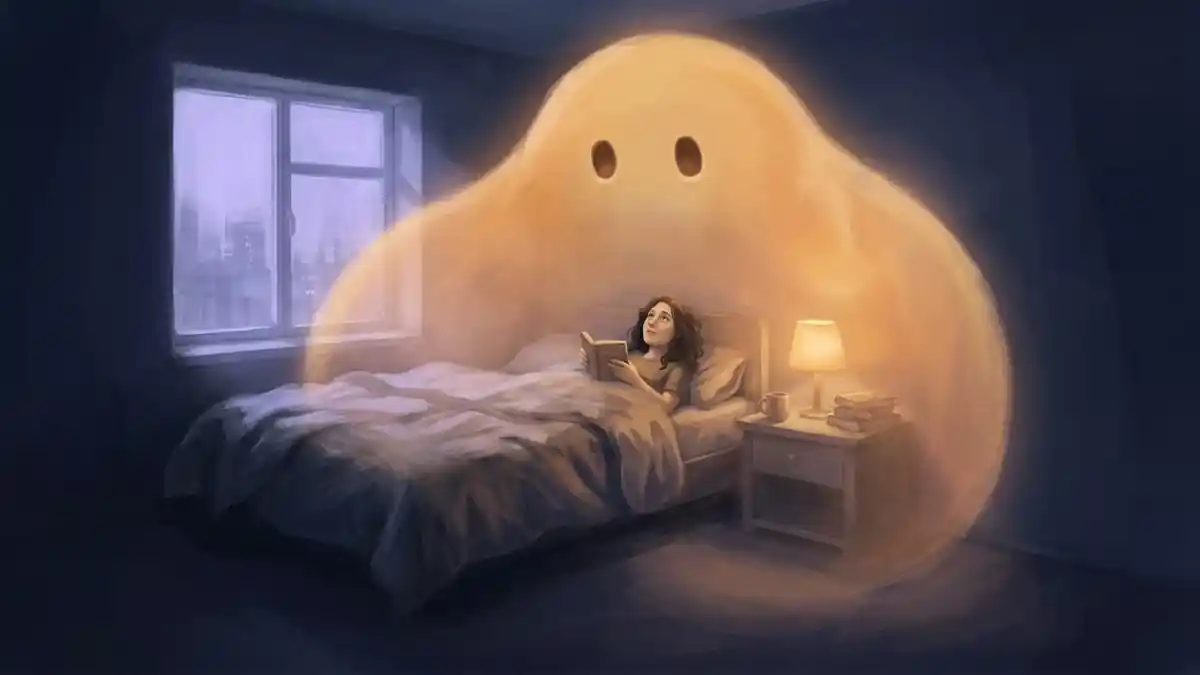
Nighttime existential dread can arrive without a dramatic panic.
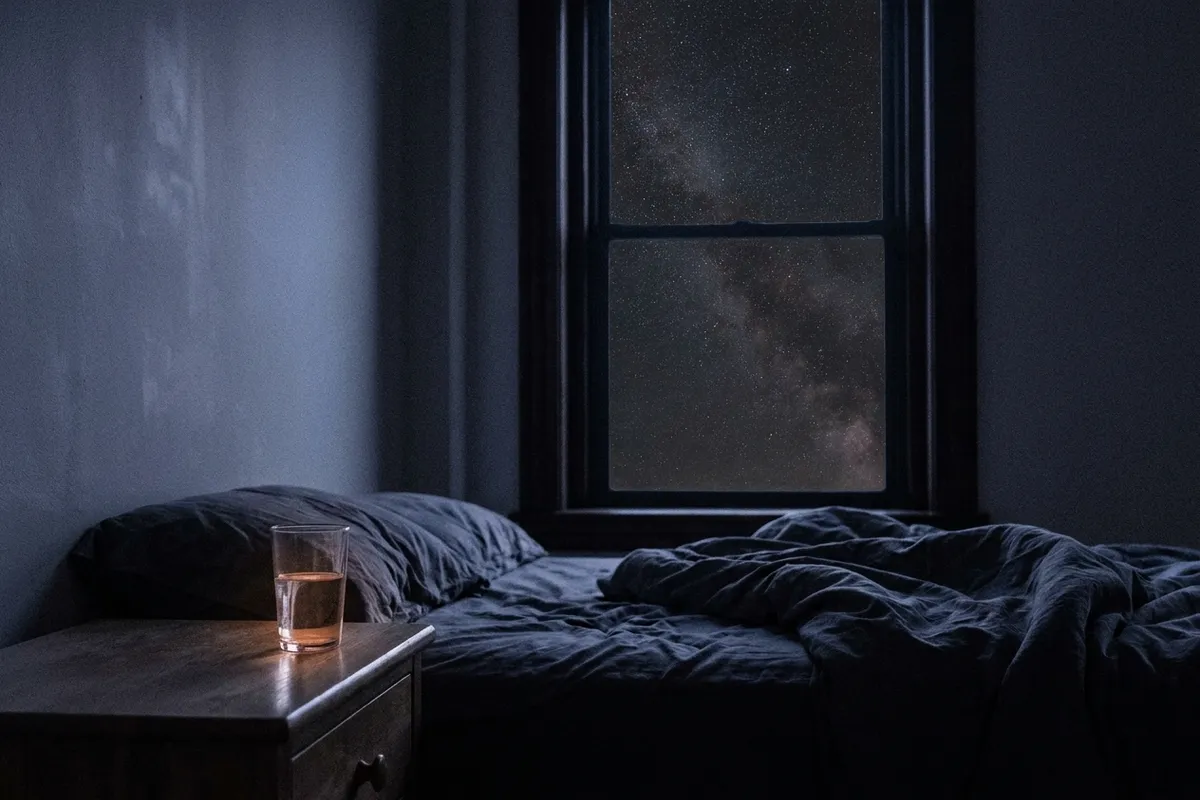
The room looks normal. The lamp is on. There is a glass of water by the bed. And then a question becomes enormous: What am I doing with my life? What does any of this mean? What happens when I die? Who am I without all the things I do during the day?
A question can be real without needing an answer at two in the morning.
You do not need an evolutionary story about cliff edges, caves, tribes, tigers, or a threat-detecting nervous system to explain why these thoughts can feel more intense at night.
There are fewer tasks, conversations, and distractions competing for attention. You may also be tired, alone with your thoughts, and less interested in the practical limits that keep big questions manageable during the day.
If what you feel is broader hypervigilance rather than philosophical dread, the science of hyper-vigilance discusses that separately.
The Bleak Hour Is Honest and Unhelpful
Existential questions are not fake because they appear at night. Mortality, meaning, identity, freedom, loneliness, and uncertainty are real subjects.
But 2 a.m. may be a poor time to demand a final answer from yourself. Tiredness can narrow perspective, and the absence of ordinary activity can make one thought take up the whole room.
When Philosophy Turns Mean After Dark
A useful question in daylight can become repetitive at night. Instead of exploring it, you may keep circling the same sentence without learning anything new.
When that happens, postpone the project rather than the feeling. You can say: This matters to me. I am not solving it now. I can return to it tomorrow when I have more perspective.
That is not avoidance. It is choosing a better time for difficult thinking.
Learning Edges Without Lying to Yourself
You do not need to convince yourself that everything is fine or that the universe suddenly makes sense.
You can simply make the next ten minutes smaller.
Name three objects in the room. Feel the mattress under your back. Put both feet on the floor. Drink some water. Notice one sound outside the room.

These actions do not defeat existential dread. They move attention from an unlimited question to a limited present moment.
What Ritual Can Offer
A familiar routine can also create an edge around the evening. Read the same few pages, write down one thought, listen to a short piece of audio, then stop.
That is the useful part of ritual and rhythm: not that ritual changes your biology on command, but that it gives the night a sequence with a beginning and an end.
Some Nights Do Not Need an Answer
You can let a difficult thought exist without debating it until dawn.
"I am scared by how temporary everything is."
"I feel small tonight."
"I do not know what I want my life to mean."
A sentence can be acknowledged without becoming a problem-solving session. Why some nights don't need fixing takes the same approach to other difficult nights.
Naming the Shape Without Filling It In
Putting a feeling into words can sometimes make it easier to handle because the experience becomes more specific.
A well-known neuroimaging study on affect labeling found changes in brain responses when participants labeled emotional facial expressions. That is interesting, but it does not prove that saying "nighttime existential dread" will quiet your amygdala or solve late-night rumination.
Use naming for the ordinary reason it can help: this is what I am experiencing right now.

Saying It Aloud Into the Dark
If speaking a sentence aloud helps, do that. You can say it to yourself, write it down, send it to someone you trust at an appropriate time, or use a digital prompt to turn it into a short guided exercise.
Tonight can generate an AI-led audio ritual from a line you enter. The AI does not understand the meaning of your fear, repeat it back "with respect," witness you, or emotionally meet you. It processes text into a temporary guided experience.
If what you need is another person's understanding, use a person rather than an AI voice.
The Day Keeps Its Contract
Morning does not solve philosophy. It often changes scale.
The same question may still matter after breakfast, but now there are other things in the room too: work, food, light, people, movement, plans. That wider context can make it easier to decide which questions deserve attention and which were simply looping.
Edges Return in Ordinary Clothes
If a question still matters in daylight, give it a real place. Journal about it. Read. Talk with a friend, therapist, teacher, or someone from a philosophical or spiritual tradition you trust. Make one concrete change if the question points to something in your life that needs changing.
If the dread is frequent, overwhelming, or tied to depression, panic, or significant sleep loss, professional support can help. And if existential thoughts turn into thoughts of suicide, self-harm, or not wanting to stay alive, Tonight is not the right level of support: contact a trusted person, mental-health professional, crisis service, emergency service, or other local urgent support appropriate to your situation.
There is no need to solve the universe before you sleep. If a brief low-screen guided routine helps you close the question for tonight, you can download Tonight.
Frequently asked questions
What is nighttime existential dread?
Nighttime existential dread is an informal description for fear or unease about meaning, identity, mortality, freedom, or the scale of life that becomes especially noticeable after dark. It is not a diagnosis. The thoughts may be important, but they do not have to be solved while you are trying to sleep.
Why does existential dread feel worse at night?
At night there are often fewer tasks, conversations, and distractions competing for attention, and tiredness can make perspective narrower. That can make one big question take up much more mental space. You do not need an evolutionary threat-scanner story to explain the effect.
How do you deal with existential dread at night?
Make the time horizon smaller. Name what you are feeling, orient to a few concrete things in the room, write down the question if you want to revisit it, and postpone the philosophical work until daylight. A familiar routine or quiet audio can be an optional way to end the loop, not a cure.
Is nighttime existential dread a sign that something is wrong?
Occasional existential worry can happen without indicating a disorder. If the dread is persistent, overwhelming, seriously disrupts sleep or daily life, or comes with depression or panic, talk with a qualified professional. If it includes suicidal or self-harm thoughts, seek real human and crisis or emergency support rather than relying on a sleep app.