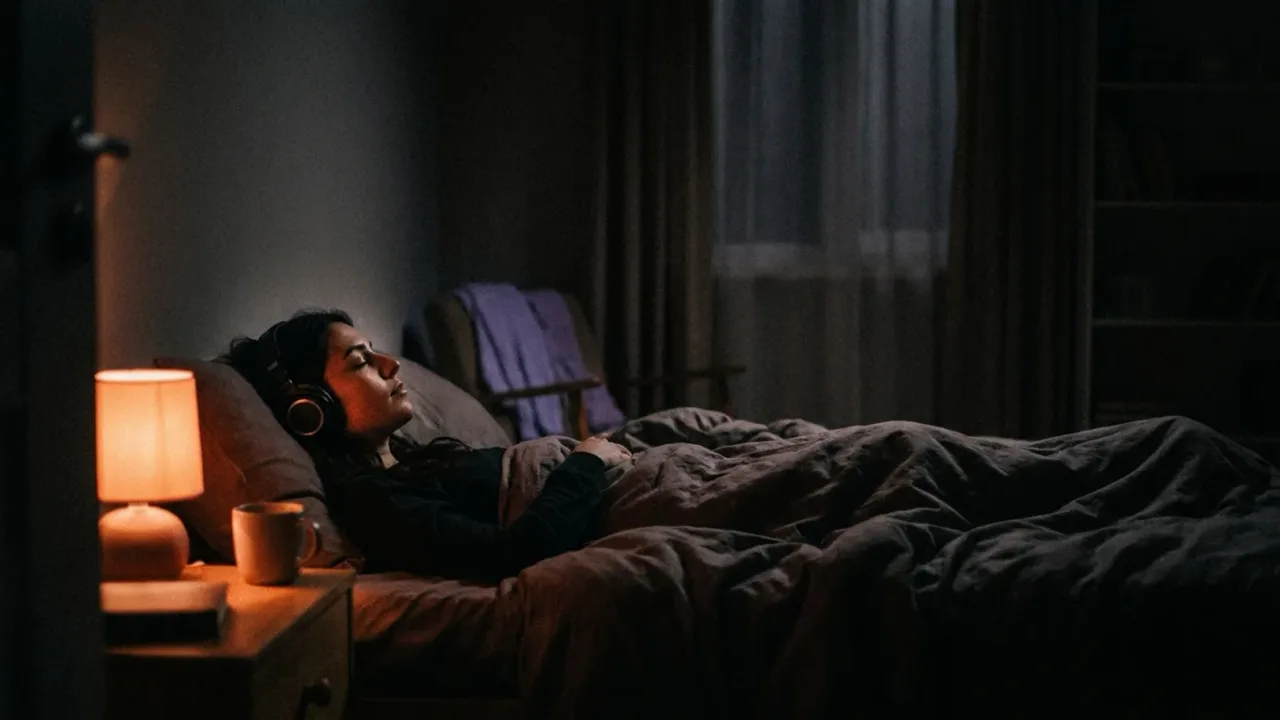

You've locked the doors. Checked the windows. The house is quiet. Yet when your head hits the pillow, your heart may feel faster, your muscles may stay tense, and every small sound seems difficult to ignore.
If you've ever wondered, "Why do I feel so alert when I'm trying to rest?" the experience is real. But it deserves a more careful explanation than "your ancient brain thinks a predator is coming."
Research on insomnia often uses the idea of hyperarousal to describe elevated cognitive, emotional, cortical, or physiological activation that can interfere with sleep.
That does not mean every restless night is the same biological state, or that one hormone, brain region, or branch of the nervous system explains it.
What Is Hyper-Vigilance?
Hypervigilance generally describes unusually intense monitoring for possible threat. It can occur with anxiety, trauma-related conditions, chronic stress, and other states, but the word is sometimes used loosely online. Feeling alert in bed does not by itself diagnose hypervigilance or any disorder.
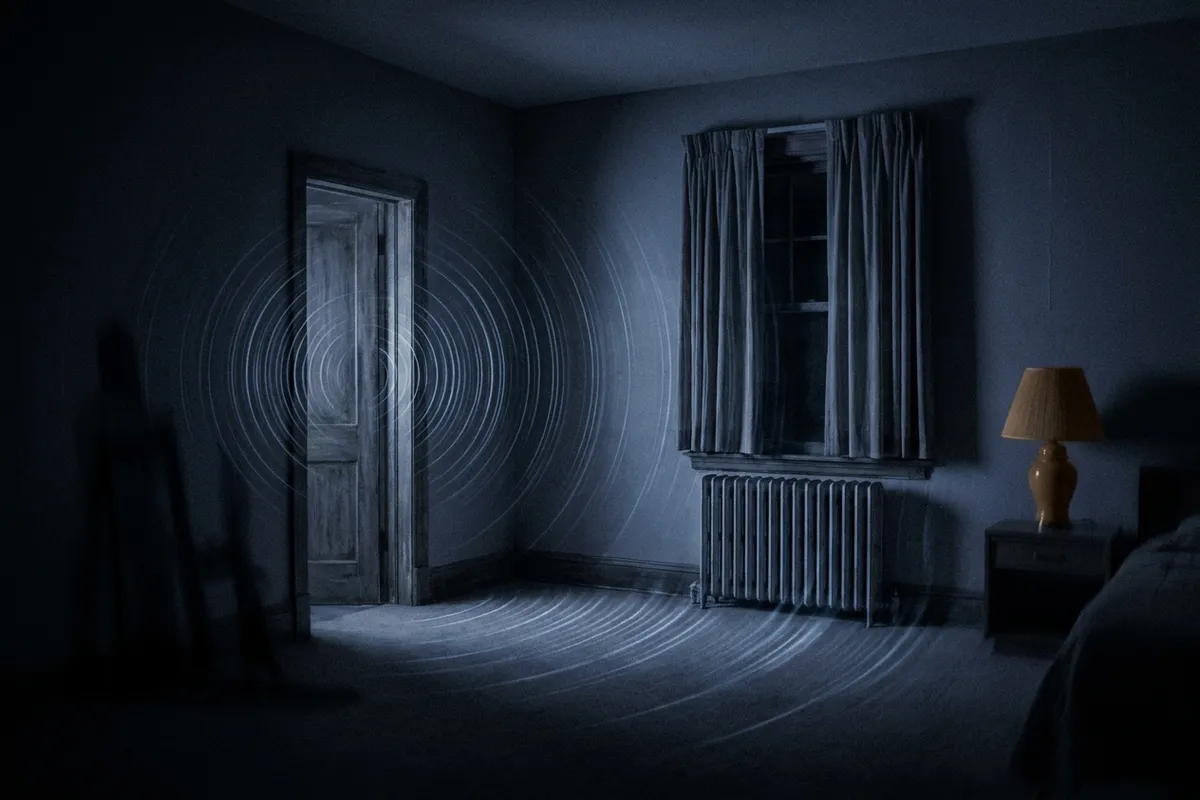
People who feel highly alert at night may notice:
- being easily startled
- difficulty relaxing muscles
- racing or intrusive thoughts
- strong awareness of sounds, shadows, or body sensations
- a persistent sense of unease
Why It Can Feel Stronger at Night
For some people, nighttime makes alertness more noticeable because there are fewer distractions and fewer ordinary daytime sounds competing for attention. Tiredness can also make worry harder to manage. If insomnia has gone on for a while, the bed itself may become associated with frustration and wakefulness.
That is different from saying the nervous system universally "refuses to stand down" after dark.
Is Nighttime Anxiety a Survival Instinct?
The simple answer is: not in the confident way this story is often told.

It is plausible that human responses to darkness and vulnerability have evolutionary roots. But that broad possibility does not prove that modern nighttime anxiety is an ancient predator-watch program switching on in the bedroom.
A Plausible Story Is Not the Same as an Established Mechanism
Popular explanations often jump from "our ancestors faced dangers at night" to "your brain is still keeping watch for predators." That is a compelling narrative, but individual nighttime anxiety can have many causes: insomnia, stress, trauma, panic symptoms, pain, medications, sleep disorders, environmental noise, or worry about sleep itself.
A useful explanation should leave room for those possibilities instead of assigning everyone the same prehistoric cause.
What Darkness Research Actually Shows
A frequently cited laboratory study found a larger acoustic startle response in darkness than in light. But importantly, darkness did not increase prepulse inhibition, which the authors used to test whether auditory attention had increased. Their interpretation was that the stronger startle likely reflected an affective response to darkness rather than sharper hearing for threats.
That finding is interesting. It does not establish that your bedroom brain mistakes every creak for a predator.
The Neuroscience Behind Feeling Too Alert for Sleep
Insomnia researchers often discuss hyperarousal, but newer reviews emphasize that it is not one single switch. Studies look at several domains: cognitive-emotional arousal, cortical activity, neuroendocrine measures, autonomic measures, and other physiological signals.
The Amygdala Does Not Simply "Take Command" at Night
The amygdala is involved in processing emotionally relevant and threatening information, among many other functions. It is too simple to call it a threat detector that becomes especially sensitive every night and takes control before the rest of the brain can respond.
For an individual lying awake, you usually cannot infer amygdala activity from the fact that a sound feels startling or a thought feels frightening.
Cortisol Is Not a Bedtime Alarm Meter
Cortisol follows a daily rhythm and is also involved in stress responses. Some insomnia studies have found differences in HPA-axis or cortisol measures at the group level, but those findings do not justify saying that each episode of nighttime alertness is caused by a cortisol spike.
A modern review of hyperarousal in insomnia also notes that evidence is not equally strong across all physiological systems. Autonomic measures such as heart rate and heart-rate variability have not produced a single conclusive pattern that explains insomnia in everyone.
So if you feel wired at midnight, "your cortisol spiked" is not a diagnosis you can make from the feeling alone.
The Autonomic Nervous System Is Not Just Two Pedals
It is common to describe the sympathetic system as an accelerator and the parasympathetic system as a brake. That can be a useful teaching shortcut, but the real autonomic nervous system is more complex. The two branches can be active in overlapping ways, and healthy sleep is not simply a state in which the parasympathetic system "wins" and the sympathetic system switches off.
The practical point is simpler: worry, tension, discomfort, noise, and frustration can make it harder to settle. You do not need to identify which branch of the nervous system is "in control" to work with those factors.
Why Can Your Body Feel Unsafe in Bed?
The feeling can be intense even when there is no immediate external danger. That does not mean the body has discovered a hidden threat. Anxiety and insomnia can both make ordinary sensations and uncertainties feel unusually important.
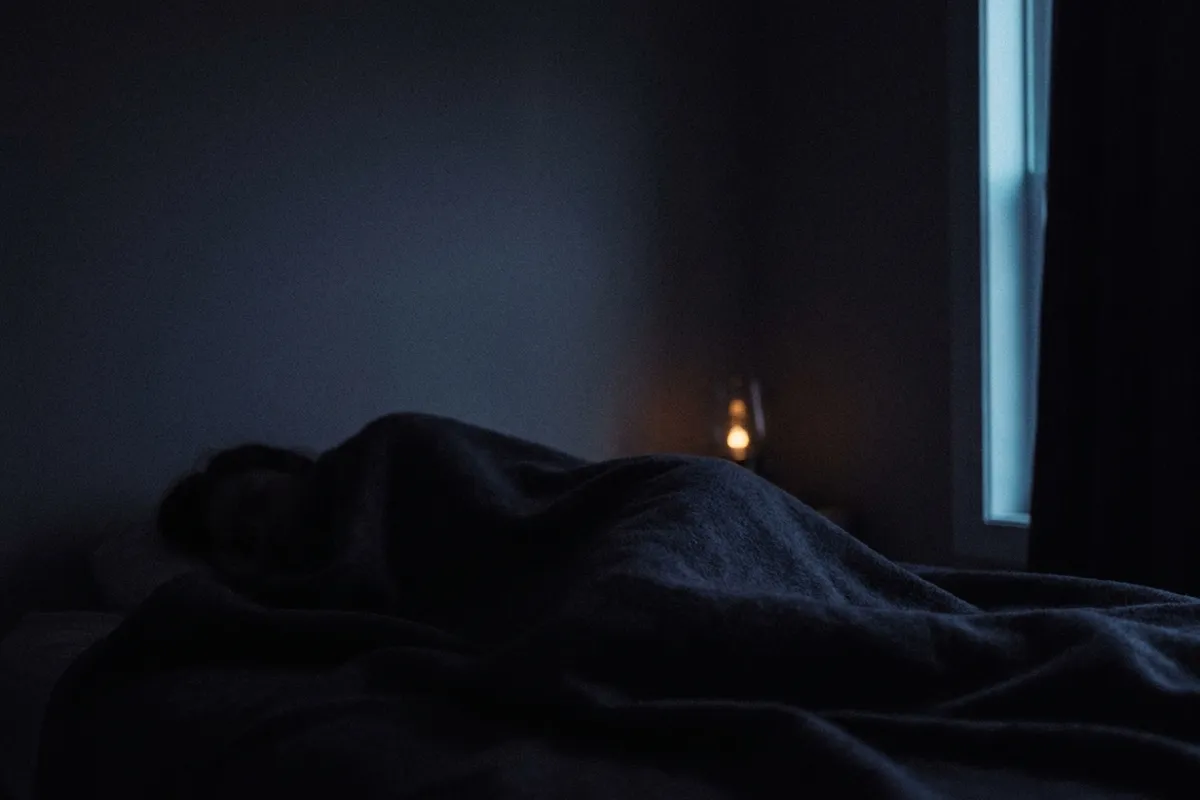
Lying Down Can Feel Vulnerable Without Proving a Primal-Fear Mechanism
Some people dislike closing their eyes, lying still, or losing awareness of the room, especially after frightening experiences. Others feel perfectly comfortable with those things. There is no need to claim that the horizontal position itself triggers an ancient survival program in all humans.
If lying down reliably brings panic, intrusive memories, or a strong sense of danger, that pattern is worth discussing with a qualified mental-health professional rather than reducing it to evolution.
Darkness Can Change How the Room Feels
Darkness removes visual information, which can make uncertain sounds or sensations more noticeable for some people. That does not mean darkness automatically activates a special threat-detection mode.
If complete darkness makes you more anxious, a very dim light may be more comfortable. If darkness helps you sleep, keep it dark. The goal is not to pass a biological safety test; it is to create a sleep environment that works for you.
Quiet Can Make Small Sounds More Noticeable
A quiet room gives small sounds less competition. A settling house, HVAC system, or distant car may therefore stand out more. The darkness-startle study often cited here did not show increased auditory attention, so it should not be used as proof that the brain sharpens hearing at night to detect threats.
If unpredictable sounds keep waking or startling you, earplugs or a steady background sound may help. Some people prefer silence.
The Bed Can Become Associated With Wakefulness
This part has a firmer place in insomnia treatment. If you spend many nights awake in bed worrying, checking the clock, working, or trying hard to force sleep, bed can become associated with wakefulness and frustration. CBT-I uses stimulus-control principles partly to change those learned associations.
That is a behavioral association, not proof that your bed has become a biological threat cue.
Feeling Safe Matters, but "Safety Signals" Are Not a Complete Sleep Theory
People generally sleep better when they are not frightened, uncomfortable, or expecting interruption. That everyday truth does not require a claim that the nervous system ignores logic and waits for special physiological safety cues.
If your home is actually unsafe, or another person is making you feel unsafe, practical safety and human support come first. If the danger feeling is coming from anxiety, trauma, or panic despite a physically safe environment, professional support may be useful.
What Can Help When You Feel Too Alert for Sleep
There is no single way to "reset" a hyper-vigilant nervous system. Think in terms of reducing avoidable arousal, making the environment comfortable, and getting appropriate treatment when the problem is persistent.
1. Try Slow Breathing If It Feels Comfortable
Slow breathing can feel calming for some people, and breathing practices can influence autonomic measures. But a long exhale is not a guaranteed vagus-nerve switch and does not prove to the brain that no threat exists.
You might try:
- inhale gently for about 4 counts
- exhale comfortably for about 5–6 counts
- continue for a few minutes without straining
Skip breathwork if focusing on breathing makes you more anxious, light-headed, or uncomfortable.
2. Make the Bedroom Comfortable and Predictable
Adjust practical things you can actually observe:
- Temperature: Keep the room comfortably cool rather than chasing one perfect number.
- Sound: Use earplugs, white noise, brown noise, or silence according to preference.
- Light: Keep the room dark or use a very dim light if complete darkness increases anxiety.
- Bedding: Choose weight and texture that feel comfortable. Weighted blankets help some people, but they are not a universal nervous-system treatment and may not be appropriate for everyone.
3. Try Progressive Muscle Relaxation
Progressive muscle relaxation (PMR) involves briefly tensing and releasing muscle groups so you can notice the contrast. It has a place among behavioral relaxation strategies, but it should be treated as an option rather than a signal that tells the body it is safe.
Use gentle tension, avoid painful areas, and stop if the exercise increases discomfort.
4. Keep the Pre-Sleep Routine Simple
A consistent routine can reduce decisions and make the end of the evening more familiar. That may include dimming lights, washing up, reading, stretching, or listening to a short guided audio.
The routine does not need to retrain ancient biology. It only needs to be repeatable and low-pressure.
5. Address What Is Actually Driving the Alertness
If the problem is persistent, look beyond generic regulation advice.
- Chronic insomnia: CBT-I is an established first-line treatment.
- Trauma symptoms or persistent anxiety: A qualified mental-health professional can assess what is happening and discuss evidence-based treatment options.
- Possible sleep disorder: Snoring with breathing pauses, severe daytime sleepiness, restless legs, or unusual nighttime events deserve medical evaluation.
- Medication, substances, pain, or medical conditions: These can also affect sleep and alertness and may need review with a clinician.
The Path Forward
Living with intense nighttime alertness is exhausting. The useful science is not a story about a prehistoric guard refusing to sleep. It is the recognition that insomnia and anxiety can involve several forms of arousal, and that the mix differs from person to person.
That gives you more useful questions to ask. Is the problem mostly worry? Body tension? Panic? Noise? Trauma symptoms? Learned frustration around bed? A sleep disorder? Medication? Pain? The answer changes what is likely to help.
Final Thoughts
Feeling too alert at night does not mean you are failing at sleep, and it does not prove that your body "doesn't trust" your bedroom. It is an experience worth taking seriously without turning it into a dramatic biological story.
If simple changes help, use them. If the problem persists, evidence-based care is more useful than trying to decode every sensation as cortisol, vagus activity, or ancient threat detection.
Tonight can be one optional part of a wind-down routine: an AI-guided, screen-free wellness ritual with carefully crafted voices. A voice may give your attention something finite to follow, but it is not human presence, co-regulation, therapy, or a treatment for hypervigilance or insomnia.
What Helps, in Three Lines
- Reduce pressure. Do not turn breathing, relaxation, or bedtime into another test you have to pass.
- Use practical cues. Make the room comfortable, limit clock-checking, and keep the routine simple.
- Get the right help. Persistent insomnia, trauma symptoms, panic, or suspected sleep disorders deserve appropriate professional evaluation.
If nighttime alertness is what's pulling you out of sleep at 3 AM, you may also want to read why your brain wakes you at 3 AM and why you can't shut your brain off at night.
Frequently asked questions
What is nighttime hyper-vigilance?
Hypervigilance generally means unusually intense monitoring for possible threat. Some people notice this most strongly at night, but feeling alert in bed does not by itself diagnose hypervigilance or any disorder. Insomnia research more broadly uses the idea of hyperarousal across cognitive, emotional, cortical, and physiological domains rather than one universal nighttime alarm state.
Why does my body feel like it's in danger when I'm in bed?
Anxiety, panic, trauma symptoms, insomnia, pain, and learned frustration around sleep can all make a physically safe bedroom feel uncomfortable or threatening. Lying down or closing your eyes may feel vulnerable for some people, but there is not good evidence that every person has an ancient predator-watch program that automatically activates in bed.
Why can hyper-vigilance feel worse at night?
There are often fewer distractions at night, so worries, body sensations, and small sounds can become more noticeable. Darkness can also make uncertain sounds feel harder to interpret. Research does not support reducing this experience to a universal nighttime cortisol spike, extra-sensitive amygdala, or sharpened auditory threat detection.
How do you calm a hyper-vigilant nervous system for sleep?
There is no single nervous-system reset. Some people benefit from comfortable slow breathing, progressive muscle relaxation, a predictable routine, less clock-checking, or a quieter sleep environment. Persistent insomnia is best addressed with evidence-based care such as CBT-I, while trauma, panic, anxiety, or possible sleep disorders may need their own professional evaluation.