Written by the Tonight team — the people who shape and refine the Whisperers.
The voices you hear at night are AI voices. Behind them sits a small team of humans who work on cadence, pauses, pronunciation, tone, and the words that will be spoken in each ritual.
The difficult part is making a synthetic voice feel carefully made without pretending it is a person.
The responsibility behind the voice
One Thought can contain something personal: worry about a parent, fear about tomorrow, grief, work, or a sentence someone has not said aloud.
The system can use those words to shape a ritual. That does not mean the voice understands what happened, knows the person who wrote it, or feels the weight of the story.
The human responsibility sits elsewhere: in designing the product so the language stays respectful, the voice stays clear about what it is, and sensitive moments are not turned into false intimacy.
Care in the design does not make the AI a caring person.
Speaking without pretending to listen
The Whisperers are AI voices. They do not hear you, remember you, worry about you, or wait for a response.
The people who build them also do not sit inside each ritual listening to what a user wrote. Their job is to shape the system, scripts, guardrails, pacing, and voice quality before the audio reaches someone at night.
We often do not know whether a particular ritual helped. That uncertainty is a reason to keep the product claims modest: a voice can guide a finite ritual; it cannot promise sleep, understanding, or human connection.
Why we made them this way
We could have used a flat, generic synthetic voice. It would have been faster and cheaper.
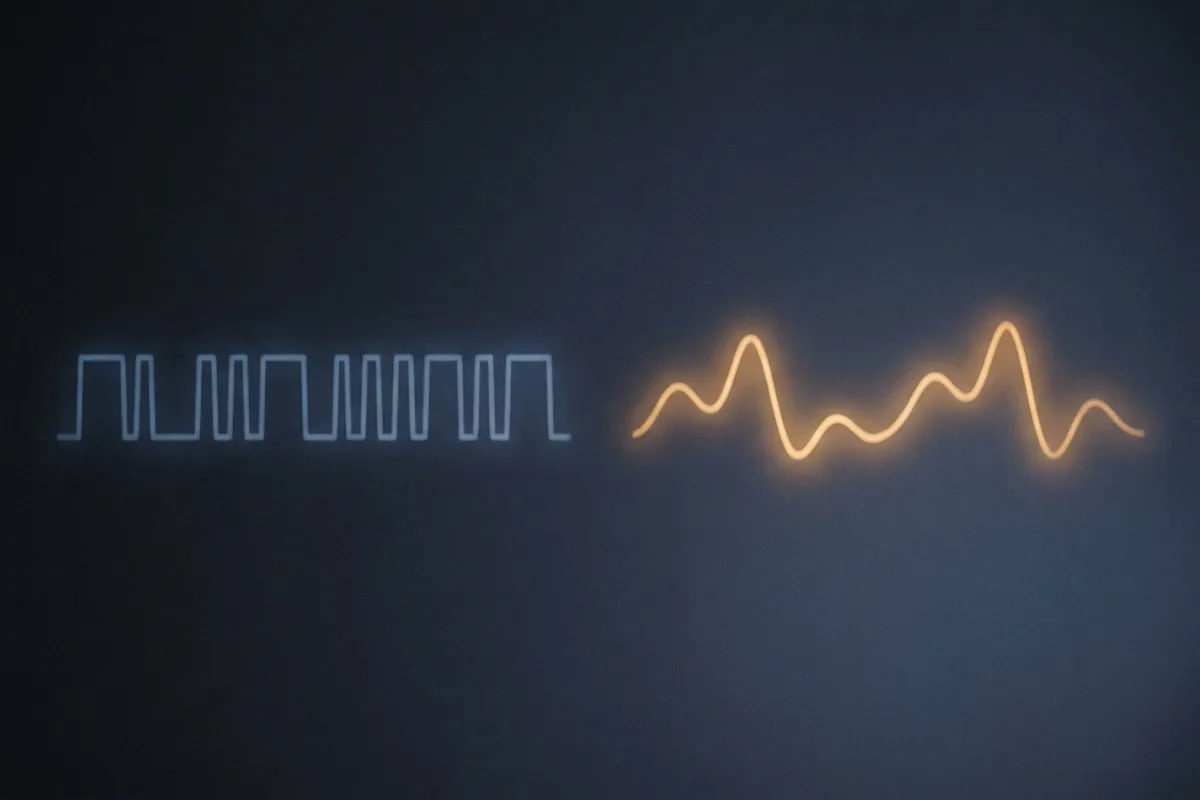
But voice design matters to the experience. A rushed cadence, strange pronunciation, or overly bright delivery can make a nighttime ritual harder to follow. So we work on warmth, slowness, clarity, and consistency — qualities a synthetic voice can have without becoming human.
This is what the Whisperers carry: not intimacy or presence, but the result of deliberate voice design.
The rest of the architecture — the same voice every night, the nightly ritual, nothing saved by morning — depends on the same idea. The technology should stay honest about being technology, while the people building it take care with how it sounds.