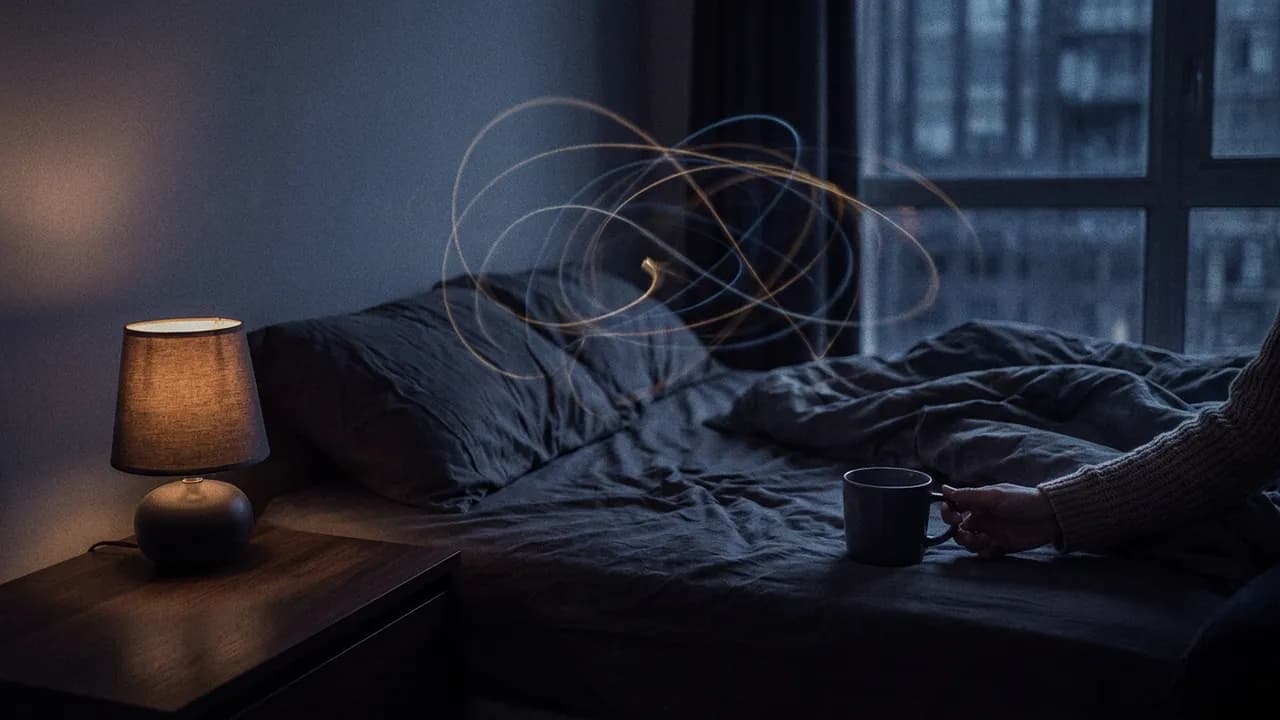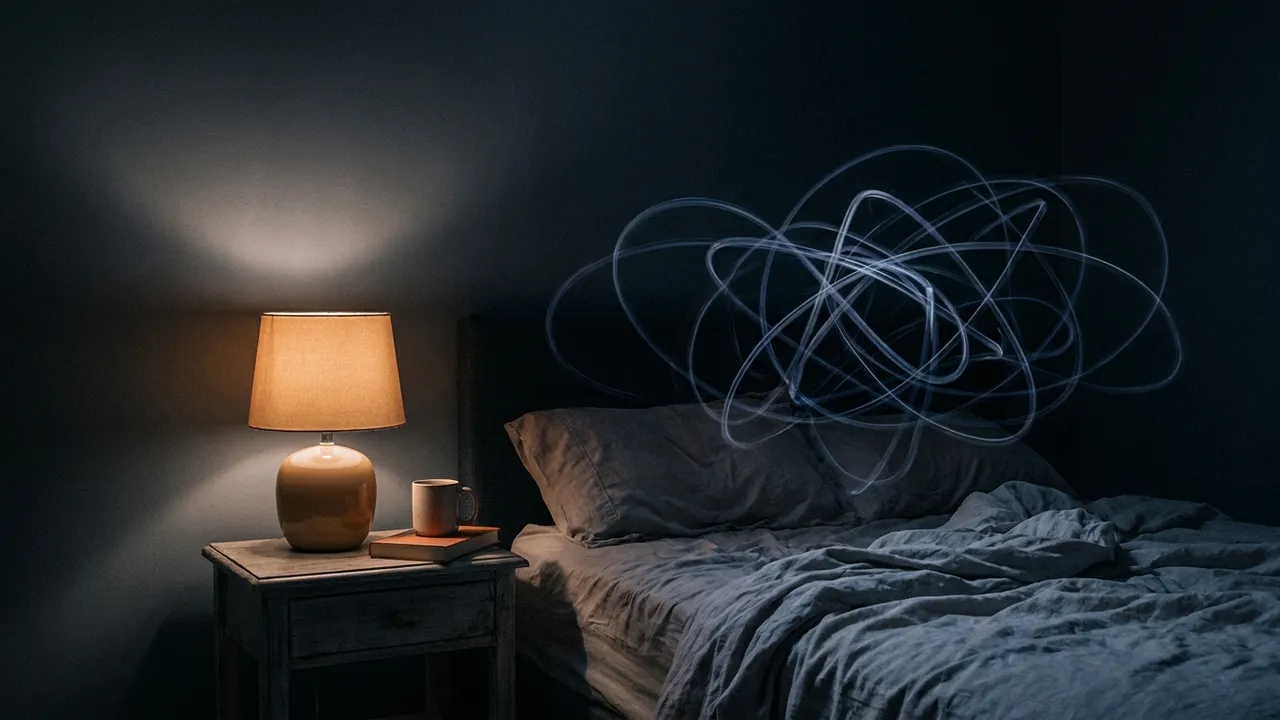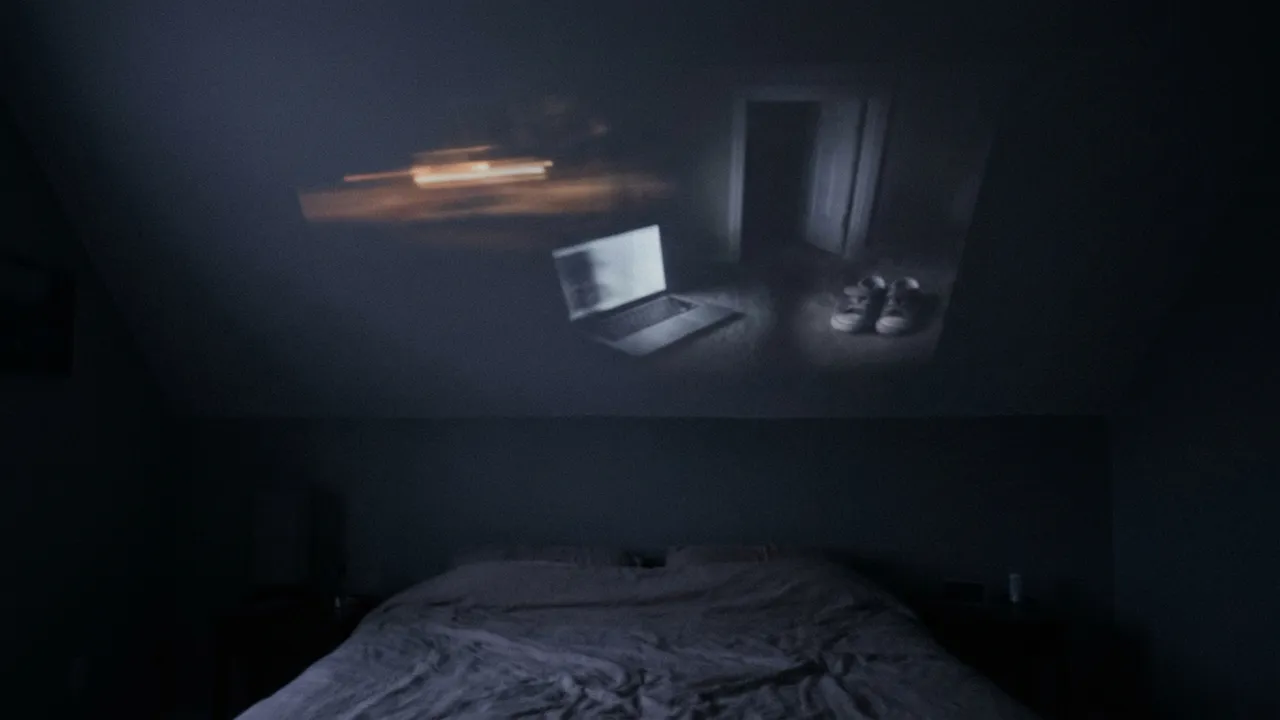
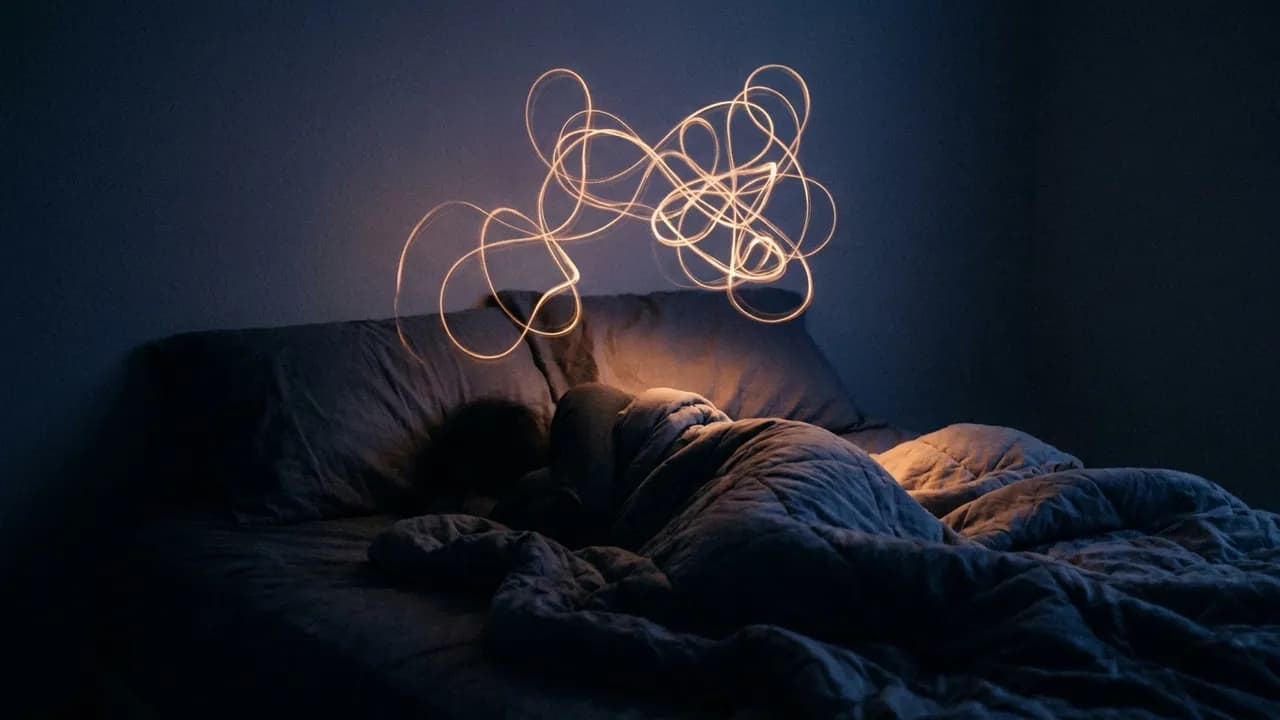
It's 2:14 AM. The room is dark. You are exhausted, but your mind is still working.
You're replaying the email you sent. Rehearsing tomorrow's conversation. Remembering something embarrassing from years ago. Calculating how many hours are left before morning.
A busy mind at night is common, and it does not automatically mean you are hyper-vigilant, unsafe, or missing another person's presence.
Often there is a simpler pattern: the day gets quieter, there are fewer tasks competing for attention, and thoughts that were easy to postpone become harder to ignore.
The 3 AM Loop
A nighttime loop can start with almost anything: a task you forgot, worry about tomorrow, frustration about being awake, or a physical sensation that catches your attention.
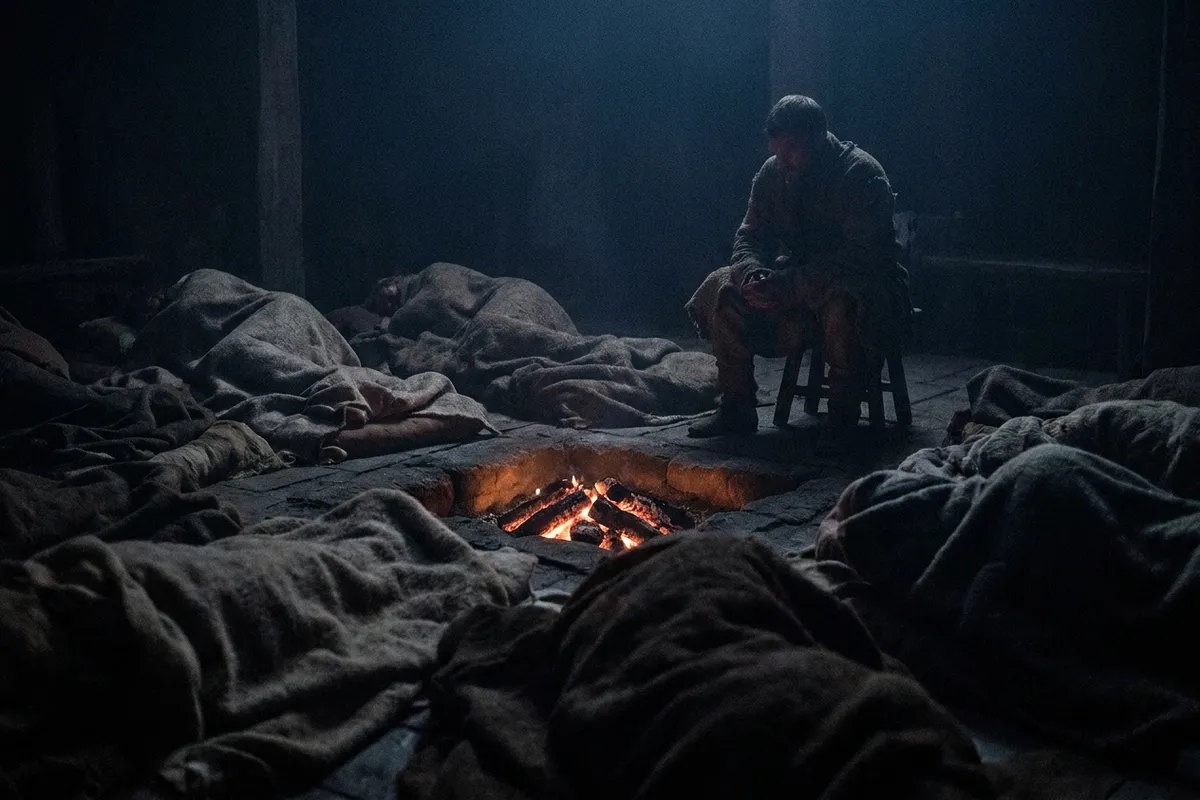
The Hadza study sometimes cited as evidence for a human "sentinel system" found that variation in chronotypes meant somebody in the observed group was usually awake. It does not show that each sleeping brain keeps watch for the tribe or that modern silence is interpreted as danger.
When Silence Leaves More Room for Thought
Silence can feel peaceful to one person and uncomfortable to another.

If silence makes thoughts louder, that may simply be because there is less competing for attention. You do not need to treat the room as biologically unsafe.
Why Being Heard Can Help—And What It Does Not Mean
Talking to another person can reduce loneliness, help organize a problem, or give you perspective. Human relationships can influence stress and emotion.
Co-Regulation Is Human Interaction
Co-regulation describes regulation that occurs in interaction with another person. It should not be transferred onto an AI voice.
Polyvagal Theory is also not a settled explanation for why a warm voice calms a person, and it is too strong to claim that vocal frequencies activate middle-ear muscles, signal the vagus nerve that the environment is safe, lower cortisol, and switch off a vigilance center.
A calm recording may still be pleasant or useful. That is enough of a claim.
A Real Witness Is a Real Person
If you need to be heard, a real listener matters in a way a recording cannot reproduce.
A podcast can distract. A meditation can guide attention. A friend can actually hear you. Those are different functions, and none is automatically better for everyone.
Tonight should not call an AI voice a witness. The system can use your input to shape audio; it cannot see, understand, or hold your experience.
Self-Soothing Is Not a Myth
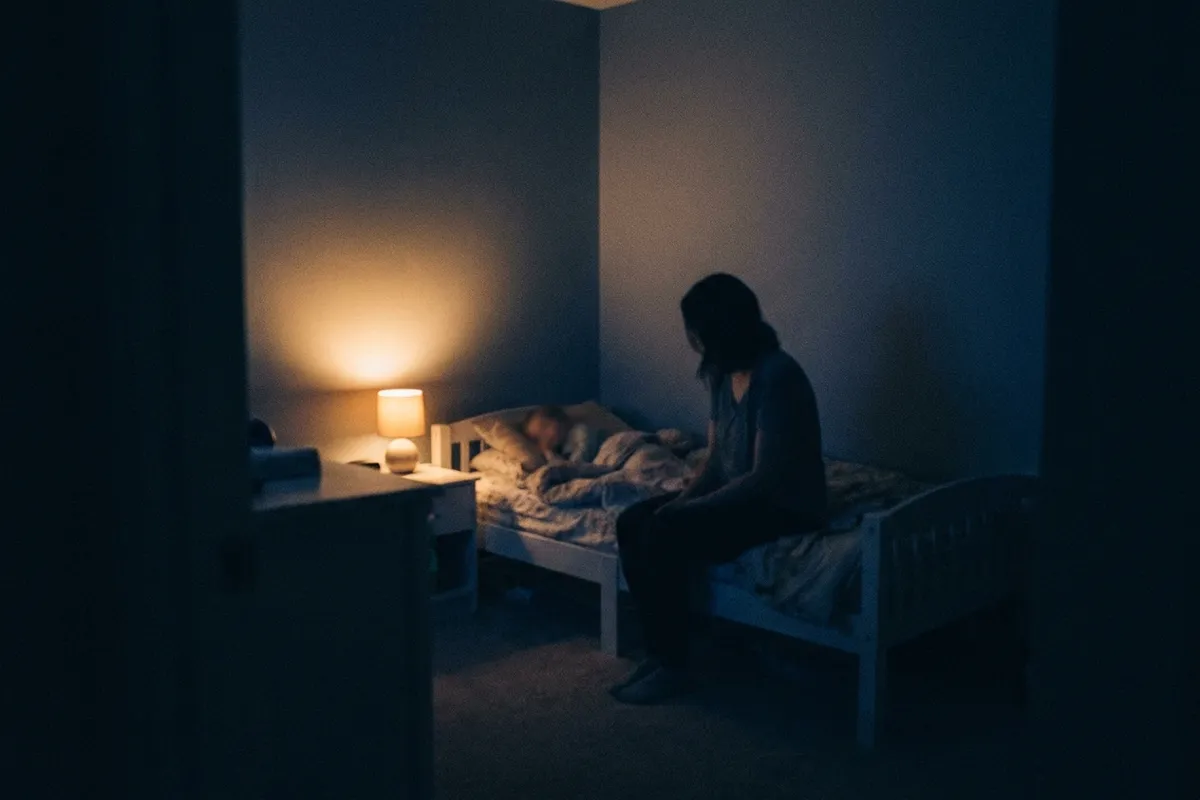
People can learn and use self-directed ways of regulating emotion and arousal. Human support can also help. These are not opposites.
Containment Has a Specific Meaning
In psychotherapy, containment can refer to ways emotional experience is processed and held within a therapeutic relationship. That concept should not be used as a loose biological explanation for why an app works.
Why Self-Soothing Can Feel Hard at 3 AM
When you are tired, anxious, and frustrated, any coping skill can be harder to remember or use. That does not mean the nervous system "knows it is alone" and refuses to stand down.
Sometimes a self-directed technique helps. Sometimes talking to someone helps. Sometimes the best next step is simply reducing stimulation and waiting for sleepiness to return.
A Few Things That May Quiet the Loop
- Write down the one thing you keep rehearsing. If it is a task, add the next action for tomorrow. If it is a worry, write it plainly without turning the page into a full analysis session.
- Use comfortable breathing if it helps. A slower pace or slightly longer exhale can feel calming for some people. There is no universal 4-in/8-out safety signal, and you can stop if breath focus makes you uncomfortable.
- Give attention something neutral. A quiet sound, a few pages of a book, or a simple imagery exercise can be easier than fighting thought directly. White noise and meditation help some people and not others.
- If you wake around 3 AM, do not over-interpret the clock. See why repeated 3 AM waking can happen.
Against Turning Night Into a Project
Sleep gets harder when every minute becomes something to evaluate.
If a thought is genuinely worth remembering, put it somewhere. A small Baylor laboratory study of 57 healthy young adults found that writing a specific to-do list before bed was associated with faster sleep onset than writing about completed tasks. That is interesting, but it is one small study—not proof that writing reliably fixes insomnia.
You might also like why some nights don't need fixing and why nothing is saved.
The Body Matters Too
Sometimes thoughts are only part of the problem. Light, temperature, pain, alcohol, caffeine, medication, reflux, breathing problems, or other physical factors can affect sleep.
Evening room light can suppress melatonin under experimental conditions, but one study showing that effect does not mean ordinary light is the cause of every restless night.
Make practical changes that help: dim the light, cool the room if you are hot, turn the pillow, drink some water, or stop working.
Sleep loss can also affect mood and social behavior, but do not turn every research association into a reason to panic about one bad night.
A Small Ritual of Release
If you are stuck in a loop tonight, you do not need to force silence.
Try giving the end of the day a small shape: one thought, one next step, one short audio, then stop working on the problem.
This is where Tonight can fit.
It is an AI-guided evening ritual with voices carefully curated by humans. It is not a meditation app, therapist, friend, witness, or co-regulating person.
The Release
You write one line about what is on your mind.
The Reading
The system uses that line to shape a ritual. A selected AI voice delivers it.
The Return
Your name may be spoken and the content can reflect the topic you entered. That personalization does not mean the AI understands or acknowledges you as a person.
A familiar audio sequence may give you something finite to follow. It does not replace the safety of human presence or guarantee that you will fall asleep.
When the Problem Is Bigger Than Tonight
If racing thoughts are frequent, severe, tied to significant anxiety, or part of chronic insomnia, seek appropriate professional care. CBT-I is an established first-line treatment for chronic insomnia.
If what you need is human reassurance, reach for a human being.
Tonight can offer one small wellness ritual at the end of the day. It cannot hear you, know you, or stay with you until you sleep.
Frequently asked questions
Why can't I shut my brain off at night?
At night there are fewer tasks and distractions competing for your attention, so worries, memories, and unfinished plans can become more noticeable. Frustration about sleep can add another loop. This does not automatically mean hypervigilance or an ancient sentinel response.
Why does silence make racing thoughts worse at night?
For some people, silence leaves more attention available for internal thoughts. Other people find silence calming. The response is individual, and there is no good evidence that a quiet room is universally read by the brain as dangerous isolation.
Does self-soothing help with 3 AM anxiety?
It can. Comfortable breathing, grounding, writing down a task, or redirecting attention may help some people. Human support can also help. If anxiety or insomnia is persistent, evidence-based professional care is more appropriate than treating self-soothing or companionship as the one missing biological mechanism.
How does being heard calm a racing mind at night?
A real conversation can reduce loneliness, organize a worry, and provide social support. That is human interaction. An AI or recorded voice may provide useful structure or a calming sound, but it is not a witness or another nervous system and should not be described as co-regulation.