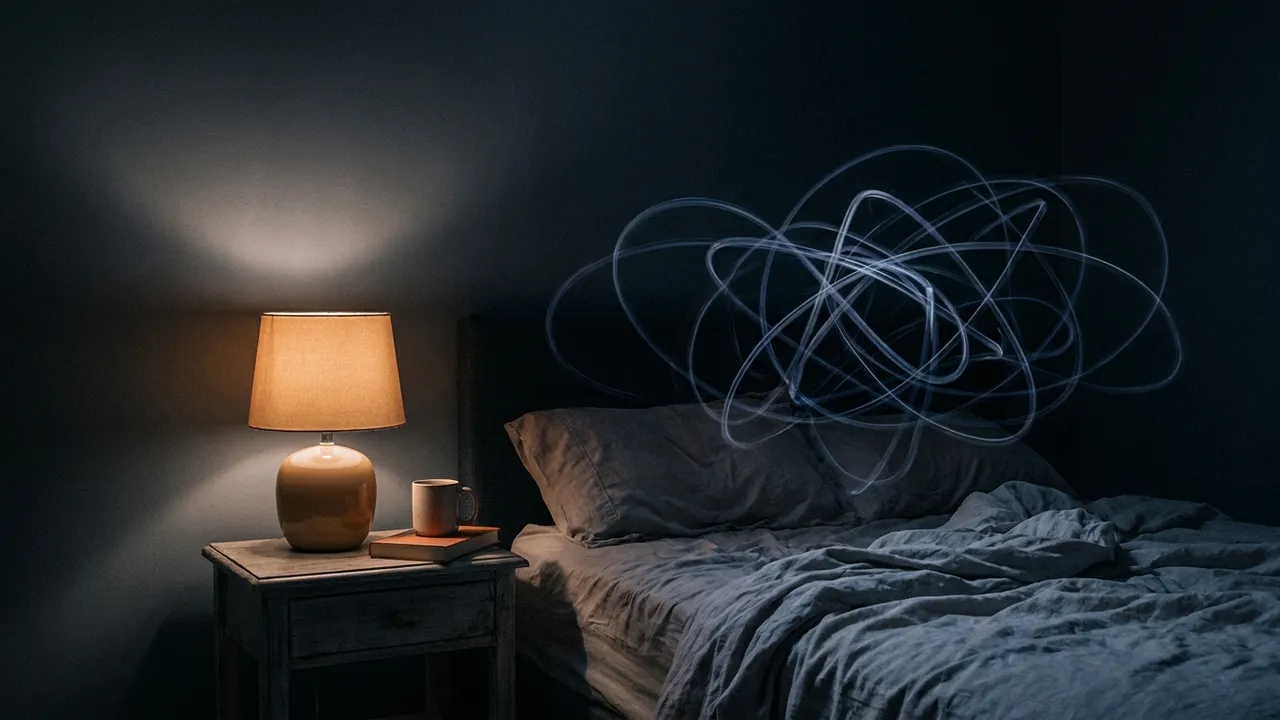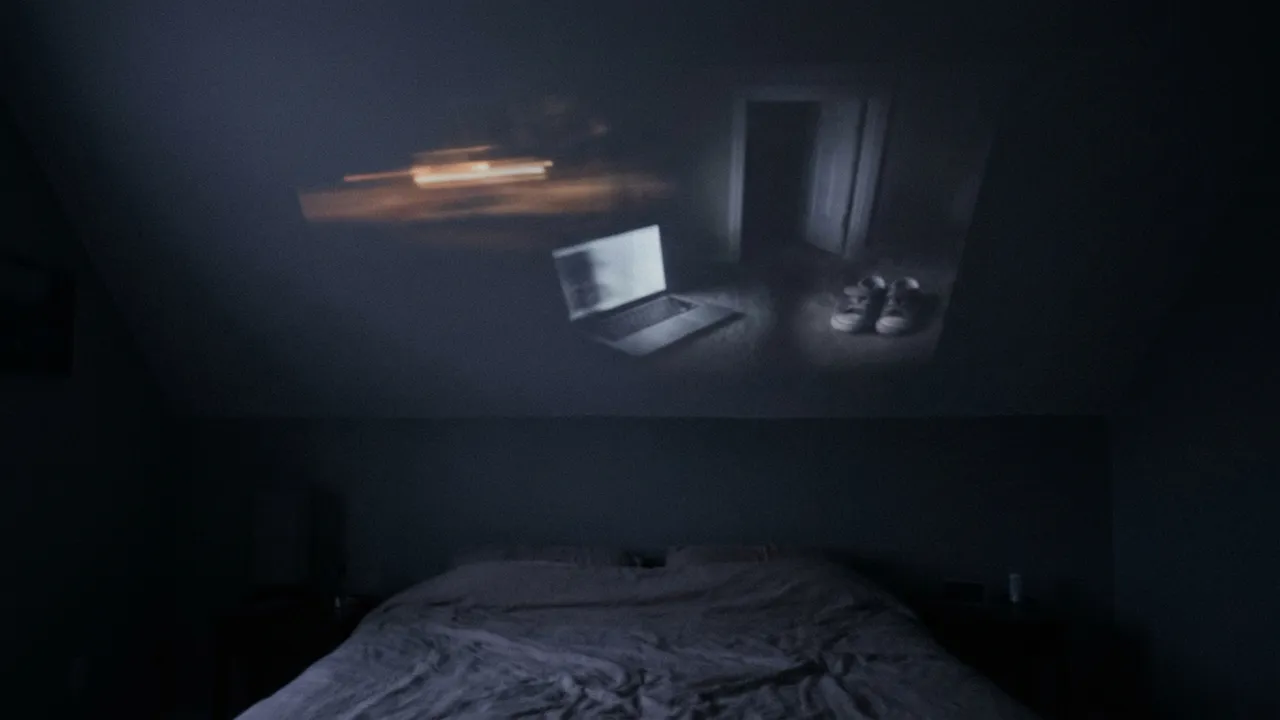
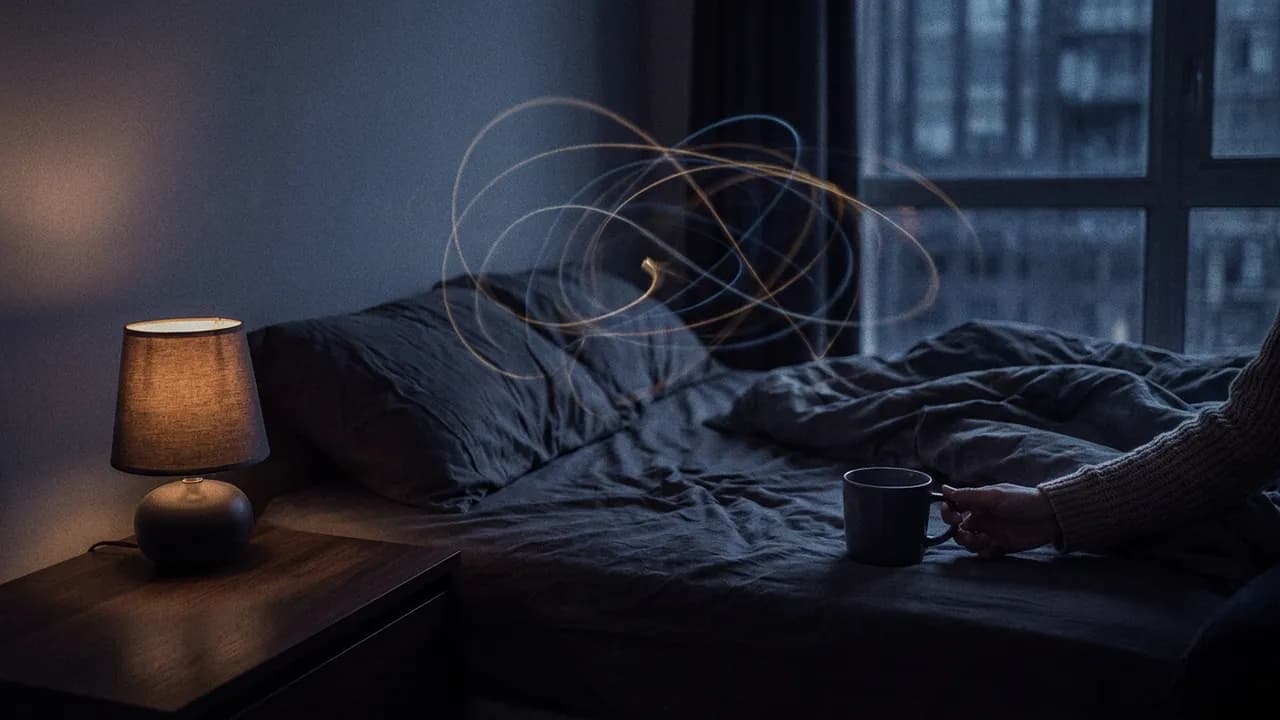
The room changes after dark. The emails slow down. The house gets quieter. There are fewer things asking for your attention.
For some people, that is when worry gets louder.
A concern that felt manageable at 2 p.m. can feel enormous at 11:47. A sentence from weeks ago comes back. A bill, a symptom, a silence from someone you love, tomorrow's meeting — all of it can feel closer when there is less else to focus on.
There is no single reason anxiety feels worse at night. Fewer distractions, mental fatigue, stress, caffeine or alcohol, learned associations with bedtime, and the simple fact that bodily sensations are easier to notice in a quiet room can all contribute.
If anxiety repeatedly disrupts your sleep, it is worth treating it as a real problem rather than a personal failure. But a difficult night does not tell you that your brain is detecting hidden danger or that one hormone or brain region is to blame.
When the Sun Goes Down, Worry Can Get Louder
During the day, tasks, conversations, movement, and other demands compete for your attention. At night, some of that structure disappears.
Then Night Removes the Scenery
When there is less outside input, thoughts that were easy to postpone can move to the front. That does not mean night has made them more true. It means you have more room to notice them.
What Nighttime Anxiety Feels Like in the Body
Nighttime anxiety can show up as racing thoughts, a tight chest, a noticeable heartbeat, stomach discomfort, tingling, restlessness, or a sense of dread. Those sensations can be frightening, but they are not specific enough to diagnose a cause on their own.
If you wake with a racing heart, it is reasonable to orient yourself, slow down, and notice what else is happening. But new or severe chest pain, fainting, severe shortness of breath, or a new irregular heartbeat deserve prompt medical attention. Repeated nighttime episodes are also worth discussing with a clinician.
The Loneliness of the Dark
Anxiety can also feel more private at night. Other people may be asleep, messages slow down, and the room can feel cut off from ordinary daytime life. You can even feel lonely beside a sleeping partner. We wrote more about that experience in why we feel lonelier after the sun goes down.
A sense of doom can feel very convincing. It is still a feeling, not a prediction.
Night can make fear feel louder. It does not make fear more accurate.
Why Anxiety Can Feel More Intense at Night
Quiet Leaves More Room for Internal Thought
The brain has networks involved in internally focused thought, including the Default Mode Network. Research links these networks with many processes such as memory, self-reflection, and mind-wandering. But it is too simple to say that the DMN "turns on at night" and causes rumination.
For everyday purposes, the clearer point is this: when external tasks fall away, you may notice your own thoughts more. If you are already worried, that extra mental space can become repetitive thinking.
Darkness Can Change What You Notice
An older laboratory study in Biological Psychiatry found that darkness increased the human startle reflex in the conditions tested. That is interesting evidence that lighting can influence arousal. It does not prove that everyone's brain becomes an evolutionary night watchman after sunset, or that darkness is the reason for your anxiety.
Environment matters in more ordinary ways too. A quiet room can make a creak, heartbeat, or passing car easier to notice. If you are already anxious, those sensations may grab attention quickly.
Sleep Loss Can Affect Emotional Reactivity
Sleep loss can also affect how the brain responds to emotional information. One frequently cited study found greater amygdala reactivity to negative images after sleep deprivation. That does not mean the amygdala is an "alarm system" that explains nighttime anxiety in every person, but it does support a simpler idea: being very tired can make emotional regulation harder.
Cortisol also follows a daily rhythm and is involved in stress responses. Stress can affect that rhythm, but you cannot tell from a worried night whether your cortisol is high, and a cortisol explanation is not necessary to take the anxiety seriously.
Night anxiety is usually better understood as a mix of context, thoughts, habits, bodily sensations, stress, and individual health rather than one hidden biological cause.
If your mind feels too active for sleep, you might also recognize yourself in when the brain is too active to sleep.
When You Are Tired, Worry Is Harder to Handle
By bedtime, you may simply have less patience and mental energy available.
The Cost of a Demanding Day
All day, you make decisions, manage reactions, switch attention, answer messages, and deal with people. By night, even small choices can feel harder. You do not need a special biological story for that. Fatigue makes many forms of self-control and problem-solving more difficult.
When "Not Now" Has Less Support
During the day, you can take a walk, call someone, answer a task, or change rooms. At night, there may be fewer distractions and fewer people awake. A worry you postponed can return simply because there is finally space for it.
That does not mean you must solve it before sleep.
Why Arguing With Fear Can Backfire
Trying to prove every anxious thought wrong at midnight can become another form of effort. Sometimes a simpler response works better: write down what needs attention tomorrow, turn down stimulation, or give your attention one neutral task.
Meditation helps some people and not others. Breathing exercises help some people and annoy others. Neither reaction means you are doing anything wrong. Choose the tool that makes the evening easier rather than the one you think you should like.
Creating a Predictable Wind-Down
A routine does not need to "signal safety" to an ancient part of your brain. Its value can be much more practical: it reduces decisions, limits stimulation, and gives the end of the day a familiar shape.
Predictability Can Reduce Bedtime Decisions
Polyvagal Theory is sometimes used online to explain nighttime anxiety through constant subconscious scanning for danger and safety. The theory is influential in some therapeutic communities, but parts of it remain debated and it is not necessary for understanding why a simple routine may help.
A routine can be useful without a grand mechanism. Low light, fewer notifications, a familiar activity, and a consistent sleep schedule may simply make it easier to stop doing daytime things.
A Simple Routine You Can Try
Keep it small enough that it does not become another standard to fail.
You might try:
- Lower the lights.
- Put the phone out of reach or choose a stopping point for scrolling.
- Write down one thing that needs attention tomorrow so you do not have to keep rehearsing it.
- If slow breathing feels comfortable, make the exhale unhurried for a few breaths. If it does not, skip it.
- Choose one calm activity: a familiar book, music, prayer, meditation, or guided audio.
- End with a plain sentence such as: "I can come back to this tomorrow."
The exact steps matter less than whether the routine genuinely lowers effort for you.
Why Fewer Choices Can Help
Anxious nights can turn into endless searching: another article, another technique, another check of the time. A short repeated sequence gives you fewer choices to make when you are already tired.
That is the practical value of ritual and rhythm: not a biological promise, but a familiar path through the last part of the day.
When Spoken Guidance Helps
When anxiety is high, remembering a list of steps may feel like too much. Spoken guidance can make the next step easier to follow.
Human Co-Regulation and Audio Guidance Are Not the Same Thing
Co-regulation is an interpersonal process involving another real person who can notice, respond, and adjust to you. A recorded or AI-generated voice cannot provide that relationship, and it should not be described as human presence.
Audio can still be useful. It can offer paced instructions, reduce choices, and give your attention something neutral to follow. That is guidance, not co-regulation.
If what you need is human connection, call or message someone you trust when possible. If anxiety is frequent, intense, or affecting your days, a therapist or clinician can offer support that an app cannot.
When Screens Keep You Engaged
Screens are not automatically harmful at night, but bright light, notifications, emotionally charged content, and endless scrolling can keep some people engaged longer than they intended. If that happens to you, audio or a paper book may be an easier off-ramp.
How to Return to the Present
If you wake suddenly with anxiety, try orienting to what is actually around you: feel the mattress, name the room, notice the date or time, and let your breathing return to a comfortable pace. You do not need to explain the episode immediately.
If episodes are frequent or severe, or if anxiety is accompanied by persistent insomnia, panic, depression, or thoughts of harming yourself, seek professional help. If you are in immediate danger or think you may act on suicidal thoughts, contact emergency or crisis services where you are.
Tonight is a wellness product with AI-guided evening rituals and carefully crafted voices. It can provide structured audio prompts, but the AI does not listen, understand, provide human presence, diagnose anxiety, or offer crisis care. If that kind of low-light guidance fits your routine, you can download Tonight.
Related reading: hyper-vigilance · worry you successfully kept at bay · feeling of dread before sleeping
Frequently asked questions
Why is my anxiety worse at night?
Anxiety can feel worse at night because there are fewer distractions, you are tired, and thoughts or bodily sensations may be easier to notice. Stress, caffeine, alcohol, learned bedtime associations, and ongoing anxiety can also contribute. There is no single brain network, hormone, or "night watch" mechanism that explains every case.
What causes sudden anxiety at night for no reason?
Nighttime anxiety can seem to come from nowhere, but many things can contribute, including stress, fatigue, bodily sensations, medication, substances, dreams, or an anxiety condition. A single episode usually cannot tell you the cause. Repeated or severe episodes are worth discussing with a clinician.
Why do I get a sense of doom at night?
A sense of doom can be part of anxiety and can feel extremely physical and convincing. The feeling itself is not a prediction of what will happen. If it is new, severe, repeatedly wakes you, or comes with concerning physical symptoms, seek medical or mental-health advice.
How can I calm anxiety at night?
Try reducing decisions and stimulation rather than forcing yourself to feel calm. Lower the lights, put away work, write down what can wait until tomorrow, and choose one simple activity such as reading, meditation, music, slow breathing, or guided audio. If anxiety is persistent or significantly affects sleep or daytime life, professional support can help.