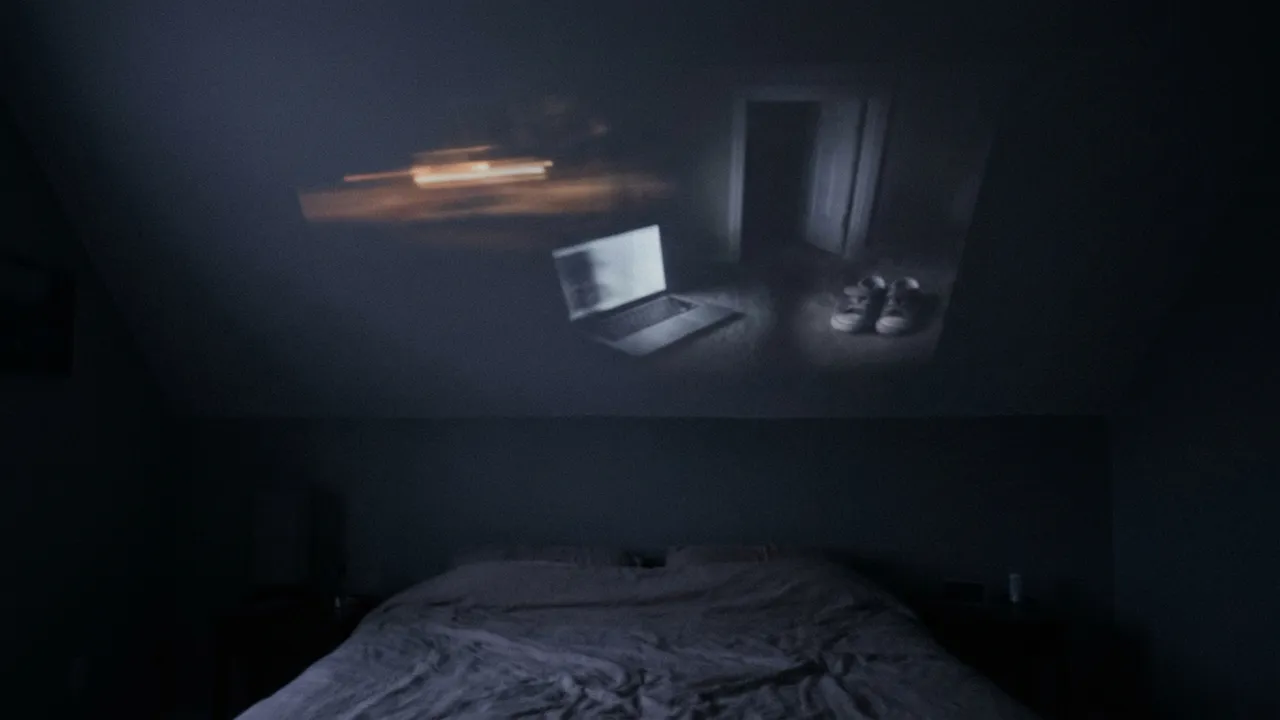

Sunday evening can feel different from the rest of the weekend.
You may be sitting on the couch while your mind is already in Monday: the meeting, the commute, the inbox, the person you need to call, the thing you forgot on Friday.
Then a second problem appears. You start worrying about sleep itself.
If I fall asleep now, I can get seven hours. If I am still awake at midnight, tomorrow will be awful.
Sunday night insomnia can become a mix of anticipatory worry and pressure to produce a good night's sleep before the week begins.
That does not require a story about your nervous system learning Sunday as a threat. Monday is simply closer, and the consequences of a bad night may feel more important.
The Specific Quiet of a Sunday Evening
An unanswered email. A meeting you have not prepared for. A long commute. A full calendar. Tasks that looked distant on Friday can feel much closer on Sunday night.

More Than a Joke: The Sunday Scaries
"Sunday Scaries" is an informal name for worry, dread, or low mood as the work or school week approaches. It is not a diagnosis. Sometimes the feeling is mild. Sometimes it points to something practical that deserves attention: an overloaded Monday, a difficult workplace, unfinished work, or not enough recovery time.
Try not to turn the feeling into proof that something is wrong with you. Ask what, specifically, Monday is asking from you.
Then Comes the Fear About Sleep
Clock-watching can add another layer. Once sleep becomes a task you have to complete before Monday, every awake minute can feel expensive.
That pressure often makes bedtime harder. You cannot force sleep on command, and repeatedly calculating how many hours remain usually gives the mind more work rather than less.
This Is 'Anticipatory Anxiety', and It's Real
Anticipatory anxiety means worry about something that has not happened yet. The future event may be genuinely difficult, or your mind may simply be rehearsing possibilities because the event is close.
Your Body Is in Bed; Your Brain Is Rehearsing Monday
A simpler description is often enough: you are in bed, but your attention is still on Monday.
You do not need to assume cortisol is "higher than it should be," that the Default Mode Network is spinning stories, or that the vagus nerve has failed to receive a safety signal. Those systems are real, but they cannot be read from the feeling of lying awake on a Sunday.
If thoughts about work keep repeating, why you can't shut your brain off at night covers practical ways to externalize them.
Why Sunday Is a Temporal Landmark
Researchers use the term temporal landmark for points in time that mark a boundary, such as New Year's Day, a birthday, or the start of a week. The Fresh Start Effect describes how some of these boundaries can change motivation.
That does not mean Sunday automatically causes insomnia. It simply helps explain why the transition into a new week can feel psychologically important.
When a Thought Becomes a Prophecy
Sunday worry can become especially unhelpful when a possibility starts sounding like a certainty: I will not sleep. Tomorrow will be ruined. I will not cope.
Try making the sentence more accurate: I am worried I will sleep badly. I do not know yet how the night will go. If tomorrow is harder, I can make adjustments.
The goal is not positive thinking. It is to stop treating a prediction as a fact.
Why Your Usual Sleep Routine Might Not Be Enough
Basic sleep habits can help: a reasonably regular wake time, a comfortable room, less bright light late in the evening, and avoiding caffeine or alcohol too close to bedtime if they affect you.
But a perfect pillow or dim lamp will not finish tomorrow's planning for you.
Your Mind Needs a Believable Ending
If Monday is vague, take a few minutes earlier in the evening to make it concrete. Check the first appointment. Write down the first few tasks. Put anything you need by the door.
Then stop planning.
The point is not that "the brain likes closure" as a biological law. It is that a written plan can reduce the need to keep rehearsing the same practical questions in bed.
Where a Boundary Ritual Helps
A boundary ritual is simply a repeated action that marks the end of one activity and the start of another. Close the laptop. Put the notebook away. Take a shower. Dim one lamp. Put on a familiar piece of audio.
It can help because it reduces decisions and gives the evening a clear order. It does not need to tell your nervous system anything or produce a specific physiological state.
When the Bed Becomes a Place of Vigilance
CBT-I, or Cognitive Behavioral Therapy for Insomnia, includes behavioral methods that strengthen the association between bed and sleep rather than long periods of wakefulness and frustration. The details matter, and stimulus control is more than simply doing a calming ritual before bed.
If insomnia is frequent or persistent, CBT-I is a well-supported treatment to discuss with a qualified clinician rather than trying to turn a general wellness article into a treatment protocol.
For more on why a familiar sound or meditation may not solve every kind of wakefulness, see why white noise and meditation apps fail.
How to Fix Sunday Night Insomnia: The Sunday Night Reset
The Sunday Night Reset is not a treatment for insomnia. It is a simple way to separate Monday planning from bedtime.

Choosing When to Begin
Choose a time before you normally get into bed. The exact clock time is not important. What matters is that planning ends before sleep becomes the next task.

Try three parts:
- The Close-Down — 15 to 30 minutes. Check Monday's calendar. Write down three to five concrete next steps. If something cannot be solved tonight, write that down too.

A short worry list — about 10 minutes. Writing worries down before bed has been studied as one way to move repetitive thinking onto paper. It should not be presented as a guaranteed CBT-I technique or as part of stimulus control. Use it simply as an experiment: write what is circling, add a next step where one exists, and close the notebook.
A quieter transition — about 10 to 20 minutes. Shower, stretch, read, listen to audio, or do something else that does not reopen work. Slow breathing is optional if you enjoy it. There is no need to claim humming, jaw relaxation, or exhalation sends a safety message through the vagus nerve.
Prepare the Mind, Then Leave the Mind
The principle is simple: prepare what can actually be prepared, then stop preparing.
If another work thought appears, add it to tomorrow's list only if it genuinely needs recording. Otherwise, let it be an unfinished thought rather than an emergency.
Turning a Chore Into a Ritual
A Sunday reset should not become another performance standard.
A Chore Says Finish; A Ritual Says Be Cared For
Keep the useful part of the distinction: a chore has an outcome to complete; an evening ritual can exist simply because the sequence makes the transition easier.
That may be as ordinary as checking the calendar, making tea, and reading for ten minutes. It does not need candles, perfect consistency, or a special mood.
Consistency Is What Gives the Ritual Its Power
Familiar routines may become easier to start because you have fewer decisions to make. That is enough of a reason to repeat one.
Avoid promising that the third, tenth, or twentieth repetition will create a new nervous-system pathway or automatically make your body relax. Some Sundays will still be difficult. A ritual can support an evening without controlling it.
You Need a Door, Not a Different Person
Adapt the reset to your actual week. If you work shifts, "Sunday" may be Tuesday. If you have children, the quiet part may be seven minutes. If planning together with a partner reduces uncertainty, do that.
The useful boundary is not tied to a calendar. It is the moment you decide that tomorrow has received enough attention for one evening.
This is part of what we mean in ritual and rhythm: a familiar sequence can help a transition without becoming another rule you have to perform perfectly.
A Guided Ceremony to Close the Week
You may already know which habits make Sunday harder. Checking work email from bed. Opening the calendar again after lights out. Scrolling because you are afraid silence will turn into planning.
Where Tonight Fits Gently
Tonight can be one optional part of the quieter transition. It provides AI-generated, audio-led evening rituals designed for minimal screen use.
The voice is synthetic audio, not a person who understands your week or keeps you company. Its job is simply to guide a short listening experience if that format helps you stop planning and put the screen down.
The Closing of the Weekend Door
You have looked at Monday. You have written down what matters. Now there is nothing more useful to solve from bed.
The week can wait at the edge of the bed. It does not need to climb in.
You do not need to force sleep to arrive. Give yourself permission to stop preparing for it.
A Handrail You Reach For Without Thinking
If Sunday nights are difficult every week, notice the broader pattern. Is the workload too high? Is Monday unusually stressful? Are you routinely losing sleep on other nights too?
Persistent insomnia, significant daytime impairment, or anxiety that is difficult to manage deserves more than a wellness routine. A doctor, sleep specialist, or therapist trained in evidence-based insomnia care can help; CBT-I is one established option.
If you simply want a low-screen audio transition after your planning is done, you can download Tonight.
Related reading: anticipatory anxiety
Frequently asked questions
Why do I get Sunday night insomnia?
Sunday night can make Monday feel close, which can increase planning, worry, clock-watching, and pressure to sleep. You do not need to assume your cortisol is abnormally high or your nervous system has learned Sunday as a threat. If the pattern is frequent or seriously affects daytime life, consider professional sleep support.
What are the Sunday Scaries?
The Sunday Scaries is an informal term for worry, dread, or low mood as the work or school week approaches. It is not a diagnosis. Sometimes the feeling is mild; sometimes it points to a practical problem such as workload, an unpleasant workplace, or not enough recovery time.
How do you fix Sunday night insomnia?
You cannot guarantee sleep, but you can reduce some of the work around it. Check Monday earlier, write down a few concrete next steps, stop planning before bed, and use a simple quieter activity afterward. Persistent insomnia is better addressed with evidence-based care such as CBT-I than with an increasingly complicated Sunday ritual.
Why is my insomnia worse on Sundays than other nights?
The transition into a new week can make work, school, schedules, and the consequences of poor sleep feel more immediate. That extra mental load can make Sunday different from an ordinary midweek night. It does not mean Sunday has a special biological effect on your sleep.