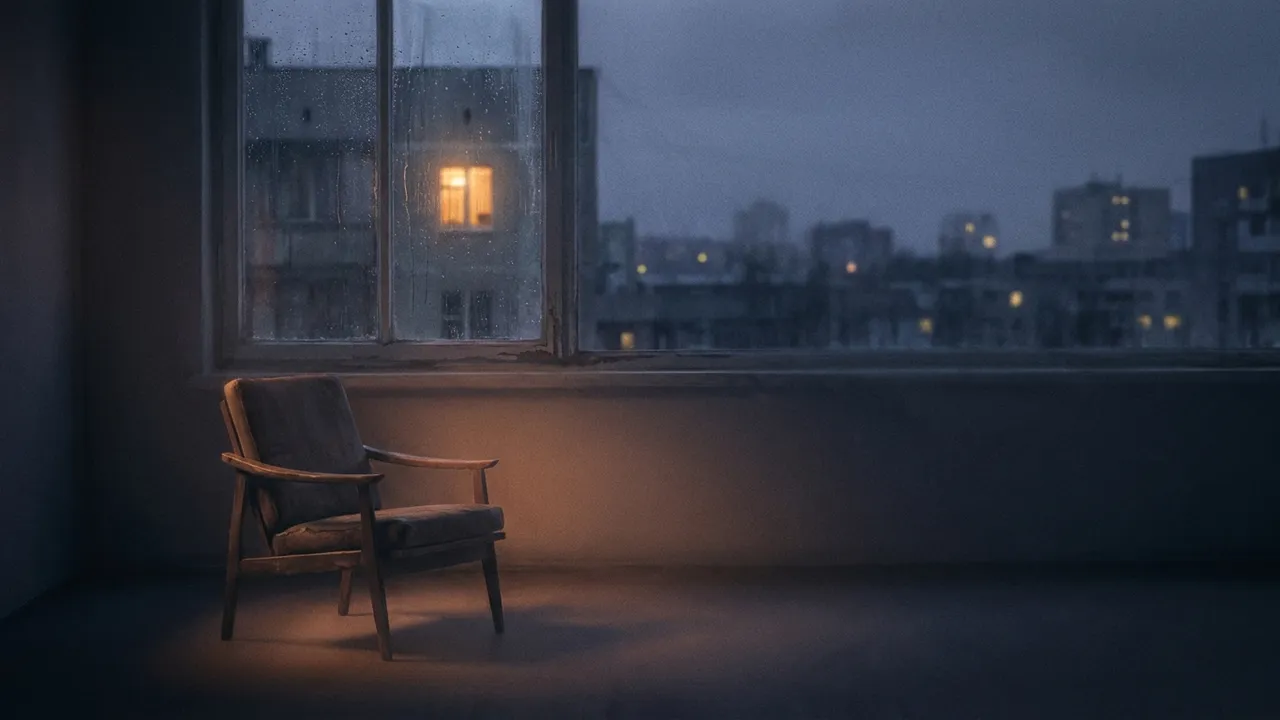

By day, grief has to share the room with everything else: work, errands, messages, food, other people.
At night, many of those things fall away.
A chair, a photograph, a quiet hallway, or the empty side of a bed can suddenly carry much more weight than it did at three in the afternoon.
That is one reason grief can hit harder at night: there is less competing for your attention, and more room for absence to be noticed.
It does not mean the night is revealing a deeper truth. It does not mean your nervous system has switched into an ancient guard mode. It means grief is easier to hear when the rest of life goes quiet.
Why Grief Hits Harder After Dark
Grief Has More Space at Night
During the day, attention keeps moving. At night, the environment often becomes quieter and more repetitive. That can make memories, longing, guilt, or loneliness more noticeable.
Fatigue can also make difficult emotions harder to manage. A thought that felt bearable earlier may feel much sharper when you are exhausted.
The "Mind After Midnight" Is a Hypothesis, Not a Guard Story
Researchers have proposed the Mind After Midnight hypothesis, which suggests that being awake during the biological night may be associated with changes in mood, reward processing, and risk-related thinking. It is a hypothesis about circadian timing and nighttime wakefulness, not evidence that the body keeps an ancient guard at dusk or scans grief as a threat.
The House Keeps Their Shape
Loss often attaches itself to ordinary places. A chair. A shelf. A side of the bed. A route you used to walk together.
When Memory Arrives Like Weather
Memories can come suddenly and bring several emotions at once: sadness, warmth, anger, relief, guilt, even laughter. That mixture is common in grief.
You do not need to decide which feeling is the "real" one.
Writing One Sentence as a Bridge
If one thought keeps repeating, writing a sentence can help you stop trying to hold it in working memory. You might write: I miss him. Or: I wish I had called. Or: Today was harder than I expected.
That does not solve grief. It simply gives the thought a place outside your head for the moment.
Tonight can use a written thought to shape a short AI-guided ritual. The system does not understand the loss like another person would and does not "acknowledge its meaning" in a human sense. You can read more about the privacy design in why nothing is saved.
The Hour When Stories Return
Grief often brings counterfactual thoughts: I should have called. I should have noticed. I should have said something different.
Offer a Fuller Story Alongside It
If one regret is taking over the whole night, try adding context rather than arguing with yourself. One missed call can be true. Thousands of ordinary moments of care can also be true.
This is not positive thinking. It is resisting the tendency to let one painful detail become the entire history of a relationship.
The Practical Mercy of Ritual
A small ritual can give the hour shape: light a candle, say a name, look at a photograph, write one sentence, make tea, or sit quietly for a few minutes.
Ritual does not need to regulate the nervous system or change grief biology to matter. Sometimes repetition simply makes a difficult hour more manageable. See on ritual and rhythm.
Companionship That Does Not Pry
People need different things in grief. Some want to talk. Some want quiet. Some want one person who can listen without trying to turn the loss into a lesson.
An AI voice is not that person. It cannot witness grief, understand a relationship, or keep you company in the human sense. It can provide a short piece of spoken structure if that is useful. There is more about that boundary in what the Whisperers carry.
When the Night Grows Too Heavy to Hold Alone
If grief is making you feel unsafe, hopeless, or unable to cope, reach for real human support. If you are thinking about harming yourself or not wanting to stay alive, contact emergency or crisis support where you live or tell someone you trust immediately.
The Work Grief Asks and Does Not Ask
Grief is not homework and there is no correct timetable.

There Is No Timetable
Some nights will be easier. Others may become difficult again around anniversaries, places, smells, songs, or unexpected reminders.
That variability does not mean you are going backward.
Feeling It Again Is Not Failure
A wave of grief months or years later does not prove that you have failed to "move on." It means a memory or loss still matters.
If grief remains overwhelmingly intense or is making daily life very difficult for a long period, a qualified mental-health professional can help assess what kind of support may be useful.
Morning's Faint Mercy
Sometimes the same room feels easier in daylight. There are more cues, more tasks, more people awake, and more options for action.
Give the Night a Gentle Container
If it helps, give grief a small container for tonight: one sentence, one song, one photograph, one short ritual. Then let the rest wait.
Tonight can be one optional wellness ritual in that space. It does not hold grief for you, replace a person, or provide therapy. If you want a finite piece of audio guidance, you can download Tonight.
Frequently asked questions
Why does grief hit harder at night?
At night there are often fewer tasks, conversations, and distractions competing for your attention, so memories and absence can become more noticeable. Fatigue and loneliness can also make difficult emotions feel harder to manage. You do not need an ancient guard or nervous-system threat explanation for that pattern.
Is it normal for grief to feel worse at night?
Yes. Many people notice stronger grief in quiet periods, including at night. Grief can vary from hour to hour and can become intense again around anniversaries or reminders. If it is persistently overwhelming or severely affecting daily life, professional support may help.
Why do memories and emotions surface more at bedtime?
When the day's tasks end, there is more room for memory and self-reflection. A quiet environment can make unfinished thoughts and emotionally important memories easier to notice. That does not mean the night is revealing a hidden biological truth.
How can I cope with grief that arrives at night?
Try something small and low-pressure: write one sentence, look at a photograph, say a name aloud, make tea, or contact someone you trust. An AI-guided ritual can provide structure, but it cannot replace human support or grief therapy. If grief makes you feel unsafe or suicidal, seek immediate human crisis or emergency support.