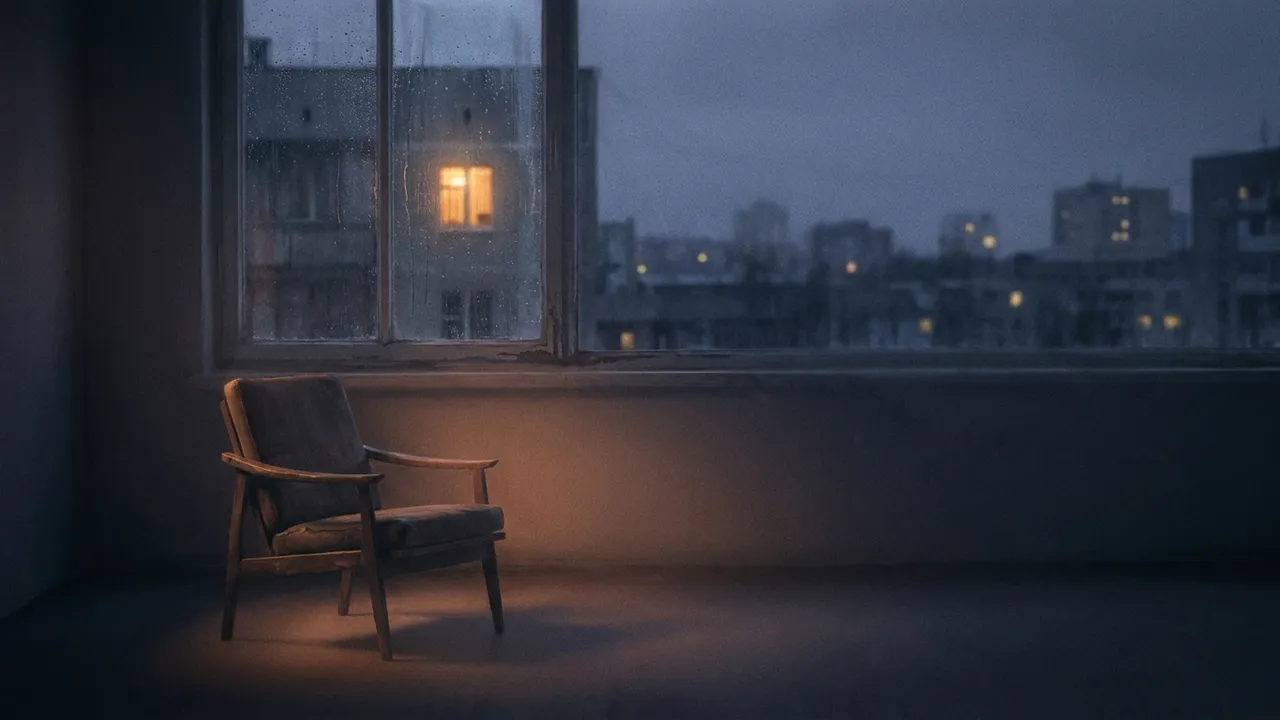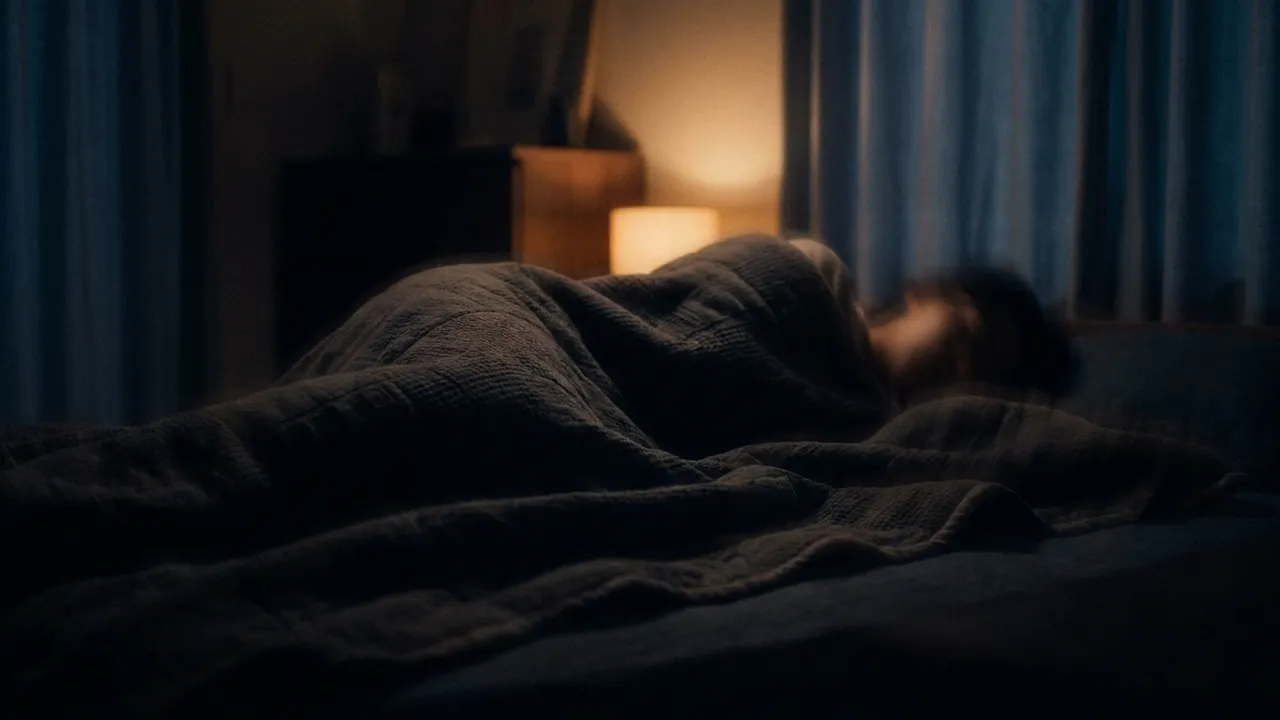

Why does everything feel worse at night?
Night can make ordinary problems feel unusually large because many of the things that keep your attention occupied during the day have disappeared. Work stops. Messages slow down. Other people go to sleep. The room gets quieter. There is less competing for your attention.
What remains might be an unfinished task, an awkward conversation, loneliness, guilt about resting, a decision you have not made, or tomorrow arriving a little too early in your head.
The problem may not have become bigger. It may simply have more room.
There are also more physical reasons not to trust every late-night verdict. If you are tired or short on sleep, emotional regulation can become less steady, and research has found that sleep loss can increase negative emotional reactivity and make relatively mild stressors feel more stressful. That does not mean there is a universal biological switch at midnight. It means that context, fatigue, attention and emotion can all change as the day ends.
The day was carrying more of you than you noticed
At 2:17 p.m., a strange comment from a colleague has to compete with a meeting, a grocery list, three notifications, a train platform, somebody asking what you want for dinner and the fact that your phone is at 11 percent.
At 1:37 a.m., the comment may have the room to itself.
This is one reason nighttime can feel emotionally louder. During the day, attention is repeatedly pulled outward. At night, there is often less external input and more room for internally focused thought. That can be useful. It is also why an unresolved worry can suddenly feel like the only thing that exists.
The quiet is not inventing the problem. It is changing its competition.
Why unfinished things get louder when everything else gets quiet
Unfinished things are especially good at returning when you stop moving.
The email you still need to send. The thing you meant to say differently. The decision you have postponed. The person you have not heard from. The sentence you wish you could take back.
Research on insomnia consistently finds that cognitive arousal — worry, rumination and repetitive thinking — can interfere with falling asleep and staying asleep. But the important part here is simpler than a diagnosis: an open problem is easy to keep mentally rehearsing when nothing else is asking for your attention.
Sometimes the phone becomes a way of postponing that moment. One more scroll, one more video, one more message means the unfinished thing does not quite get the room yet. If that sounds familiar, why it can be hard to get off your phone at night looks at that pattern more closely.
The different shapes nighttime heaviness takes
Nighttime heaviness does not always look like obvious anxiety. Sometimes it arrives wearing much more ordinary clothes.
Work that will not end
You close the laptop, but the day keeps running in your head. The undone email starts feeling less like a task and more like evidence that you are falling behind.
If work follows you into bed, why you can't shut your brain off at night and falling asleep stressed about work go deeper into that specific loop.
Guilt about resting
The moment you stop, you remember everything you could still be doing. Rest begins to feel irresponsible precisely because there is finally time to notice what is unfinished.
That is the territory of feeling guilty for sleeping or resting: not laziness, but a learned rule that stopping needs to be earned.
Loneliness even when you are not alone
Someone can be sleeping twenty centimetres away and the room can still feel lonely.
At night, conversation ends. Messages stop. The small confirmations of connection that happen throughout a normal day become less available. Loneliness does not automatically mean something is wrong with your relationship. Sometimes the silence simply makes distance easier to notice.
If this is the version you know, read why you can feel lonely at night even with a partner beside you.
Everything feels like too much
Sometimes there is no single dramatic thought. The blanket is wrong. A sound is too sharp. Your skin feels busy. The room seems to contain one stimulus too many.
For that version of the night, sensory overload when you can't sleep may be more useful than another article about overthinking.
Night is a bad time to demand answers from yourself
A strange thing happens when something feels urgent at night: we often respond by asking bigger questions.
Why did they say that?
What does this mean about us?
Am I in the wrong job?
What am I doing with my life?
These might be real questions. They just do not necessarily become better questions because it is 1:37 a.m.
Fatigue can make emotional reactions stronger and cognitive flexibility less reliable. A tired mind may be perfectly capable of noticing that something matters while being a poor place to demand a final verdict about it.
Night is allowed to notice. Daylight gets to decide.
You are allowed to notice what hurts without holding a meeting about it at 1:37 a.m.
What to do with the one thought that is still here
If five worries are circling, do not solve five worries.
Ask a smaller question:
What is the one thing that is still with you?
Maybe it is: "I think she is angry with me."
Or: "I do not know how I am going to finish this tomorrow."
Or simply: "I miss him."
One sentence is enough.
That is the idea behind One Thought in Tonight. You write the one thing that is still taking up space. Tonight turns it into a short, personalized audio ritual designed to help you stop working on it for the night — not by solving the problem, but by giving it somewhere to go.
You don't have to solve it tonight
Some problems really are serious. Some conversations need to happen. Some decisions cannot be avoided forever.
But a problem being real does not mean it must be solved in bed.
Write down tomorrow's first step if you need to. Send yourself a note. Put the object you need by the door. Let the practical part have somewhere to live outside your head.
And then notice the difference between this matters and I must resolve this now.
If this idea resonates, we also made a short video about why the same thought can feel manageable in daylight and enormous in the dark. It uses the image of an almost-empty airport after the last flight — where every delayed arrival suddenly echoes.
Watch the English video on YouTube →
The night can make a thought louder without making it wiser.
You do not have to solve it tonight.
You only have to stop carrying it for a few hours.
Frequently asked questions
Why am I more emotional at night?
Several things can contribute. There is often less external stimulation competing for your attention, while tiredness or insufficient sleep can make emotional regulation less steady. That does not mean every nighttime feeling is false. It means the context in which you are evaluating it has changed.
Why does loneliness feel worse at night?
Night often removes many of the small social signals present during the day: conversations, messages, coworkers, errands and background contact. With fewer signals of connection, loneliness can become more noticeable. Poor sleep and loneliness can also reinforce each other over time.
Why do small problems feel huge at night?
A small problem can take up more attention when fewer other things are competing with it. Fatigue can also increase emotional reactivity. The problem may therefore feel more urgent without actually containing new information.
Why do I overthink when I go to bed?
Bedtime removes many daytime demands and distractions. If there are unresolved worries, decisions or memories, that quieter environment can make repetitive thinking easier to notice. Persistent bedtime rumination can also become part of an insomnia pattern.
Sources
- Harvey AG. A cognitive model of insomnia. Behaviour Research and Therapy. 2002.
- Talbot LS et al. Sleep deprivation in adolescents and adults: changes in affect. Emotion. 2010.
- Minkel JD et al. Sleep deprivation and stressors: evidence for elevated negative affect in response to mild stressors. Sleep. 2012.
- Ben Simon E, Walker MP. Sleep loss causes social withdrawal and loneliness. Nature Communications. 2018.
- Griffin SC et al. Loneliness and subsequent insomnia symptoms in older adults. Sleep Health. 2023.