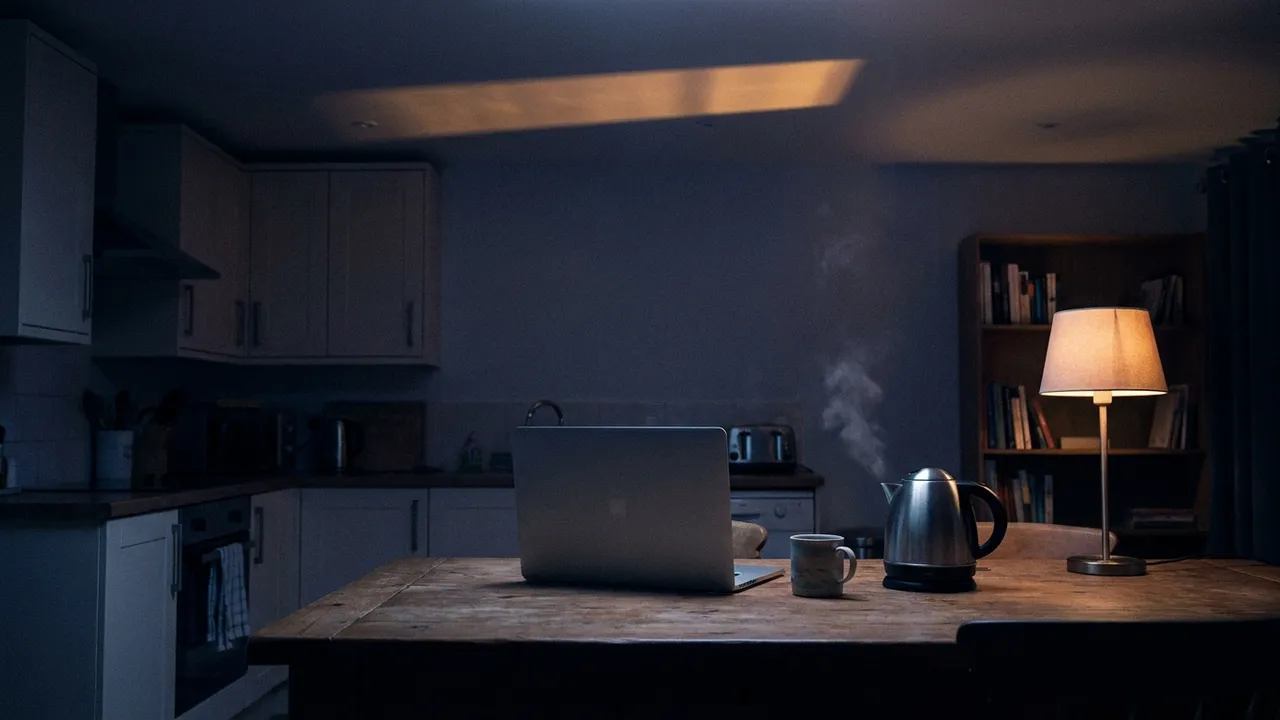

You get into bed meaning to check one thing. A message becomes a video, the video becomes a comment thread, and suddenly much more time has passed than you expected.
Bedtime scrolling is easy to repeat because the phone is close, the next piece of content arrives instantly, and stopping asks you to leave an activity that is still offering something new.
Breaking the habit usually works better when you change the setup, not when you rely on willpower at the end of a tiring day. Add a little friction to the phone and decide in advance what you will do instead.
That replacement can be very simple: a paper book, stretching, music, meditation, quiet audio, or just putting the phone out of reach and turning off the light.
That Familiar Blue Glow in the Dark
The phone is especially hard to leave when you are tired and finally have a little time to yourself. Scrolling can provide entertainment, distraction, social contact, news, or simply a pause after a demanding day.
The Scroll Often Starts as a Break
That is why moralizing about the habit rarely helps. You may not be "addicted to being unproductive." You may be trying to get ten minutes that feel like your own.
The problem is that a feed has no natural ending. If ten minutes regularly becomes an hour, the habit is taking more of the night than you intended.
When the Content Keeps Changing
A feed can move from something funny to upsetting news, social comparison, work, or an argument in seconds. That variety can keep attention engaged even when you no longer feel good.
Doomscrolling can also make bedtime feel mentally busy because you keep introducing new information right before trying to stop for the day.
You do not need to win a fight with your phone. You need an easier stopping point.
Your Brain on 'The Scroll': Why It Is Easy to Keep Going
Reward-learning research includes the incentive-salience model, which describes how cues and anticipated rewards can drive wanting. Dopamine is part of that research, but it is too simple to say every swipe produces a dopamine spike or that scrolling works exactly like a slot machine in your brain.
Dopamine Is More Complicated Than a 'Pleasure Chemical'
Dopamine is involved in motivation, learning, reward prediction, movement, and other functions. It is not a meter you can read from how compelling a feed feels.
The practical point does not need a neurotransmitter story: every swipe can produce something new, and novelty makes it easy to continue.
Screen Light Can Affect Circadian Timing
Evening light can affect melatonin and circadian timing. A well-known PNAS study of evening e-reader use found that a light-emitting e-reader suppressed melatonin and delayed circadian timing compared with a printed book under the study conditions.
That does not mean "blue light" is the only reason phones affect sleep. Brightness, duration, how close the screen is, what you are doing on it, and the fact that scrolling delays bedtime can all matter.
The Default Mode Network is not needed to explain why a troubling post follows you into bed. If content gives you something new to worry about, you may keep thinking about it after the screen goes dark.
A Lot of Input Right Before Bed
A feed may ask you to switch quickly between jokes, news, relationships, work, outrage, and comparison. That can leave you feeling mentally activated.
It is not accurate to say your nervous system confuses every headline with a predator, that cortisol must therefore stay high, or that the vagus nerve is failing to calm you. Those are specific biological claims that cannot be inferred from scrolling.
If your mind stays busy after the phone is down, why you can't shut your brain off at night looks at that pattern separately.
Why 'Just Stop' Isn't Helpful Advice
A plan made in the morning can be hard to follow when you are tired and the phone is already in your hand.
Night Changes the Decision
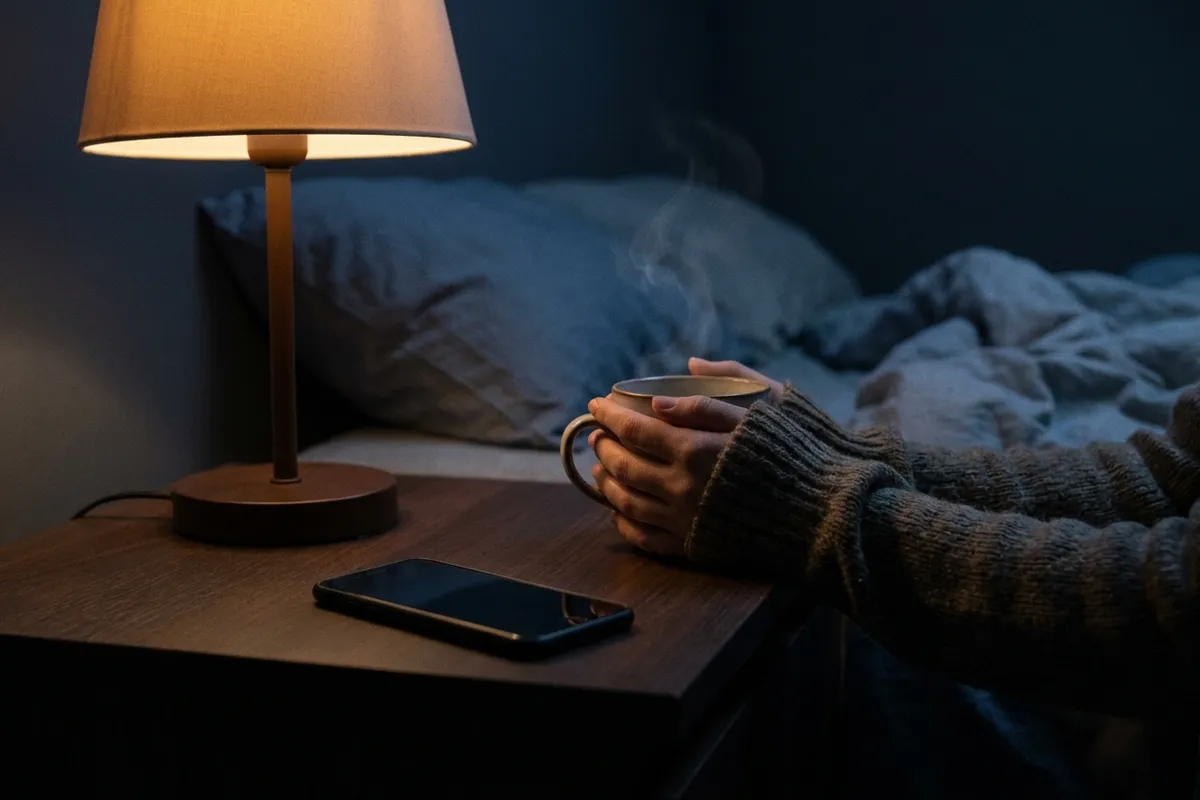
At the end of the day, you may have less patience for an effortful choice. If the phone is beside your pillow and the alternative has not been decided, the easiest action is usually the familiar one.
That is not proof your defenses are "low." It is a basic habit and environment problem.
Look at the Cue, Routine, and Reward
A simple habit framework can help:
- Cue: you get into bed or finish brushing your teeth.
- Routine: you open the phone.
- Reward: entertainment, distraction, social contact, novelty, or a sense of personal time.
Ask which part you actually value. If the reward is personal time, you may need to protect some earlier. If it is something to focus on, a book or audio may fit. If it is real social connection, talk to a real person rather than asking an app to stand in for one.
Replacement, Not Punishment
You can attach a new action to something you already do: after brushing your teeth, charge the phone across the room; after turning off the overhead light, open the book; after getting into bed, play one chosen audio track instead of opening a feed.
Repetition can make the sequence easier because you make fewer decisions. You do not need to say your nervous system learns a safety cue for a habit to become familiar.
Finding a Better Anchor: What to Do With Your Hands (and Mind)
The first practical change is distance.

Put a Little Friction Between Impulse and Action
Charge the phone across the room or outside the bedroom if that works for you. Turn off non-essential notifications. Log out of the app that most often keeps you scrolling. If your phone is your alarm, an inexpensive alarm clock can remove one reason to keep the phone beside the bed.
The goal is not to make the phone forbidden. It is to make picking it up a deliberate choice rather than the easiest movement your hand can make.
Give Your Hands Something Else to Do
A replacement can be physical without being a special "nervous-system" ritual. You might hold a warm drink, use hand cream, stretch, turn pages in a book, knit, or adjust your room for sleep.
Try a short sequence:
- Plug the phone in away from the bed.
- Lower the light.
- Choose one screen-free activity.
- Stop when you are ready for sleep rather than adding another task.
Keep it easy enough to use on a bad night.
Why Audio Can Be a Useful Replacement
Audio can give your attention one thread to follow while letting you keep your eyes closed. That might be music, a meditation, a familiar podcast, an audiobook, white noise, or a guided ritual.
Choose based on what you actually find low-stimulation. There is no rule that crime stories, podcasts, meditation, or silence affect every person the same way, and audio does not "invite the vagus nerve toward safety."
If silence is the part you dislike, it is fine to use sound without pretending the sound is human company.
Build a Ritual That Gives More Than It Takes
A bedtime replacement should not become another complicated standard.
Notice the Cost of the Current Habit
Ask what actually happens after scrolling. Does it push bedtime later? Leave your eyes uncomfortable? Make you angry or anxious? Or do you sometimes scroll for ten minutes and stop without a problem?
The pattern matters more than the label. Change the habit because of a real cost, not because phones are morally bad.
A Routine Can Give the Day a Clear Ending
A repeated routine can be useful because it creates a stopping point. On Ritual and Rhythm explores that idea in more detail.
It does not need to tell your body "we are safe" or "we are done gathering threat." It can simply mean: the feed is closed, work is over, and this is the activity I chose for the last part of the evening.
If scrolling is mainly filling loneliness, real human contact matters more than a better synthetic voice. If it is mainly filling boredom or providing a transition, a non-interactive audio track may be enough.
Start Smaller Than You Think
Move the charger tonight. Choose one replacement tomorrow. Do not rebuild your whole evening at once.
Tonight is one optional replacement: an AI-guided wellness ritual with carefully crafted voices and low-light use. It can offer structured audio without a feed. The AI is not human, does not listen or understand like a person, and cannot provide companionship, therapy, or medical care. It is also not inherently better than meditation, an audiobook, white noise, or silence.
If you want to try it as a screen-light alternative, you can download Tonight.
Related reading: revenge bedtime procrastination
Frequently asked questions
How do I break the bedtime scroll habit?
Change the setup instead of relying only on willpower. Put the phone farther from the bed, reduce notifications, and choose one easy replacement in advance, such as a paper book, stretching, music, meditation, or quiet audio. The replacement should meet the need the scroll was filling without opening an endless feed.
Why does my brain feel wired after scrolling at night?
Scrolling can keep you engaged with changing content and can introduce new worries or stimulation right before bed. Evening screen light can also affect circadian timing, and scrolling may simply delay when you try to sleep. The feeling does not prove a dopamine, cortisol, vagus-nerve, or fight-or-flight problem.
What can I do instead of scrolling in bed?
Choose one low-effort activity you genuinely like: reading, stretching, a warm drink, music, meditation, an audiobook, white noise, or guided audio. If the phone mainly fills a need for real social connection, contacting a real person is more direct than replacing the feed with an AI voice.
Why doesn't 'just stop' work for the bedtime scroll?
Habits are easier to repeat when the cue and reward stay the same, and a phone beside the bed makes the familiar action effortless. Adding friction and planning a replacement reduces the number of decisions you have to make when you are already tired.