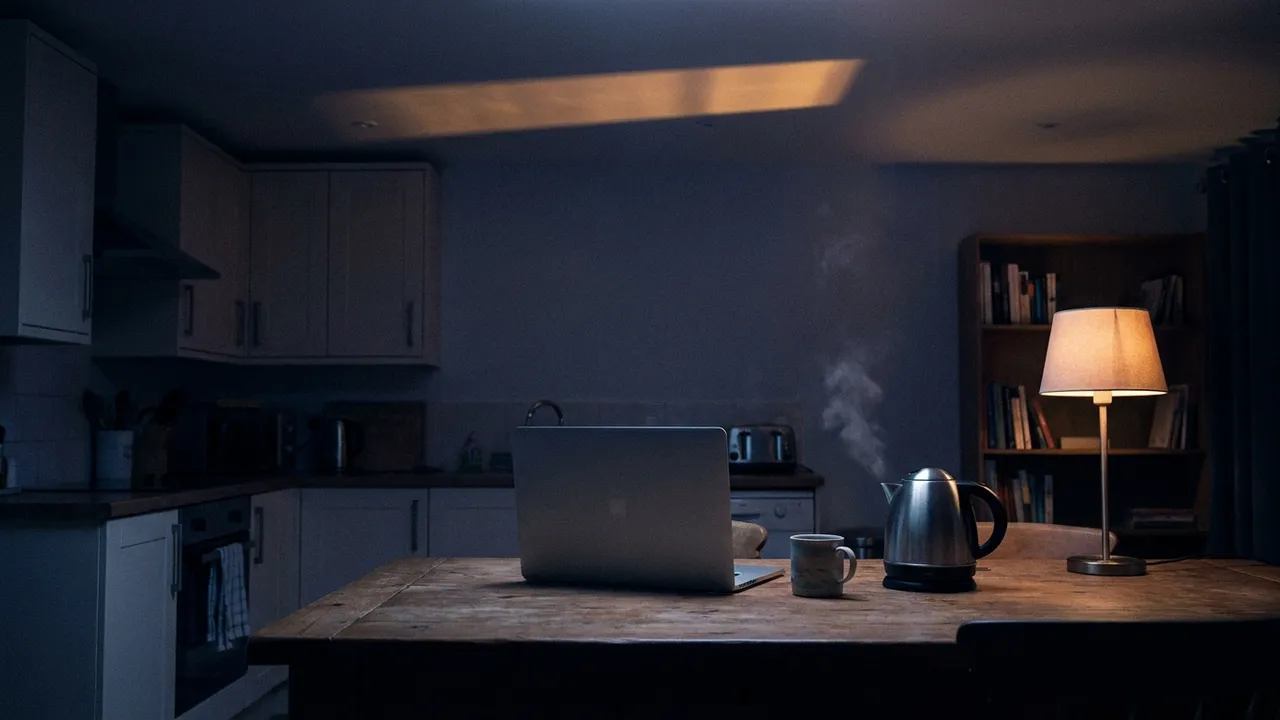

The house is finally quiet. Your laptop is closed. No one needs an answer right now. You are tired, but your thumb keeps finding one more video, one more post, one more small distraction.
You meant to go to sleep.
But stopping can feel like giving up the only part of the day that belongs to you.
That is the useful idea behind revenge bedtime procrastination: sometimes delaying sleep is less about poor discipline and more about trying to reclaim personal time at the end of an overfull day.
If you came here searching how to fix revenge bedtime procrastination, "just put the phone away" is probably not enough. The phone may be part of the habit, but the more useful question is what you are trying to get from those late hours: quiet, choice, entertainment, privacy, or simply a stretch of time when nobody is asking anything of you.
Instead of asking only, "Why am I still awake?" try asking, "What am I trying to get from this hour?"
It's Midnight. Do You Know Where Your 'Me-Time' Is?
A day can become a long sequence of obligations: work, caregiving, errands, meals, messages, household tasks, and other people's needs. Even the breaks may not feel like yours.
Then night arrives. For the first time, there is space around you. No new meeting is beginning. The phone gives you an instant way to fill that space with something you chose yourself.
Of course it can be hard to stop.
What Revenge Bedtime Procrastination Really Is
Bedtime procrastination was described in a 2014 paper in Frontiers in Psychology as going to bed later than intended without an external reason forcing the delay. "Revenge bedtime procrastination" is a popular term for a related experience: staying up because late evening feels like the only available personal time.
The word "revenge" should not be taken too literally. You may not be consciously rebelling against anything. You may simply keep watching, reading, gaming, shopping, cleaning, or scrolling because ending the evening feels like ending your freedom too.
Honoring What the Habit Has Been Giving You
Before changing the habit, notice what it provides.
Maybe it gives you privacy. Maybe you finally get to choose what happens next. Maybe it is the first time all day you can be unproductive without explaining yourself. Maybe it gives you something pleasant after a day that felt mostly practical.
That need is worth taking seriously. The goal is not to remove the only enjoyable part of your day. It is to find a version of it that does not regularly take sleep away from tomorrow.
This Isn't Laziness. It's a Search for Autonomy.
Autonomy means having some say in how your time is used. When a day feels heavily controlled by work, schedules, caregiving, or other demands, bedtime can feel like one more instruction: stop now, be responsible, prepare for tomorrow.
That can make staying awake unusually appealing.
Why Shame Gets the Story Wrong
Calling yourself lazy does not explain much. A more useful question is: "What did I not get enough of today?"
Maybe the answer is silence. Play. Conversation. Solitude. Reading. Music. Doing absolutely nothing. Once you know the missing piece, you have something concrete to work with.
Decision Fatigue, Dopamine, and ADHD
Late in the day, many people find self-control and decision-making harder. That does not require a simple story about a "tired prefrontal cortex," glutamate buildup, or a specific neurotransmitter causing you to keep scrolling.
For people with ADHD, transitions, task switching, time awareness, and stopping an engaging activity can be difficult. Those are useful things to plan around. It is not accurate to assume that revenge bedtime procrastination happens because someone is chasing dopamine or because their dopamine is low at bedtime.
If ADHD is part of your life, make the transition smaller and more visible: use an external reminder, prepare the first bedtime step in advance, or move the phone before you are exhausted. The practical support matters more than a one-chemical explanation.
The Cruel Paradox: Why a 'Rebel Bedtime' Doesn't Restore You
The late hour can feel free and still leave you worse off the next day.
Why Stimulation Is Not the Same as Restoration
Feeds are easy to continue because there is always another item and no natural stopping point. The next post may be funny, interesting, annoying, beautiful, or completely forgettable. That unpredictability can keep attention moving forward without requiring you to decide on a clear ending.
The problem is not that "dopamine is bad" or that you need a dopamine detox. Dopamine is involved in many normal brain functions. The simpler point is that a feed can keep giving you new material when what you actually wanted was a break.
Bright evening light can also affect circadian timing and melatonin, especially when exposure is strong or prolonged. Content matters too: work messages, arguments, news, or rapid video can simply keep you mentally engaged. You do not need to claim that your cortisol is too high or that your nervous system thinks a post is a physical threat to explain why this can delay sleep.
When the Thoughts You Outran Rush In
Sometimes scrolling also postpones the moment when the room becomes quiet enough for unfinished thoughts to return. A conversation. A bill. Tomorrow's meeting. Something embarrassing from years ago.
That does not mean a particular brain network has suddenly "switched on." It means quiet leaves more room for internal thought. If that is the harder part for you, why you can't shut your brain off at night may help.
The Different Texture of Real Rest
Rest does not have to be biologically explained to count. It can simply be an activity that leaves you less engaged and less pulled toward the next thing.
For one person that may be a paper book. For another it is music, a shower, stretching, talking with a partner, or sitting quietly for ten minutes. The useful test is simple: when you finish, do you feel more ready to stop for the day, or do you immediately want another hit of input?
How to Reclaim Your Evening, Gently
Start with the need, not the rule.

Ask yourself what you want from the late hour. Then see whether a small piece of that can happen earlier.
Name the Feeling, Then Build a Buffer Zone
If you want quiet, protect ten quiet minutes before you are exhausted. If you want entertainment, choose one episode or a few pages rather than an endless feed. If you want privacy, tell the people you live with that a short part of the evening is yours.
A 15- to 30-minute buffer before bed can work well because it creates an ending that is not simply "phone off, lights out." It does not need to be perfectly screen-free, but reducing bright, interactive content can make the transition easier.
Small Pleasures That Mark the Border
Pick something you actually like. Read a few pages. Listen to music. Take a warm shower. Write down whatever is still circling in your mind. Stretch if that feels good.
Breathing exercises are optional, not a reset button. If a slow breathing pattern feels comfortable, you can try it. You do not need a specific 4-7-8 count, and you never need to hold your breath if that feels unpleasant or makes you light-headed.
The aim is not to activate a particular nerve or prove that your body is "safe." It is simply to give yourself a less stimulating way to end the day.
Protect the Time and Make the Phone Easy to Leave
Make the preferred choice easier. Charge the phone outside the bedroom or across the room. Put a book, headphones, or anything else you want to use where the phone normally sits. Use a separate alarm clock if that helps.
For a deeper reflection on repeated evening cues, you may like On Ritual and Rhythm. A ritual can be useful without needing to "teach the nervous system" anything. Its value may be as simple as making the next step familiar and reducing decisions.
If you slip back into scrolling, notice what happened instead of turning it into a character judgment. Was the day unusually demanding? Did you have no personal time? Were you avoiding something? That information can help you adjust the evening.
Trading a Draining Habit for a Restorative Ritual
To fix revenge bedtime procrastination, sleep should not have to compete with every bit of freedom you get.

The goal is not a stricter night. It is a night with a clearer place for both personal time and sleep.
Making Your Me-Time Worthy of You
Try comparing two evenings. Which one actually gave you what you were looking for?
Maybe thirty minutes of deliberate reading feels better than ninety minutes of accidental scrolling. Maybe a phone call is more satisfying than reading other people's updates. Maybe you discover that what you wanted was not entertainment at all, but silence.
There may still be nights when you stay up later than planned. One difficult night does not require a new theory about your brain or a tougher set of rules. Return to the smallest useful change the next evening.
Compare Two Mornings
You can also compare how the next morning feels. Not as a sleep score, just as ordinary information. Did the later night make the morning harder? Did the earlier wind-down feel worth it? Did your chosen me-time actually feel like yours?
Use the answer to shape the next evening.
Begin Smaller Than Your Ambition
Choose one need, one enjoyable alternative, and one bit of friction around the phone. Keep it doable.
You might tell yourself: "I can have my night before midnight." Or: "I'm moving my free time earlier, not taking it away."
Tonight can be one optional part of that transition. It offers AI-generated, audio-led evening rituals designed to be listened to with minimal screen use. It is not a person, therapist, or source of human company, and it does not need to regulate your nervous system to be useful. If a guided audio routine helps you put the feed down, you can download Tonight.
Related reading: the pull can be even stronger · when the feed calls to you · make the phone easier to leave
Frequently asked questions
What is revenge bedtime procrastination?
Revenge bedtime procrastination is a popular term for delaying bedtime because late evening feels like the only personal time left in the day. It can overlap with ordinary bedtime procrastination, but it is not a diagnosis and it is not always a deliberate act of rebellion.
How do you fix revenge bedtime procrastination?
Start by identifying what the late hour gives you, such as quiet, privacy, entertainment, or choice. Protect a small amount of that earlier, create a believable stopping point, and make the phone slightly harder to reach. The aim is not to remove me-time but to stop making sleep compete with all of it.
Why do I procrastinate sleep even when I am exhausted?
Being tired does not automatically make it easy to stop an engaging activity. Endless feeds have no natural ending, and bedtime may also mean giving up the only unscheduled part of your day. A clearer transition and a satisfying alternative can be more useful than relying on willpower alone.
Is revenge bedtime procrastination worse with ADHD?
Some people with ADHD may find bedtime delay harder because transitions, task switching, time awareness, and stopping an engaging activity can be difficult. It is too simple to explain this as a bedtime dopamine problem. External cues, smaller steps, and reducing friction around the bedtime transition may help.