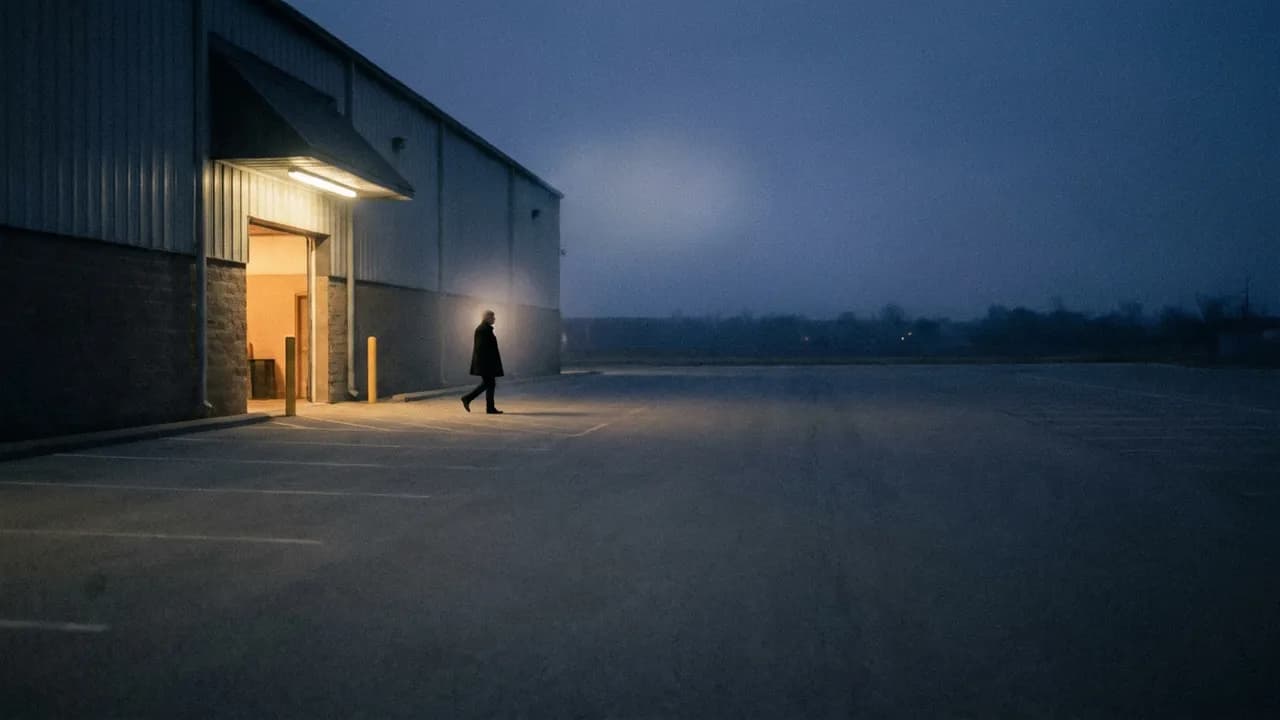
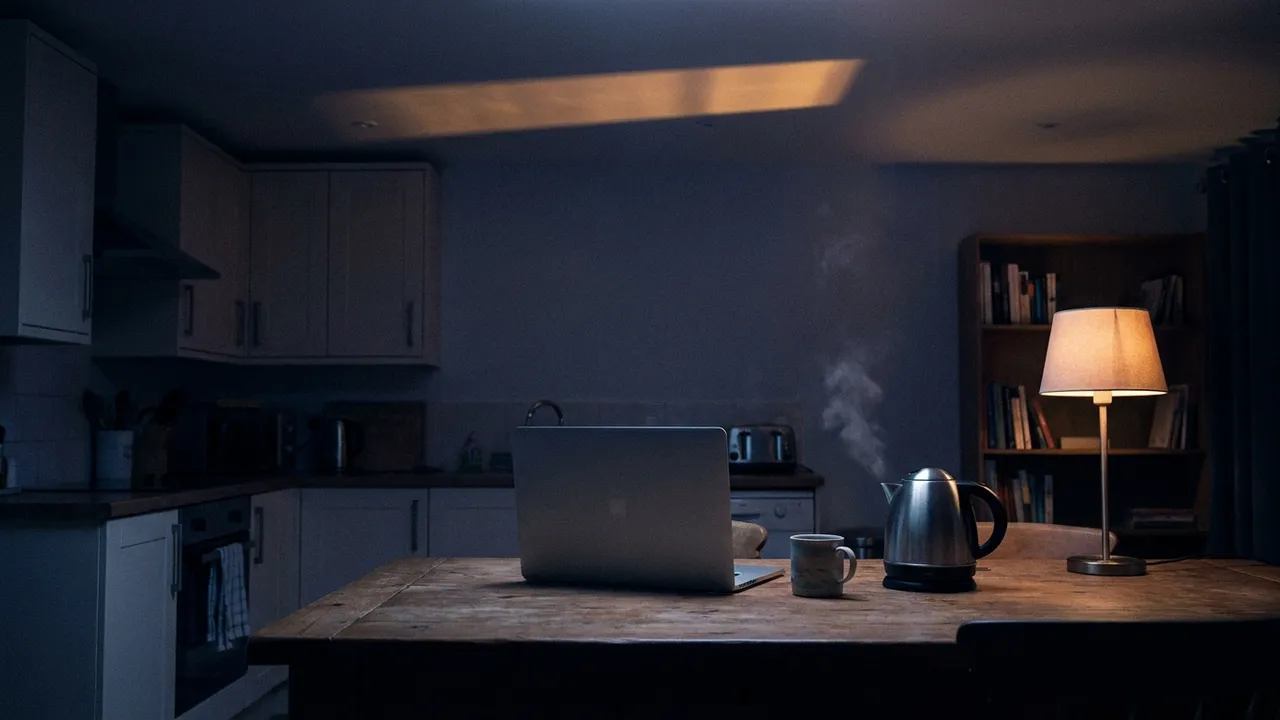
The laptop closes, but your mind may keep working.
You replay the meeting. You remember the message you forgot to send. Your shoulders are still tight. You are technically done, but the day has not quite left your attention.
One useful way to wind down after a stressful day is to create a small buffer zone between work and the rest of your evening.
This does not need to send a biological "all clear" signal or teach your nervous system that it is safe. It is simply a practical transition: fewer demands, fewer decisions, lower stimulation, and a repeatable end to work.
Bringing the Stress of the Day Home With You
Stress does not disappear because the workday ended.
You may keep replaying conversations, checking the phone, thinking through unfinished tasks, or carrying muscle tension from hours at a desk.
Still 'At Work' After Work
That experience can be mental and physical at the same time: tight shoulders, shallow breathing, a clenched jaw, an unsettled stomach, or a mind still moving through the task list.

You do not need to diagnose which stress hormone or nervous-system branch is responsible in order to notice that you have not shifted gears yet.
The Evening Replay
At night, unfinished things can become more noticeable because the room gets quieter. If this sounds familiar, see why you can't shut your brain off at night.
That is different from saying the brain is scanning to protect you.
When 'Relax' Becomes Another Assignment
Trying to relax on command can become another performance test.
A drink, a show, a scroll, exercise, food, a shower, or time alone may all help in different ways. There is no single correct decompression method.
You do not have to become calm instantly just because work is over.
Why You Can Still Feel in 'Go' Mode
Stress Has Physical Effects
Stress can affect heart rate, muscle tension, attention, breathing, and digestion. The sympathetic and parasympathetic nervous systems are involved in those processes, but it is too simple to describe office stress as a tiger response that leaves cortisol and adrenaline "stuck on" until a ritual turns them off.
A stressful email and immediate physical danger are not the same event, even if both can make you feel activated.
The Nervous System Is More Complex Than Two Modes
"Fight or flight" and "rest and digest" are useful teaching shortcuts. They are not two exclusive modes where one system takes control and the other disappears.
For winding down, the practical question is simpler: what keeps you activated, and what reduces stimulation without creating more pressure?
You Do Not Have to Think Your Way Calm
Sometimes changing the environment is easier than arguing with yourself. Put the work laptop away. Lower the light. Change clothes. Stop notifications. Take a shower. Walk outside for a few minutes.
These actions do not provide biological proof of safety. They change what you are doing and what is competing for your attention.
The Mistake: Swapping One Screen For Another
Many evenings begin with a screen because a screen is easy.
What Do I Do With the Leftover Energy?
Online advice often swings between numbing and optimization: watch something, exercise, order food, take supplements, meditate, journal, become more disciplined.
None of those is automatically right or wrong. The point of a buffer zone is to choose something deliberately rather than stay in work mode by default.
Why Screens Don't Always Calm You
Evening light and stimulating content can make some people more alert. Bright screens, news, arguments, messages, and endless novelty can keep attention engaged.
That does not mean all screens are bad. A familiar show may be exactly what you want. The mistake is treating any screen use as automatically restorative.
The Problem of No Boundary
If work, social life, entertainment, and bedtime all happen on the same device in the same chair, the day can feel like one continuous stream.
A small change of place or activity can create a clearer boundary without turning the evening into a purity test.
The Solution: Create a 'Buffer Zone' Between Day and Night
A buffer zone is a small piece of evening that belongs to neither work nor sleep.
Fifteen or twenty minutes can be a useful starting point, but it is not a medical rule. Five minutes may be enough. Some people want longer.
An Embarrassingly Simple Ritual
Try a few ordinary actions:
- close and put away the work laptop;
- change clothes;
- wash your face or shower;
- turn off work notifications;
- use a lamp instead of the overhead light;
- step outside for a few minutes;
- make tea;
- play the same quiet album;
- stretch if that feels good.
The ritual should reduce decisions, not create another checklist you have to complete perfectly.
Why Repetition Can Help
Repeating a routine can make it familiar and easier to start. It can become a cue in the ordinary behavioral sense: this is what I do when work ends.
That does not mean the body automatically learns a safety state by the twentieth repetition. See on ritual and rhythm for a more careful look at routines and cues.
A Breath Practice Inside the Space
If you like breathwork, keep it comfortable. You can try a slower breathing pace or a slightly longer exhale.
The 4-7-8 pattern is popular, but breath holds or long counts are not necessary and can feel uncomfortable for some people. Slow-breathing research suggests effects on autonomic measures and subjective calm, but it is too strong to say the longer exhale "nudges the vagus nerve" in a way that reliably brings the parasympathetic system forward for everyone.
Stop if you feel dizzy, air-hungry, or more anxious.
How a Guided Ritual Can Be Your Bridge to Rest
The advantage of guidance is simple: fewer decisions.
At the end of a hard day, you may not want to assemble a perfect unwind routine from a list of tips.
Why Guidance Can Help When You're Tired
A guided ritual gives you a sequence to follow. You can keep the lights low and listen instead of continuing to browse.
That does not mean you need an external person or nervous system to regulate you. It means instructions are already organized.
The Voice Is Not an External Nervous System
Tonight's Whisperers are AI voices shaped by humans for pacing, pronunciation, warmth, and clarity.
They are not another person's nervous system. Their tone does not prove that there is no emergency in the room, and they cannot assess whether you are safe.
A calm voice can simply be easier to follow than a bright screen or another decision.
A guided buffer zone might ask you to put something down, notice where you are sitting, take one comfortable breath, and stop working on the day for now.
Some evenings will still feel stressful. A ritual does not erase difficult circumstances or guarantee sleep.
The day may still echo. You do not have to keep answering it tonight.
A Gentler Question Than 'Why Can't I Relax?'
Instead of asking why you cannot relax on command, ask: What would make the next ten minutes less demanding?
Maybe it is changing clothes. Maybe it is a song. Maybe it is warm water. Maybe it is ten minutes of audio you do not have to choose or organize yourself.
If you want help building that threshold, Tonight is an AI-guided nighttime wellness ritual designed for low-light use. It is not therapy, a nervous-system treatment, or a sleep guarantee. You can download Tonight if that format suits you.
Related reading: wired · vigilance · unfinished tasks
Frequently asked questions
How do you wind down after a stressful day?
Try a short buffer zone between work and the rest of the evening: put work away, lower stimulation, change activity or location, and choose a few repeatable actions. The aim is not to send your nervous system proof that the day is safe; it is to stop carrying work forward by default.
Why can't I relax after work even when I am exhausted?
Stress can leave you mentally busy and physically tense even after the task or meeting has ended. That may show up as rumination, muscle tension, phone-checking, or difficulty shifting attention. You do not need to diagnose a stuck stress response to take the pattern seriously.
What is a buffer zone, and how long should it be?
A buffer zone is a period between work and the rest of your evening in which you reduce demands and change context. Fifteen to twenty minutes is one practical option, not a biological rule. The best length is one you can actually repeat without turning it into another task.
Are screens a good way to unwind after a stressful day?
They can be. A familiar show or quiet audio may feel restorative, while bright light, work messages, news, arguments, or endless scrolling may keep you engaged. Rather than banning screens, notice which kinds leave you more settled and which extend the workday in another form.