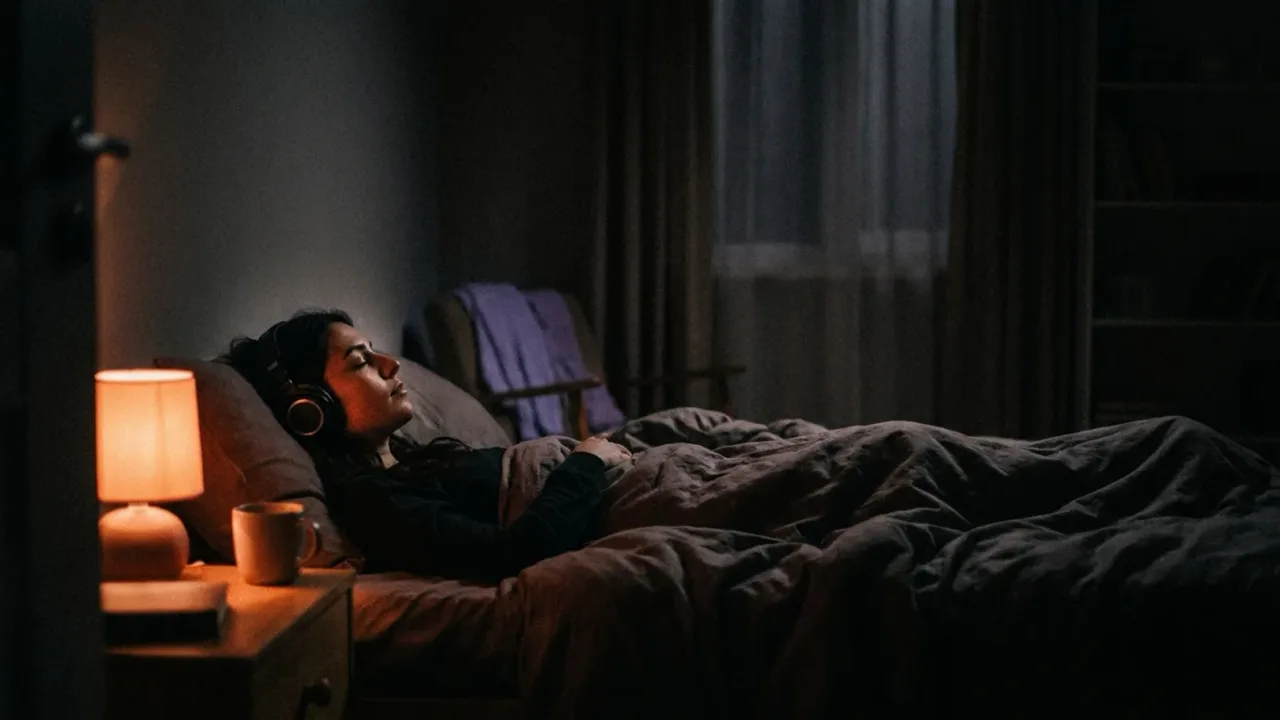

You wake up feeling surprisingly refreshed.
Then you check your watch.
"Poor sleep quality. 62%. Deep sleep: below average."
Suddenly, you are questioning the way you felt before you saw the score.
Sleep data can be useful. It can also become one more thing to worry about.
If you find yourself changing how you feel because of a device score, checking data compulsively, or trying harder and harder to perfect sleep metrics, it may be worth changing how you use the tracker.
The Rise of Performance-Based Sleep
Sleep trackers, rings, watches, mattresses, and apps can give people useful information about routines and trends.

But data can become unhelpful when every night turns into a performance review.
When Helpful Awareness Becomes Pressure
The problem is not the existence of a score. It is what happens when the score starts overriding your own experience or creates rigid rules you feel afraid to break.
Consumer trackers also estimate many sleep measures rather than measuring them with the same methods used in a clinical sleep study. That makes trends potentially useful while individual stage numbers should be interpreted with caution.
What Is Orthosomnia?
In 2017, sleep clinicians used the term orthosomnia in a case-series paper to describe patients whose efforts to perfect wearable sleep data appeared to worsen their sleep concerns.
Orthosomnia is an informal clinical and research term, not a formal standalone diagnosis.
Patterns Worth Noticing
You might consider stepping back from tracking if:
- the device score consistently matters more to you than how you feel;
- checking data causes significant morning anxiety;
- you become rigid about sleep routines mainly to improve metrics;
- you keep changing behavior despite already feeling well rested;
- the thought of sleeping without the tracker feels distressing.
Those patterns do not prove a condition. They are simply signs that the tool may be adding pressure instead of helping.
When Tracking Adds Pressure
Trying very hard to force sleep can become counterproductive. Researchers use the term sleep effort for this kind of effortful attempt to control sleep.
From Information to Surveillance
A tracker can become part of that effort if you start monitoring every awakening, calculating every stage, and treating each number as a verdict.
That does not mean tracking makes sleep worse for everyone. Some people find it neutral or useful. The relevant question is what it does to your behavior and anxiety.
When to Step Back
You can experiment with less data without giving up technology forever.
Try hiding the sleep score for a week. Stop looking at stage breakdowns. Wear the device only when you have a specific question. Or take it off entirely for a few nights and notice whether your anxiety changes.
If you have symptoms such as loud snoring with breathing pauses, severe daytime sleepiness, persistent insomnia, or other medical concerns, do not use a consumer tracker as a substitute for evaluation.
Conclusion: Sleep Is Not a Competition
We have more sleep data than any previous generation. That can be useful, but more data is not always more reassurance.

If tracking helps you notice patterns without making you anxious, keep it.
If it turns every night into a score you have to improve, you are allowed to step back.
Your sleep still matters when it is not measured.
Frequently asked questions
What is orthosomnia?
Orthosomnia is an informal term introduced by sleep clinicians for an unhealthy preoccupation with improving wearable sleep data. It is not a formal standalone diagnosis. The useful idea is to notice when tracking is increasing anxiety, rigidity, or sleep effort instead of helping.
Can sleep trackers make sleep worse?
They can add pressure for some people, especially when scores become a source of anxiety or lead to repeated attempts to control sleep. Other people find trackers useful or neutral. The effect depends on how you use the data and how much weight you give it.
Why am I so tired of optimizing my sleep?
Monitoring, scoring, and adjusting every part of sleep can become mentally exhausting. If the data is creating more pressure than useful information, try reducing how often you check it or taking a break. Persistent sleep problems deserve proper evaluation rather than endless self-optimization.