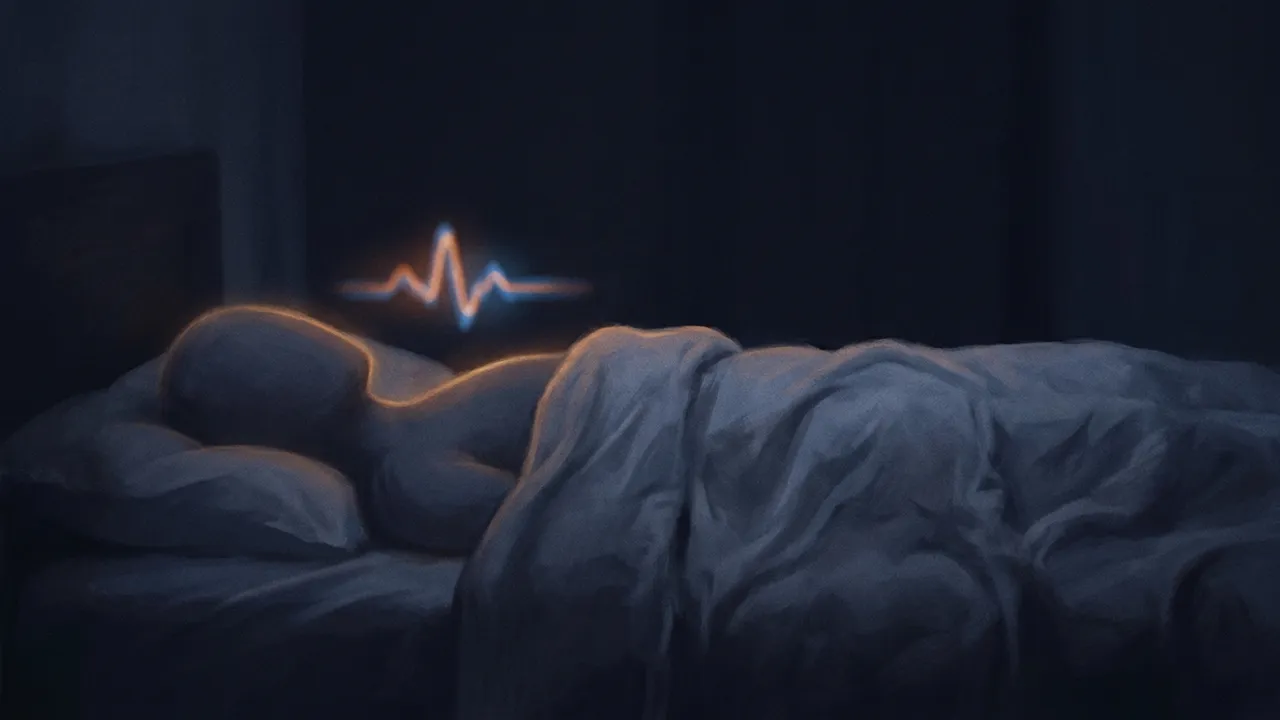
The house is quiet. You lie down, and suddenly your heartbeat seems to take over the room.
A thud. Another. Maybe a quickening, flutter, or hard pulse in your chest or throat.
A racing heart at bedtime is not automatically a sign that your fight-or-flight response is "stuck on." Anxiety can raise heart rate, but so can caffeine, alcohol, dehydration, fever, pain, medications, thyroid problems, anemia, sleep apnea, and heart-rhythm conditions. Sometimes the heart is not actually much faster — it is simply easier to notice in a quiet bed.
That distinction matters because a breathing exercise may help with anxiety, but it should not be used to explain away symptoms that need medical attention.
The Sudden Drumbeat in the Dark
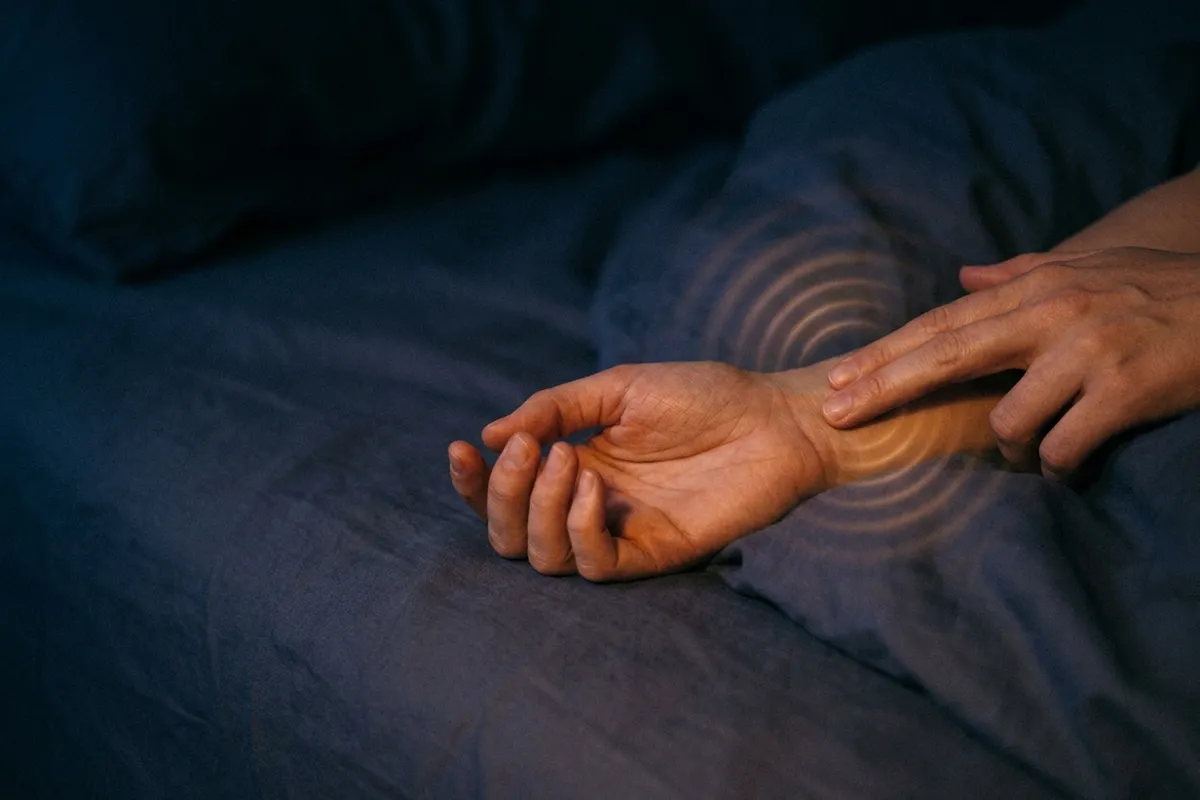
You may feel your heartbeat in your chest, throat, wrist, or even through the pillow. You shift position, check your pulse, and start wondering whether something is wrong.
When Fear Feeds the Sensation
A noticeable heartbeat can be frightening. Fear can then increase arousal and make the heartbeat feel even more important. That feedback loop is real for some people with anxiety or panic.
But the loop is not the only explanation. Do not assume a racing heart is anxiety just because it happens in bed.
When to Respect a Racing Heart
Heart palpitations are common, but some symptoms need prompt medical assessment. Seek urgent medical help if a racing or irregular heartbeat comes with chest pain, fainting, severe shortness of breath, severe dizziness, or a new sustained irregular rhythm.
If palpitations keep happening, wake you repeatedly, or are new for you, a clinician can help look for causes such as medication effects, thyroid problems, anemia, sleep apnea, or a heart-rhythm issue.
Why a Heartbeat Can Feel Bigger at Night
Anxiety Is One Possibility
Anxiety and panic can increase heart rate and make bodily sensations feel urgent. That is one reason some people notice a pulse-fear-pulse loop at bedtime.
It is still too strong to say the sympathetic nervous system is "in charge" or "stuck on" based on the symptom alone. The same sensation can come from many causes.
Do Not Diagnose High Cortisol From a Fast Heartbeat
Cortisol is involved in stress and follows a daily rhythm, but bedtime palpitations do not tell you your cortisol level. Caffeine, nicotine, alcohol, some medications, stress, exercise, illness, and several medical conditions can affect heart rate without a nighttime cortisol problem.
Interoception: Noticing What Is Already There
Interoception is the brain's perception of signals from inside the body. In a quiet room, a heartbeat has less competition from footsteps, conversation, screens, and movement. You may notice a normal or mildly elevated pulse much more clearly.
That extra attention can then feed worry. If your thoughts also become busy at bedtime, you may recognize the pattern in why you can't shut your brain off at night.
What the Vagus Nerve Does — and Doesn't Tell You
The vagus nerve is an important part of the parasympathetic nervous system and contributes to regulation of the heart, lungs, and digestive system.
It Is Not a "Calm Switch"
The vagus nerve can influence heart rate, including normal changes related to breathing. But it is misleading to describe it as a thread of calm that simply tells the brain "you are safe," or to say ordinary breathing exercises directly "activate" it in a way that explains sleep.
You can use slow breathing because it feels calming or gives you something simple to focus on. You do not need a stronger claim.
Heart and Brain Signals Affect Each Other
Bodily sensations can influence emotion and attention, and emotion can influence bodily sensations. That two-way relationship helps explain why anxiety and palpitations can reinforce each other without implying that the vagus nerve changes a "story" or proves a specific cause.
Why "Just Calm Down" Is Useless
Telling yourself to calm down rarely helps when you are scared by a physical sensation. A better first step is to check whether there are warning signs, then choose something low-effort if the situation feels familiar and non-urgent.
If you live with strong nighttime watchfulness, the science of nighttime hyper-vigilance discusses that experience in more detail.
A Breathing Option: The Physiological Sigh
If your racing heart is part of a familiar anxiety pattern and there are no urgent warning signs, a slow breathing exercise may help some people feel less keyed up.
What We Know About the Physiological Sigh
The physiological sigh is a double inhale followed by a longer exhale. A 2023 randomized study of five-minute daily breathing practices over one month found that cyclic sighing improved positive mood and reduced respiratory rate, with some outcomes stronger than mindfulness meditation in that study.
That does not mean one to three sighs are a proven treatment for palpitations or insomnia, and it does not mean the technique can safely slow every racing heart.
The Shape of the Breath
If the exercise feels comfortable:
- Inhale gently through your nose.
- Take a second smaller inhale.
- Exhale slowly without forcing the lungs empty.
Try one to three rounds, then return to normal breathing. Stop if you feel dizzy, short of breath, faint, or more anxious.
Pair It With a Plain Phrase
You might use a sentence such as, "I am noticing my heartbeat," or, "I can check this without panicking." Avoid telling yourself that nothing is wrong if you genuinely do not know that yet.
A hand on your chest or belly can give your attention another sensation, but it is optional.
From an Exercise to a Routine
Practice When You Are Not Panicking
If you like slow breathing, practicing it when you are calm can make the steps easier to remember later. It is still just one option. You do not need to train your nervous system to recognize safety.
A Note on HRV
Heart Rate Variability, or HRV, is the variation in time between heartbeats. Breathing affects HRV, and researchers use HRV in studies of autonomic function. Higher is not always "better" in every context, and a consumer wearable cannot diagnose whether your nervous system is healthy or whether a breathing routine is working.
Do not turn a calming practice into another number to chase in bed.
A Simple Sequence Can Reduce Decisions
Low light, putting the phone down, a familiar book or audio track, and a few comfortable breaths can make bedtime easier to navigate. The value of sequence is practical: fewer choices when you are tired.
If 3 AM has become a charged time for you, you may also want to read why you wake up at 3 AM every night.
When Spoken Guidance Is Easier
Instructions Can Be Hard to Remember When You Are Scared
When your heart feels loud, you may not want to remember a multi-step exercise. Spoken guidance can reduce that mental load.
An AI-generated voice can give paced instructions. It cannot keep you company in the human sense, notice whether you are getting worse, listen to your symptoms, or decide that you need medical help.
Guidance as a Practical Bridge
Tonight is an AI-guided wellness ritual with carefully crafted voices and low-light use. It can offer one cue at a time, but it is not a heart-rate treatment, diagnostic tool, therapist, or crisis service.
If you have recurrent palpitations, do not use a calming ritual as a reason to avoid medical assessment. If you simply want structured audio as part of a familiar bedtime routine, you can download Tonight.
Related reading: noticeable · Ritual · Anxiety heart racing at night
Frequently asked questions
Why is my heart racing when trying to sleep?
Anxiety is one possible cause, but a racing heart can also be related to caffeine, alcohol, dehydration, medications, illness, thyroid problems, anemia, sleep apnea, or a heart-rhythm condition. Sometimes a heartbeat simply feels more noticeable in a quiet bed. The symptom alone cannot tell you the cause.
Why does my heart beat fast when I lie down to sleep?
Lying quietly can make you more aware of internal sensations, including your heartbeat. Anxiety can then create a feedback loop in which noticing the pulse increases fear and fear increases arousal. But repeated or new palpitations should not automatically be assumed to be anxiety.
How do you calm a racing heart from anxiety at night?
If this is a familiar anxiety pattern and you have no urgent warning signs, slow comfortable breathing may help you feel less keyed up. A physiological sigh is one option, but it is not a guaranteed way to slow every racing heart. Stop if breathing exercises make you dizzy or worse.
When should I see a doctor about heart palpitations at night?
Seek urgent medical help if palpitations come with chest pain, fainting, severe shortness of breath, severe dizziness, or a new sustained irregular rhythm. If they keep happening, wake you repeatedly, or are new for you, a clinician can help look for causes such as medications, thyroid problems, anemia, sleep apnea, or rhythm issues.