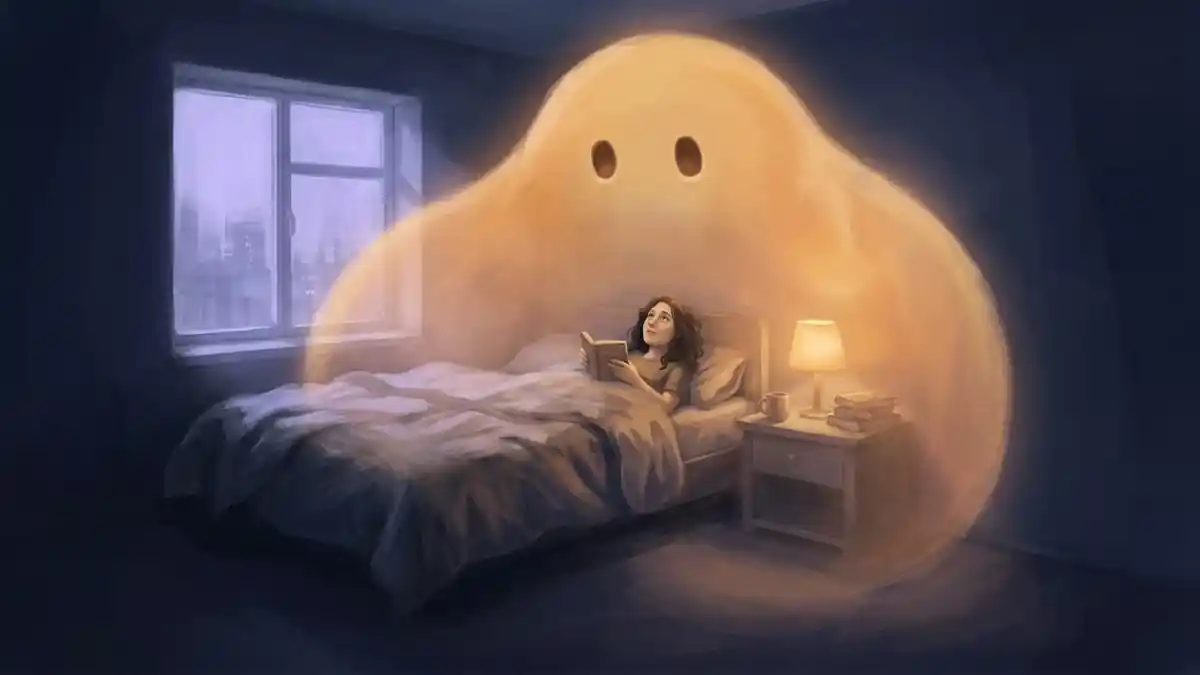

The room is quiet. The day has stopped asking things of you. Then your throat tightens and your eyes sting.
Crying before bed for "no reason" can feel embarrassing, even when nobody is watching. You search your mind for a cause: a fight, a bad email, a memory, a loss. Sometimes there is no single answer.
Nighttime tears can have many explanations. You may be tired, stressed, lonely, grieving, hormonally affected, anxious, depressed, or simply noticing feelings that were easier to ignore while the day was busy.
Crying can sometimes leave a person feeling relieved. It can also leave you exhausted, upset, or no different at all. It is not automatically a biological "reset," and tears do not prove that your body is releasing stored stress.
Why You're Crying Before Bed for No Obvious Reason
Tears can make us search for evidence that something must be wrong. But emotions do not always arrive with one clear label.

When the Day's Demands Fall Away
During the day, you may have been busy, social, distracted, or focused on getting things done. At bedtime there is less external structure. Feelings that were in the background can become easier to notice.
That is an ordinary psychological explanation. We do not need to say the nervous system was "bracing" all day and finally feels safe enough to tell the truth.
The Quiet Makes Everything Easier to Notice
Feeling sad before bed is not unusual. Quiet can make both thoughts and bodily sensations more noticeable. That does not mean the feeling is meaningless, and it does not mean it must contain a hidden message.
Tears can be an emotion, a response, or simply a moment. They do not always need an explanation tonight.
Sometimes There Are Many Small Reasons
"For no reason" often means "I cannot find one clear reason." A difficult conversation, loneliness, stress, exhaustion, grief, hormonal changes, disappointment, or several small frustrations may overlap.
What You Postpone During the Day
People often postpone emotion because life requires attention elsewhere. You hold back tears on the train, finish a meeting, answer a child's question, or deal with the next task. That does not mean emotion is literally stored in body tissue waiting for release. It means attention is limited, and some feelings get dealt with later.
When Small Things Add Up
At night, fewer distractions can make those feelings easier to notice. Brain networks involved in self-reflection, including the Default Mode Network, are sometimes discussed in research on internally focused thought, but it is too simple to say the DMN causes nighttime sadness or releases what the day "stored."
Sometimes the plain explanation is enough: you finally have space to feel.
You Do Not Have to Solve the Feeling Before Sleep
If your mind also starts racing, you may recognize the pattern in Why You Can't Shut Your Brain Off at Night. You can write down what matters, contact someone you trust, or decide that the question can wait until tomorrow.
What We Know About Crying
Crying changes breathing, facial muscles, attention, and social communication. People vary a lot in how they feel afterward.
Tears Contain Chemicals — But That Does Not Mean They Detox Stress
Emotional tears differ from basal and reflex tears, and researchers have studied their chemical composition. But the popular claim that crying works by removing meaningful amounts of cortisol or other "stress toxins" from the body is not established.
So if you feel better after crying, you can trust that experience without turning it into a detox story. If you feel worse, that is also possible.
Why You May Feel Different After a Cry
Some people notice slower breathing, tiredness, relief, or a change in tension after crying. Researchers have proposed several explanations, including self-soothing and social effects. One discussion of these ideas is the review on crying as a possible self-soothing behavior.
That review does not justify saying that crying stimulates the vagus nerve, activates a rest-and-digest state, or tells the body that danger has passed. Those mechanisms are much more specific than the evidence allows.
When a Cry Doesn't Feel Good
Not every cry is relieving. If you are crying most nights, feel persistently hopeless or depressed, are frightened by the intensity of your emotions, or are struggling to function during the day, talk with a doctor, therapist, or another qualified professional.
If you are thinking about harming yourself or feel you may not be able to stay safe, seek urgent help through local emergency or crisis services. An article or wellness app is not crisis care.
How to Make Room for Sadness Without Over-Explaining It
You do not have to cross-examine every tear. You can notice that you are sad and decide what would help in the next ten minutes.

Stop Cross-Examining the Tears
Instead of "What is wrong with me?" try a more practical question: "Do I need comfort, company, water, sleep, or to write this down for tomorrow?"

Permission Without Abandonment
Letting yourself cry does not mean deliberately spiraling into every painful thought. You can let the emotion be present and still choose not to reopen every argument or memory in the middle of the night.
Simple Sensory Comfort
A warm drink, a soft blanket, cooler air, a shower, comfortable clothing, or a hand on your chest may feel soothing. Those choices do not need a nervous-system mechanism to be valid.
If loneliness is part of the night, consider real contact when possible. We explored that experience in Why We Feel Lonelier After the Sun Goes Down.
A Simple Way to Respond to Nighttime Tears
Here is one short sequence. It is not a cure and it does not require you to identify the exact cause first.
A Way of Keeping Yourself Company
- Let the tears be there for a moment. You can say, "I am upset right now. I do not have to explain all of it tonight."
- Choose one comfortable physical thing. A blanket, water, a cooler pillow, a dimmer light, or another sensation you actually like.
- Choose connection or guidance based on what you need. If you need a person, contact a person. If you simply want spoken instructions or familiar audio, use that for what it is.
Real co-regulation involves another person who can notice and respond to you. A recording or AI voice cannot provide that, even if you find the sound calming.
When Meditation Is Not the Right Tool Tonight
Meditation helps many people. On a tearful night, you may prefer it, or you may find silence gives difficult thoughts too much room. White noise may be comforting, irritating, or irrelevant. Choose based on your actual response rather than treating one method as superior.
If your thoughts become especially active, When the Brain Is Too Active to Sleep may help you separate repetitive thinking from the emotion itself.
A Gentle Night Routine
A routine cannot remove grief, depression, conflict, or other causes of distress. It can make the next part of the evening simpler.
Recognizing a Familiar Sequence
Lower the light. Put away the screen if it keeps you engaged. Get comfortable. Choose silence, music, meditation, a real conversation, or guided audio. Repetition may make the sequence easier to follow because you do not have to decide from scratch every night.
That is predictability, not proof that the nervous system has learned a "shape of safety."
Where Tonight Fits
Tonight is an AI-guided wellness ritual with carefully crafted voices, designed for low-light listening. It can provide a simple sequence and content shaped around what you entered.
The AI is not a human companion. It does not listen, understand your sadness, provide co-regulation, diagnose depression, or offer crisis care. If you need human support, real people and professional services matter more than an app.
If you want a structured audio ritual as one part of your evening, you can download Tonight.
Related reading: Nervous System Regulation · ritual · limbic system
Frequently asked questions
Why am I crying before bed for no reason?
There may not be one clear reason. Fatigue, stress, grief, loneliness, anxiety, depression, hormonal changes, or simply having fewer distractions at night can all contribute. Crying by itself does not prove that your nervous system is releasing stored stress.
Why do I get emotional at night when I was fine all day?
During the day, tasks and other people may take most of your attention. At night there is often more space to notice feelings you postponed or barely registered earlier. That can make sadness feel sudden even when several small things have been building in the background.
Is crying at night a release of stored stress?
Crying can feel relieving for some people, but the claim that emotional tears meaningfully remove cortisol or "stored stress" from the body is not established. Researchers have proposed several reasons crying may change how someone feels afterward, and people do not all respond the same way.
How can I comfort myself when I cry before bed?
Keep the next step simple: let the emotion be present, choose one comfortable physical sensation, and decide whether you need real human contact or just a quiet activity or audio guide. If crying is frequent, comes with persistent hopelessness, or makes daily life difficult, talk with a qualified professional.