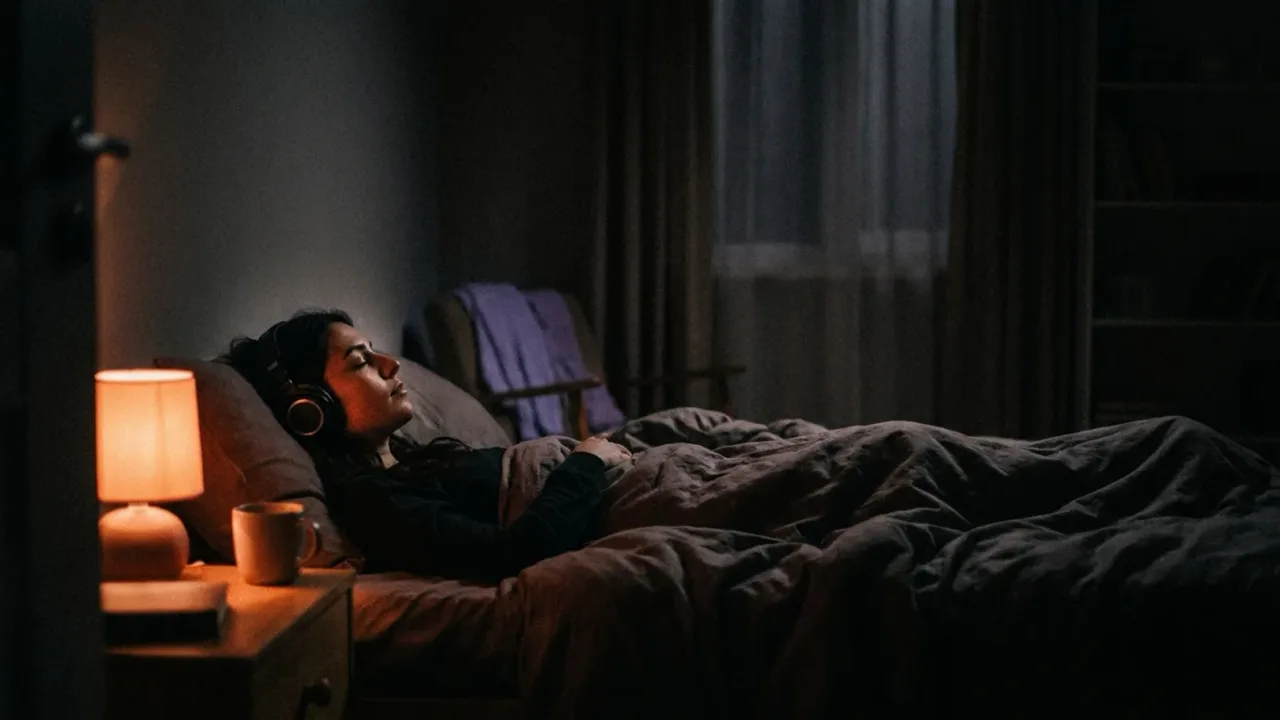

Here is a number worth looking at carefully: 3.83.
In ResMed's 2025 Global Sleep Survey, women reported an average of 3.83 nights of good-quality sleep per week, compared with 4.13 for men. The survey included 30,026 people across 13 markets, with data collected in December 2024.
That 0.3-night difference is a self-reported survey finding. It does not mean every woman loses 0.3 nights of sleep each week, and it cannot be multiplied across a lifetime to calculate a "sleep deficit."
What it does do is point toward a broader pattern seen in sleep research: women, on average, report insomnia symptoms more often than men, and sleep can become especially difficult during reproductive transitions such as pregnancy, postpartum, perimenopause, and menopause.
This article is for anyone trying to make sense of that pattern without reducing women's sleep to one hormone or one number.
The Gender Sleep Gap
Sleep differences by sex and gender are complicated. They can reflect biology, hormones, mental and physical health, caregiving, work, social conditions, and how people report symptoms. No single survey can separate all of those influences.
Still, the broader pattern is not based on one poll. A long-standing meta-analysis found a higher risk of insomnia in women than men, and later research continues to find sex- and gender-related differences in sleep complaints. Zhang & Wing, Sleep, 2006
The 3.83 figure itself comes from ResMed's 2025 Global Sleep Survey, not from a U.S.-only sample. In that survey, women also reported more difficulty falling asleep than men. Because it is self-reported cross-sectional survey data, it can describe a difference but cannot tell us that sex or gender alone caused it.
Hormones Are Part of the Picture
Reproductive hormones can influence sleep, but the story is broader than "estrogen down, sleep broken."

During perimenopause and menopause, changing hormone levels can coincide with hot flashes, night sweats, mood changes, and changes in sleep continuity. Those symptoms can interact with stress, health conditions, medications, sleep disorders, and ordinary life pressures.
Progesterone and estrogen interact with systems involved in temperature regulation and sleep, but individual experiences vary widely. It is more accurate to say hormonal transitions can contribute to sleep disturbance than to claim that one hormone directly controls whether someone sleeps well.
When 3 AM Becomes an Appointment
Sleep problems are common during the menopausal transition. Reviews report high rates of sleep complaints, although estimates vary depending on the population and how sleep problems are defined. This review discusses the range.
Hot flashes and night sweats can wake some people repeatedly. Others develop insomnia without prominent vasomotor symptoms. Snoring, sleep apnea, restless legs, depression, anxiety, pain, medications, and other conditions can also affect sleep, so a new sleep problem in midlife should not automatically be blamed on menopause.
If you are regularly waking up at 3 AM, the clock time itself is not a diagnosis. What matters is the pattern, how often it happens, what symptoms come with it, and how you feel during the day.
Why One-Size-Fits-All Advice Falls Short
Sleep advice can feel dismissive when it treats every problem as a matter of sleep hygiene. A cool bedroom may help with comfort, for example, but it is not a complete answer for severe hot flashes, chronic insomnia, sleep apnea, depression, pain, or other medical issues.
Women's sleep complaints have also historically been understudied in some areas of medicine. That does not mean every modern sleep recommendation was "built for men," but it does mean clinicians and researchers increasingly pay attention to reproductive stages, sex-specific symptoms, and social context.
If night sweats, frequent awakenings, or insomnia are persistent or significantly affecting daily life, it is reasonable to discuss them with a healthcare professional. Effective options may include treatment for menopausal symptoms, CBT-I for chronic insomnia, evaluation for sleep apnea or restless legs, medication review, or other care depending on the cause.
Reclaiming the Dark
If your sleep has changed, the first useful step is not blaming yourself. The second is not assuming you have to simply endure it.
A flexible routine can make difficult nights easier to navigate: reduce pressure around "perfect" sleep, keep a consistent schedule where possible, make the room comfortable, and notice patterns that may be worth bringing to a clinician.
But be careful with romantic claims about historical sleep. Evidence that segmented or biphasic sleep occurred in some times and places does not mean it was universal, healthier, or the right answer for a modern sleep problem.
A ritual can support the end of the evening if you enjoy it. It should remain a wellness tool, not a substitute for evaluating persistent symptoms.
You Are More Than 3.83
The survey gap is real as a reported group average. It is not your personal forecast.
Some women sleep well. Some men sleep poorly. Some people move through menopause with little sleep disruption; others have years of difficult nights. Group data can help identify patterns, but it cannot explain an individual person on its own.
If your sleep is suffering, you deserve more than generic advice and more than a statistic. You deserve a serious look at what is actually happening: symptoms, timing, health, stress, environment, medications, and the kind of support that fits the cause.
Tonight can be one small part of an evening routine if you want it: an AI-guided, screen-free wellness ritual with carefully crafted voices. It does not diagnose or treat menopause, insomnia, or any other medical condition.

You are not a survey average. And 3.83 is not a destiny.
Frequently asked questions
Why do women report worse sleep than men?
Research finds higher rates of insomnia complaints in women on average, but the reasons are mixed. Hormonal transitions can contribute, while mental and physical health, caregiving, work, social conditions, medications, sleep disorders, and other factors can also matter. Group differences do not explain every individual's sleep.
Does perimenopause cause sleep problems?
Perimenopause and menopause can contribute to sleep problems, especially through hot flashes, night sweats, and other changes that may disrupt sleep. But not every sleep problem in midlife is caused by hormones. Persistent symptoms may also warrant evaluation for insomnia, sleep apnea, restless legs, mood disorders, pain, medication effects, or other causes.
Where does the 3.83 number come from?
It comes from ResMed's 2025 Global Sleep Survey of 30,026 respondents across 13 markets. Women reported 3.83 nights of good-quality sleep per week on average, versus 4.13 for men. It is self-reported survey data, not a measure of a lifetime sleep deficit and not a prediction for any individual person.